Indian Resistance Heroes on Screen: From Shivaji to the Freedom Struggle
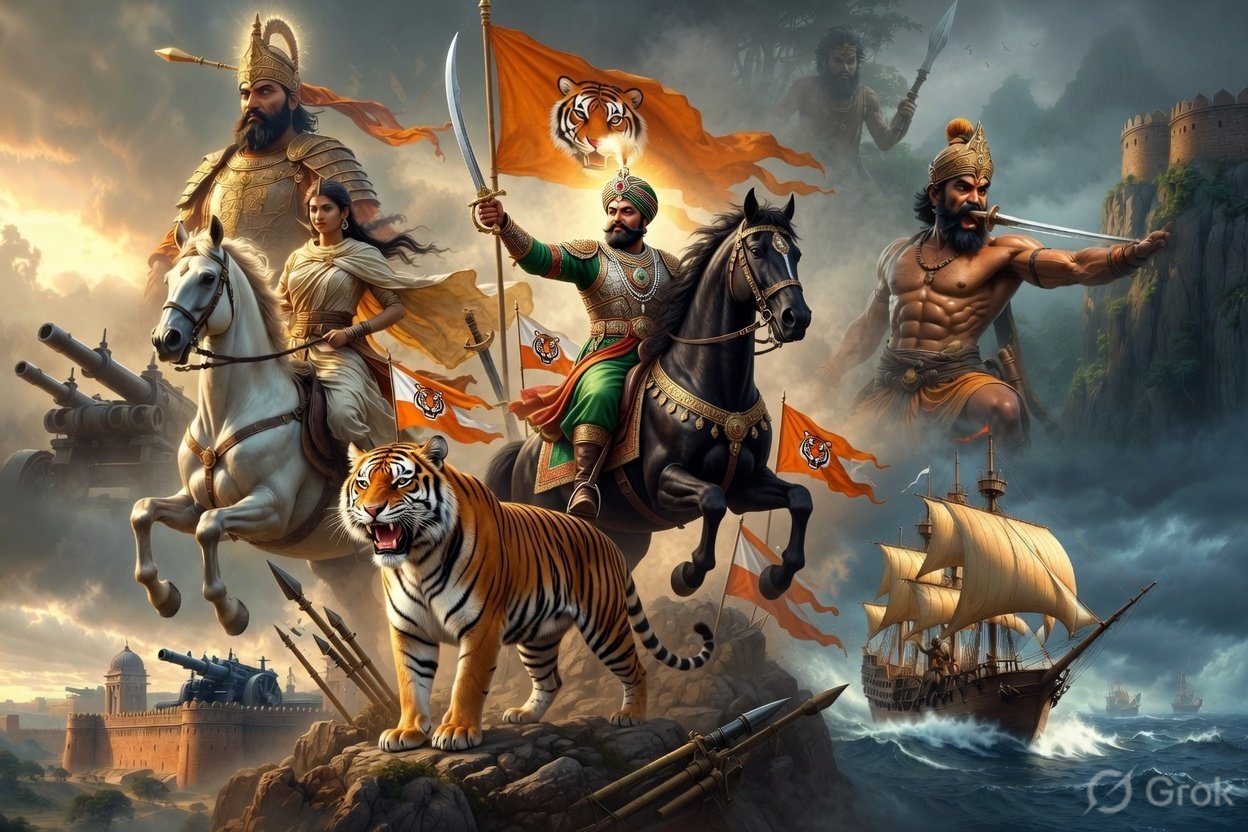
Indian Resistance Heroes on Screen: From Shivaji to the Freedom Struggle
India’s history is filled with fierce resistance against colonial powers — Portuguese, British, and others. Warriors who refused to submit, forts that refused to fall, and rebellions that refused to die quietly. In recent decades, Indian cinema has repeatedly returned to these figures, turning their stories into larger-than-life films. Here is a look at some of the most powerful historical personalities and the movies that brought them to audiences.
Chhatrapati Shivaji Maharaj & Tanaji Malusare
The Maratha empire’s founder remains one of the most celebrated symbols of resistance. Shivaji’s guerrilla tactics, fort strategy, and vision of Hindavi Swarajya continue to inspire.
Tanhaji: The Unsung Warrior (2020) focuses on one of his greatest generals. Ajay Devgn plays Tanaji Malusare in the dramatic recapture of Kondhana Fort (later Sinhagad). The film is pure spectacle — rope-climbing, night assaults, and the legendary moment that gave the fort its new name. It celebrates loyalty, courage, and the personal cost of empire-building.
The Tiger of Mysore – Tipu Sultan
Tipu Sultan, the “Tiger of Mysore,” fought the British East India Company with both conventional armies and innovative rocket technology. His resistance in the late 18th century made him one of the Company’s most determined opponents in the south. While fewer mainstream Hindi films have fully centred him in recent years, his legacy of defiance remains a powerful reference point whenever cinema turns to pre-1857 resistance.
Pazhassi Raja
Kerala’s own “Kerala Varma Pazhassi Raja” led a prolonged guerrilla war against the British in the late 18th and early 19th centuries in the forests of Malabar. Known for his knowledge of terrain and ability to mobilise local support, he became a symbol of regional resistance long before the national freedom movement took shape. His story has been told in Malayalam cinema and continues to resonate as an example of early anti-colonial struggle in the south.
Kunjali Marakkar IV – Sea Power Against the Portuguese
Long before the British, the Portuguese tried to control the Malabar coast. Marakkar: Lion of the Arabian Sea (2021) casts Mohanlal as Kunjali Marakkar IV, the naval commander who challenged Portuguese dominance through sea battles and coastal resistance in the 16th century. The film leans into grand naval combat and the idea of indigenous maritime power pushing back against European naval superiority.
Urumi (2011) takes a more stylised, fictional approach to the same era of Portuguese arrival in Kerala. Prithviraj Sukumaran stars in a revenge-driven narrative woven around real colonial aggression, blending history with myth and personal vendetta.
Uyyalawada Narasimha Reddy
Sye Raa Narasimha Reddy (2019) stars Chiranjeevi as the leader of an armed uprising against the East India Company in 1846–47 in present-day Andhra Pradesh. The film presents him as an early rebel who organised peasants and fighters against Company rule decades before 1857, emphasising rural resistance and local leadership.
The 1857 Revolt and Its Icons
The great uprising of 1857 produced some of the most enduring names in the freedom struggle.
- Mangal Pandey: The Rising (2005) – Aamir Khan portrays the sepoy whose actions at Barrackpore helped ignite the wider revolt. The film explores the immediate spark of the cartridge controversy and the larger tensions of Company rule.
- Manikarnika: The Queen of Jhansi (2019) – Kangana Ranaut plays Rani Lakshmibai, the young queen who became one of the most iconic faces of 1857. The film focuses on her military leadership, the defence of Jhansi, and her determination to keep her kingdom independent.
Kesari and the Spirit of Last Stands
Kesari (2019) features Akshay Kumar in the story of the Battle of Saragarhi (1897), where a small contingent of Sikh soldiers of the British Indian Army made a legendary last stand. While the soldiers were serving under the British flag, the film is often remembered for its depiction of extraordinary courage, duty, and the warrior ethos that later fed into the broader nationalist imagination.
Why These Stories Keep Returning to the Screen
These films share common threads: defiance against superior firepower, the defence of land and identity, personal sacrifice, and the transformation of local heroes into national symbols. Some lean heavily into patriotic spectacle; others attempt (with varying success) to ground themselves in historical detail. Together they form a popular cinema of resistance that stretches from the 16th-century Malabar coast to the Maratha forts, the forests of Kerala and Andhra, and the battlefields of 1857.
Whether through Mohanlal’s naval commander, Ajay Devgn’s Tanaji, Kangana’s Rani of Jhansi, or Chiranjeevi’s Narasimha Reddy, Indian audiences continue to revisit these figures — not only as history, but as living inspiration.
The real stories were often more complex, bloodier, and less neatly heroic than the films suggest. Yet the core impulse remains the same: ordinary and extraordinary people who refused to accept foreign domination as inevitable. That refusal still echoes.