Deadliest Animals in India: Which Animals Kill the Most People?
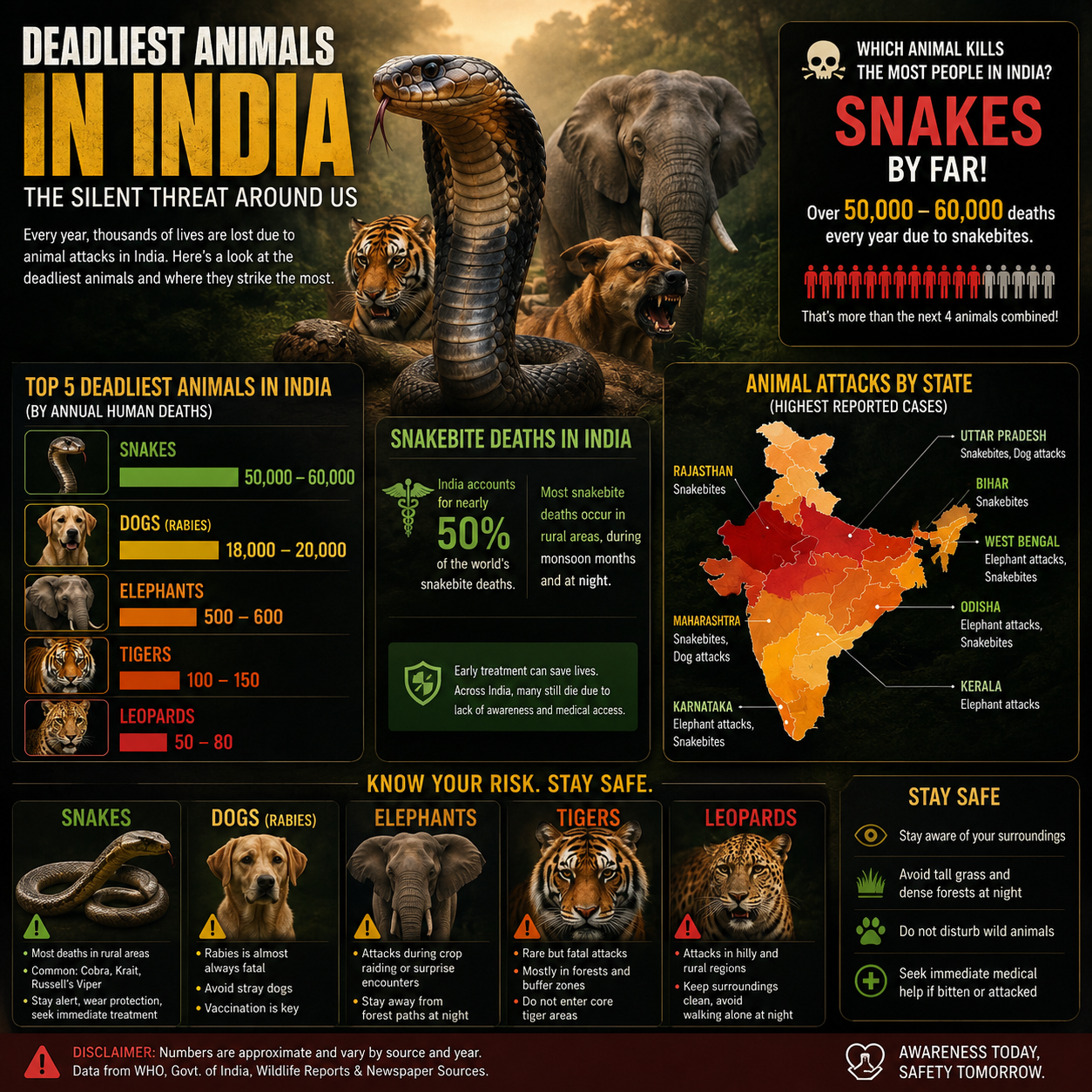
India is home to some of the world’s most diverse wildlife. While most wild animals avoid humans, thousands of people lose their lives every year due to animal attacks, venomous bites, and diseases transmitted by animals. Surprisingly, snakes and rabies from dog bites account for far more deaths than tigers or elephants.
Disclaimer: The figures below are approximate estimates based on published research and official reports. Actual numbers vary yearly depending on weather, wildlife movement, healthcare access, and reporting.
Top Animals Responsible for Human Deaths in India
| Rank | Animal | Estimated Deaths/Year | Most Affected States |
|---|---|---|---|
| 1 | 🐍 Snakes | 45,000–58,000 | Uttar Pradesh, Bihar, Madhya Pradesh, Odisha, West Bengal, Rajasthan, Jharkhand, Chhattisgarh, Andhra Pradesh, Telangana |
| 2 | 🐕 Dogs (Rabies) | 8,000–18,000 | Uttar Pradesh, Bihar, Maharashtra, West Bengal, Tamil Nadu, Karnataka |
| 3 | 🦂 Scorpions | 500–2,000 | Maharashtra, Gujarat, Telangana, Andhra Pradesh, Rajasthan |
| 4 | 🐘 Elephants | 400–600 | Odisha, West Bengal, Assam, Karnataka, Kerala, Tamil Nadu, Jharkhand |
| 5 | 🐊 Crocodiles | 150–300 | Odisha, Gujarat, Andaman & Nicobar Islands, Madhya Pradesh |
| 6 | 🐅 Tigers | 50–100 | Madhya Pradesh, Maharashtra, Uttarakhand, Karnataka, Uttar Pradesh |
| 7 | 🐆 Leopards | 30–80 | Maharashtra, Himachal Pradesh, Uttarakhand, Jammu & Kashmir, Karnataka |
| 8 | 🐻 Sloth Bears | 20–60 | Madhya Pradesh, Chhattisgarh, Odisha, Karnataka |
| 9 | 🐃 Gaur (Indian Bison) | 10–30 | Karnataka, Kerala, Tamil Nadu, Goa |
| 10 | 🐗 Wild Boars | 10–30 | Kerala, Karnataka, Maharashtra, Telangana |
1. Snakebites – India’s Deadliest Animal
Snakebite is India’s leading cause of animal-related deaths. Most fatalities occur in villages where farmers, laborers, and children accidentally encounter venomous snakes during farming, walking, or sleeping on the floor.
Most Dangerous Species
- Indian Cobra
- Common Krait
- Russell’s Viper
- Saw-scaled Viper
High-Risk Areas
- Rice fields
- Agricultural villages
- Monsoon season
- Forest-edge settlements
Most Affected States
- Uttar Pradesh
- Bihar
- Madhya Pradesh
- Odisha
- West Bengal
- Jharkhand
- Chhattisgarh
- Andhra Pradesh
- Telangana
2. Dog Bites and Rabies
India records one of the highest numbers of rabies deaths globally. Most infections occur after bites from unvaccinated stray dogs.
High-Risk Areas
- Urban slums
- Villages
- Areas with large stray dog populations
Most Affected States
- Uttar Pradesh
- Bihar
- Maharashtra
- Tamil Nadu
- Karnataka
- West Bengal
3. Scorpions
The Indian red scorpion is among the world’s most venomous scorpions. Deaths mainly occur in rural areas where medical treatment is delayed.
Hotspots
- Konkan Region (Maharashtra)
- Saurashtra (Gujarat)
- Telangana villages
- Rural Andhra Pradesh
4. Elephants
Elephant attacks occur mainly during crop raids. Human-elephant conflict has increased as forests shrink.
Conflict Zones
- Nilgiri Hills
- Wayanad
- Bandipur Region
- Assam Tea Estates
- Northern Odisha
- North Bengal
5. Crocodiles
Crocodile attacks occur while fishing, bathing, or crossing rivers.
Danger Areas
- Bhitarkanika National Park (Odisha)
- Chambal River
- Mahi River (Gujarat)
- Andaman Islands
6. Tigers
Tiger attacks are rare but usually occur when people enter forests for firewood, grazing, or honey collection.
Major Tiger Landscapes
- Sundarbans (West Bengal)
- Kanha
- Bandhavgarh
- Corbett
- Nagarhole
- Tadoba
7. Leopards
Leopards frequently enter villages searching for dogs or livestock, leading to occasional attacks.
Common Areas
- Mumbai outskirts (Sanjay Gandhi National Park)
- Shimla Hills
- Uttarakhand villages
- Western Ghats
8. Sloth Bears
Sloth bears are responsible for severe injuries when surprised in forests.
States
- Madhya Pradesh
- Chhattisgarh
- Odisha
- Karnataka
9. Gaur (Indian Bison)
Gaur attacks are defensive and usually occur when humans approach too closely.
Areas
- Wayanad
- Bandipur
- Nagarhole
- Anamalai Hills
10. Wild Boars
Wild boars often attack farmers protecting crops, especially during harvesting seasons.
High-Risk States
- Kerala
- Karnataka
- Maharashtra
- Telangana
Animal Deaths Ranking in India
- 🐍 Snakes (45,000–58,000)
- 🐕 Dogs (Rabies) (8,000–18,000)
- 🦂 Scorpions (500–2,000)
- 🐘 Elephants (400–600)
- 🐊 Crocodiles (150–300)
- 🐅 Tigers (50–100)
- 🐆 Leopards (30–80)
- 🐻 Sloth Bears (20–60)
- 🐃 Gaur (10–30)
- 🐗 Wild Boars (10–30)
Frequently Asked Questions
Which animal kills the most people in India?
Venomous snakes are responsible for the vast majority of animal-related deaths, causing an estimated 45,000–58,000 fatalities each year.
Which state has the highest number of snakebite deaths?
Uttar Pradesh reports the highest number of snakebite deaths, followed by Bihar, Madhya Pradesh, Odisha, and West Bengal.
Do tigers kill many people in India?
No. Tiger attacks are relatively rare and account for far fewer deaths than snakebites, rabies, or elephant attacks.
Where do most elephant attacks occur?
Most elephant-related fatalities occur in Odisha, Assam, West Bengal, Karnataka, Kerala, and Tamil Nadu, particularly in villages located near forests.
Which is more dangerous: a tiger or an elephant?
In India, elephants generally cause more human deaths each year than tigers because of frequent human-elephant conflict around agricultural areas.
Conclusion
While predators such as tigers and leopards often dominate headlines, India’s greatest wildlife-related threats are far less dramatic. Snakebites and rabies account for the overwhelming majority of deaths, highlighting the importance of access to healthcare, anti-venom, vaccination, and public awareness. Understanding where these risks are highest can help communities and travelers take practical precautions while coexisting with India’s remarkable wildlife.