Medicines Restricted or Prohibited in GCC Countries: A Complete Guide for Travelers
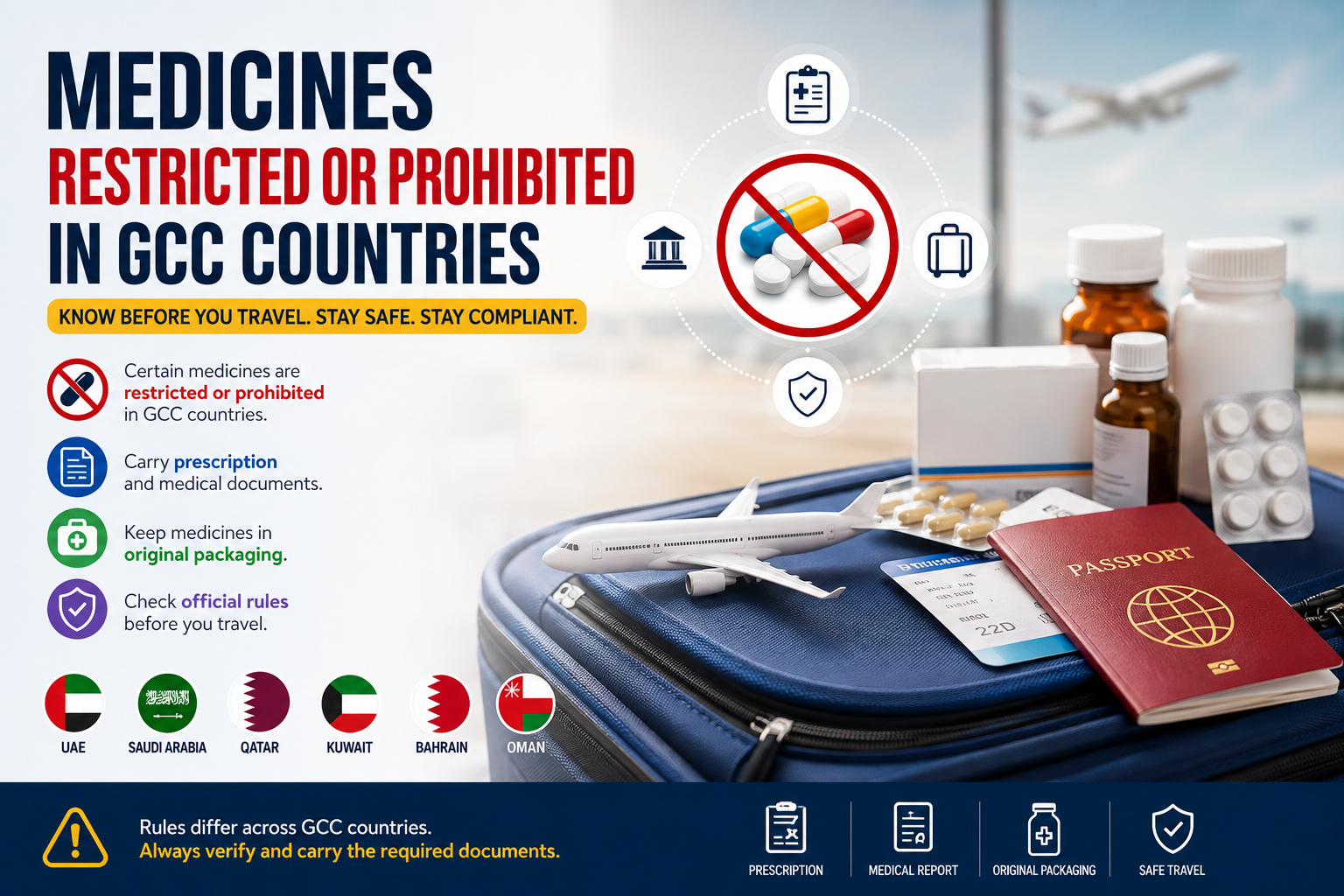
The Gulf Cooperation Council (GCC) consists of six countries: Saudi Arabia, the United Arab Emirates (UAE), Kuwait, Qatar, Bahrain, and Oman. These nations share a Common Customs Law, but each maintains its own lists of prohibited and restricted goods. Enforcement is strict, especially on narcotics, alcohol, items contrary to Islamic values or public morals, weapons, and controlled medicines. Penalties can include confiscation, fines, detention, imprisonment, or deportation.
Always check official sources (customs authorities, food/drug agencies, or embassies) before travel, as rules update frequently. Carry medications in original packaging with prescriptions/medical reports (preferably in English or Arabic). Quantities are generally limited to personal use for the duration of stay (or specific day limits for controlled substances). CBD, cannabis-derived products, and recreational drugs are banned everywhere with zero tolerance.
Common Prohibitions Across GCC
Under the GCC framework and national laws, these are widely banned or heavily restricted:- All narcotic drugs and psychotropic substances (recreational use)
- Alcohol and alcoholic beverages (strict in Saudi Arabia and Qatar; more regulated elsewhere)
- Pork and pork products
- Pornographic, immoral, or materials contradicting Islamic teachings/public morals
- Weapons, ammunition, explosives, fireworks (most cases)
- Counterfeit currency or goods
- Gambling tools/devices
- Certain tobacco products (e.g., specific chewing tobacco, naswar, paan/betel leaves in some places)
- Goods of Israeli origin (enforced in several countries)
- Hazardous materials, radioactive substances, asbestos in some forms
- Live swine and certain animal products
1. Saudi Arabia
Prohibited Items
According to ZATCA and official traveler lists:- Pills, intoxicants, and drugs of all kinds
- Discs and storage devices containing immoral materials
- Counterfeit currencies
- Fireworks of all shapes and types
- Prohibited chewing tobacco
- Tear gas / tear softeners
- Weapons and ammunition
- Items containing secret cameras (watches, pens, glasses, drones, etc.)
- Certain lasers (only one red laser pen ≤ 5 mW is allowed)
- Electric shock devices of all types
- Speed radar detectors
- Nutmeg (guru fruit) and nutmeg powder
- Books and publications that violate Ministry of Media regulations
- Unregistered pills, creams, sexual tonics, herbs, and lotions (not registered with SFDA)
- Sexual organs, tools, and devices
- Eavesdropping devices of all kinds
- Alcohol
- E-cigarettes and accessories (in many cases)
- Human organs
- Perishable foods requiring special handling
- Live or dead animals or their parts (restricted)
Medicines
Controlled narcotics and psychotropics (e.g., codeine, tramadol, morphine, benzodiazepines such as Xanax or Valium, ADHD stimulants like Adderall or Ritalin, certain sleep aids, and pregabalin/Lyrica in some contexts) require advance clearance via the Saudi Food and Drug Authority (SFDA) Controlled Drugs System (cds.sfda.gov.sa). Apply weeks ahead with a prescription or medical report. Limit is typically a 30-day supply (or the duration of stay, whichever is shorter). Non-controlled OTC medicines (paracetamol, ibuprofen, etc.) are generally allowed in original packaging with supporting documents. Unregistered products, sexual tonics, certain hormones, and steroids are banned. CBD and all cannabis-derived products are fully prohibited.2. United Arab Emirates (UAE)
Prohibited Items
- All kinds of narcotic drugs
- Gambling tools, machinery, and devices
- Nylon fishing nets
- Live swine
- Used, reconditioned, and inlaid tires
- Radiation and nuclear fallout-contaminated substances
- Items that contradict Islamic faith and public morals
- Paan and betel leaves
- Naswar
- Ozone-depleting substances
- Asbestos sheets and pipes
- Laser pens emitting a red beam
- Hazardous waste
- Counterfeit currency
- Goods originating from boycotted countries
Medicines
Controlled and semi-controlled medicines (Class A/B) — including codeine, tramadol, opioids, benzodiazepines, ADHD medications (methylphenidate, amphetamines), and certain antidepressants or sleep aids — require prior e-approval (previously MOHAP; now often handled by the Emirates Drug Establishment). Visitors may bring up to a 3-month supply with a valid prescription and permit. Non-controlled prescription medicines (many antibiotics, blood-pressure medications, etc.) are usually allowed with a prescription for up to 6 months. CBD, cannabis products, kratom, and certain synthetic substances are banned outright. Melatonin and some over-the-counter products may also require verification.3. Kuwait
Prohibited Items
Narcotics and illegal drugs; items offensive to Muslim culture, the royal family, or politics; certain media displaying the female anatomy; powdered food in some cases; and dangerous goods. Strict enforcement applies to anything related to drugs or immorality.Medicines
Since late 2025 (Ministerial Decision), many common prescription drugs require advance written or electronic clearance from Kuwaiti authorities abroad (via embassy, consulate, or health office) before arrival. This includes:- Alprazolam (Xanax)
- Adderall (Amphetamine/Dextroamphetamine)
- Hydrocodone combinations
- Zolpidem (Ambien)
- Clonazepam (Klonopin)
- Methylphenidate (Ritalin, Concerta)
- Diazepam (Valium)
- Codeine-containing medications
- Pregabalin (Lyrica)
- Tramadol
- Gabapentin
4. Qatar
Prohibited Items
- Immoral content in all forms (books, magazines, films, etc.)
- Drugs of all kinds
- Weapons, ammunition, and explosives
- Radioactive devices and materials
- Goods containing any Israeli component
- Alcoholic drinks
Medicines
Controlled narcotics and psychotropics (codeine, tramadol, morphine, benzodiazepines, methylphenidate, amphetamines, pregabalin, etc.) require a prior electronic permit through the Ministry of Public Health (MoPH) system. A list of approximately 140 allowed-with-conditions medicines has been published. Narcotics are limited to a maximum of 10 days; psychotropics up to 60 days. If no prior permit is obtained, declaration plus a prescription and medical report are required. CBD is banned. Apply several working days in advance.5. Bahrain
Prohibited Items
- All types of narcotic drugs
- Used and reconditioned tires
- Cultured pearls
- Cigarette advertising material
- Radio/remote-controlled model aircraft
- Children’s toy guns capable of firing projectiles
- Publications, photographs, pictures, books, magazines, sculptures, and mannequins that contradict Islamic teachings or decency
- Seditious or treasonable material
- Asbestos or items containing asbestos
- Raw ivory, ivory articles, and rhinoceros horn
- Live swine
- Goods of Israeli origin (in some contexts)
Medicines
Narcotics and psychotropics are tightly controlled. Tramadol is frequently cited as banned. Codeine, ADHD stimulants, and benzodiazepines are restricted and generally require a prescription, doctor’s letter, and possibly National Health Regulatory Authority (NHRA) approval. Quantities are limited. CBD and all cannabis-derived products are banned. Always carry original packaging and documentation and declare controlled medicines.6. Oman
Prohibited Items
- Illegal drugs
- Counterfeit items
- Offensive or pornographic material
- Arms and ammunition (without a permit)
- Certain political or religious literature considered offensive to the government or Islam
- Some animal products without proper clearance
Medicines
Controlled substances (narcotics and psychotropics, including codeine, tramadol, opioids, ADHD stimulants, and certain psychotropics) require a medical report issued within the last 6 months from the treating institution, plus a valid prescription showing diagnosis, scientific names, strengths, dosages, and quantities. Limits are typically the duration of stay or 1 month for controlled medicines and up to 3 months for non-controlled medicines. All medicines should be declared. CBD is banned. Some sources indicate codeine and tramadol face particularly strict restrictions — verify with the Ministry of Health before travel.Practical Advice for Travelers
- Verify everything — Use official portals (SFDA for Saudi Arabia, Emirates Drug Establishment / MOHAP for UAE, MoPH for Qatar, NHRA for Bahrain, and the respective Ministry of Health for Oman and Kuwait via embassies). Rules change.
- Documentation — Original labeled packaging + prescription or medical report (patient name, diagnosis, drug details, dosage, duration, doctor’s stamp/signature). Translate into English or Arabic if needed.
- Quantities — Stick strictly to personal-use limits. Excess is often seized.
- Declare — Declare controlled medicines or any restricted items at customs.
- CBD & supplements — Assume they are banned unless you have confirmed otherwise. Many “wellness” products cause problems at the border.
- Alcohol and pork — Leave them behind, especially when traveling to Saudi Arabia or Qatar.
- Consequences — Non-compliance can lead to serious legal consequences. Ignorance of the law is not accepted as an excuse.