Soldering Fumes: Toxicity, Health Risks and How to Solder Safely
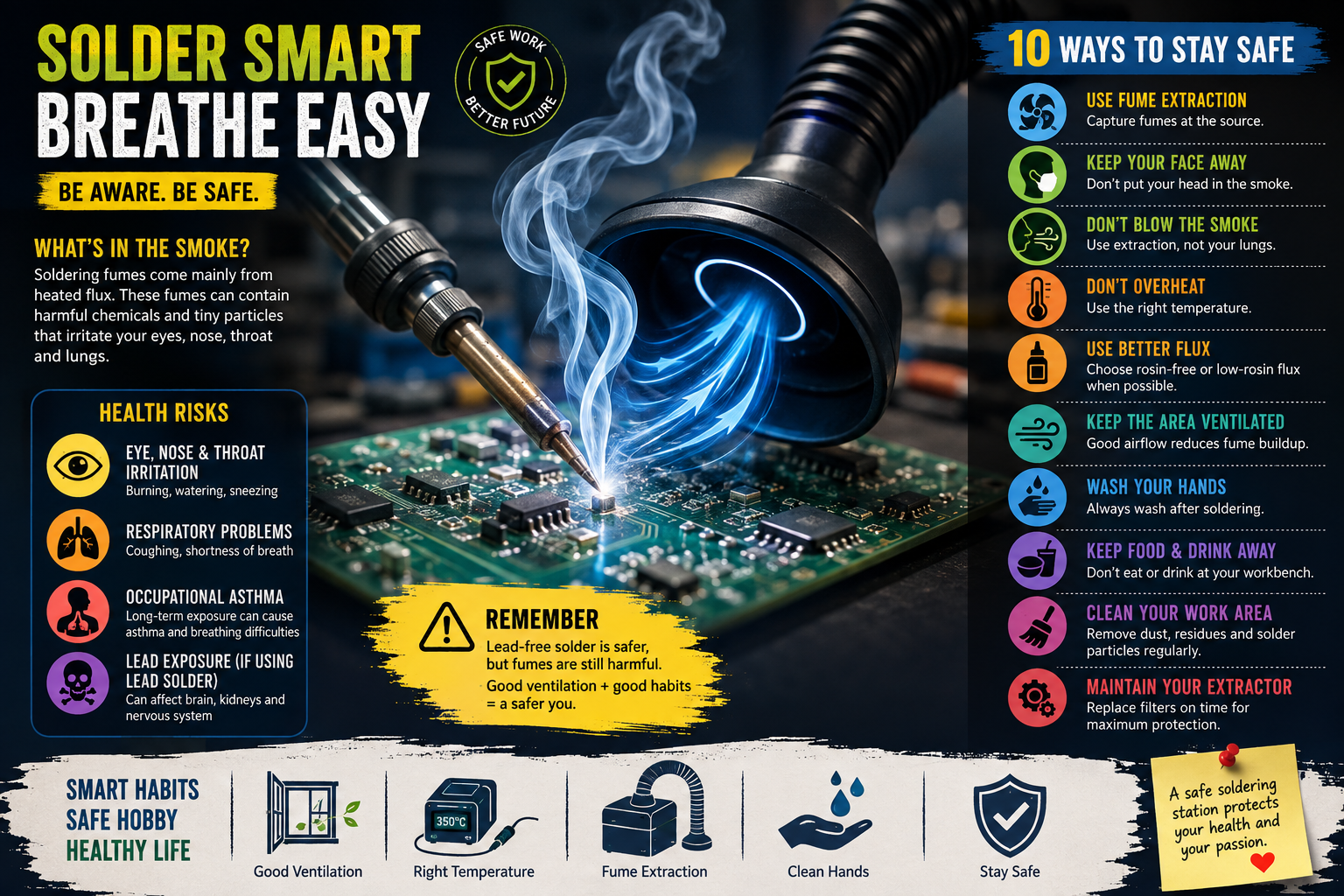
Soldering Fumes: Toxicity, Health Risks and How to Solder Safely
Soldering fumes are more dangerous than most people realize. Whether you are repairing electronics, working with silver solder for jewelry, or using solder paste for surface-mount boards, the smoke rising from your iron contains toxic particles and gases that can cause asthma, lung damage, and long-term health problems.
This complete guide covers the toxicity of soldering fumes, the real health risks, and practical ways to solder safely — including modern silver mixes, solder paste, and advanced methods.
What Are Soldering Fumes?
When solder and flux are heated, two main things happen:
- Flux breaks down – Rosin (colophony) flux releases resin acids, aldehydes (including formaldehyde), and fine irritant particles.
- Metal oxides form – Tin, lead, silver, copper, and (in older alloys) cadmium can become airborne as fumes, especially at higher temperatures.
In normal electronics soldering, the biggest hazard is usually the flux fume. In silver soldering and brazing, metal fumes become a much bigger concern.
Toxicity of Soldering Fumes
1. Rosin (Colophony) Flux Fumes
Rosin-based fluxes are the most common cause of occupational asthma in electronics workers. When heated, they release:
- Resin acid particles
- Aliphatic aldehydes (including formaldehyde)
- Other irritating gases
These substances are powerful respiratory sensitizers. Once you become sensitized, even tiny future exposures can trigger serious asthma attacks.
2. Metal Fumes
- Lead – Main risk is ingestion from surface contamination, but high temperatures can produce lead oxide fumes.
- Cadmium – Found in older silver solders. Extremely toxic. Causes acute chemical pneumonia and long-term kidney and lung damage. Avoid completely.
- Silver, Copper, Tin, Zinc – Can cause metal fume fever (flu-like symptoms) and respiratory irritation at higher exposures.
Health Risks of Exposure
Short-Term (Acute) Effects
- Eye, nose and throat irritation
- Coughing, wheezing, chest tightness
- Metal fume fever (fever, chills, metallic taste, muscle aches)
- In severe cadmium exposure: delayed lung damage that can be fatal
Long-Term (Chronic) Effects
- Occupational asthma (often permanent)
- Chronic bronchitis and reduced lung function
- Dermatitis (skin rashes from flux residues)
- Lead poisoning symptoms (fatigue, digestive problems, neurological effects)
- Kidney damage (especially from cadmium)
Important: There is no completely safe exposure level for rosin fumes. The goal is always to reduce exposure as low as reasonably possible.
How to Solder Safely – Best Practices
1. Substitute Safer Materials
- Use lead-free solder whenever possible (SAC305, SnCu, etc.)
- Choose rosin-free or low-rosin “no-clean” fluxes
- Never use cadmium-containing silver solder
- Consider conductive adhesives or mechanical joining as alternatives
2. Use Proper Ventilation (Most Important Control)
- Local exhaust ventilation (fume extractor) positioned right at the soldering tip
- On-tip extraction systems
- Downdraft benches or capture hoods
- Never rely only on a desk fan or open window
Rule: Keep your head to the side of the work, never directly above the rising fumes.
3. Good Work Habits
- Use the lowest effective iron temperature
- Wash hands thoroughly after soldering (especially with lead solder)
- Never eat, drink or smoke in the soldering area
- Clean work surfaces with wet wipes
- Read the Safety Data Sheet (SDS) for every product you use
4. Personal Protective Equipment
- Safety glasses or goggles
- Nitrile gloves when handling flux
- Heat-resistant gloves if needed
- Long cotton sleeves and closed-toe shoes
- Respirator with organic vapor + particulate cartridges only when extraction is not possible
Silver Solder Mixes, Paste & Advanced Methods
Silver-Bearing Soft Solders (Electronics)
Modern lead-free alloys such as SAC305 (96.5% Tin, 3% Silver, 0.5% Copper) are widely used. They melt around 217–220°C. Silver improves wetting and joint strength, but the main hazard remains the flux fumes, not the silver itself.
Solder Paste
Solder paste is a mixture of fine metal powder + flux vehicle. It is commonly used for surface-mount (SMT) reflow soldering. When heated:
- The flux activates and cleans the surfaces
- Metal particles melt and form the joint
Same flux hazards apply. Use good extraction and clean residues properly according to whether the paste is “no-clean” or water-soluble.
Silver Soldering / Brazing (Jewelry & Higher Strength Joints)
These alloys contain much higher silver content and melt at higher temperatures (often 600–800°C+). Key safety points:
- Use only cadmium-free silver solders
- Prefer borax-based fluxes over fluoride fluxes when possible
- Strong local exhaust is mandatory because metal fume generation is higher
Advanced & Safer Alternatives
- No-clean and synthetic resin fluxes – Lower sensitization risk than traditional rosin
- Water-soluble fluxes – Easy to clean but still produce fumes
- Low-temperature bismuth or indium alloys – Reduce process temperature
- Conductive silver epoxies – Completely eliminate soldering fumes for many applications
- Selective soldering and controlled atmosphere processes – Industrial methods that greatly reduce open exposure
Quick Safety Checklist
- ☑ Lead-free and cadmium-free solder preferred
- ☑ Rosin-free or low-rosin flux when possible
- ☑ Fume extractor running and positioned correctly
- ☑ Head kept to the side of the work
- ☑ Hands washed after every session
- ☑ Safety glasses worn
- ☑ Work area cleaned with wet method
Final Thoughts
Soldering can be done safely for years if you respect the fumes. The single most effective step most people can take is installing a proper fume extractor and using it every time.
Substitute safer materials, extract at the source, keep good hygiene, and you will dramatically reduce the health risks associated with soldering fumes — whether you are using regular solder, silver mixes, or modern paste systems.
Stay safe and solder smart.