The Effect of Music on the Brain: How Sound Influences Mood, Memory and Mental Performance
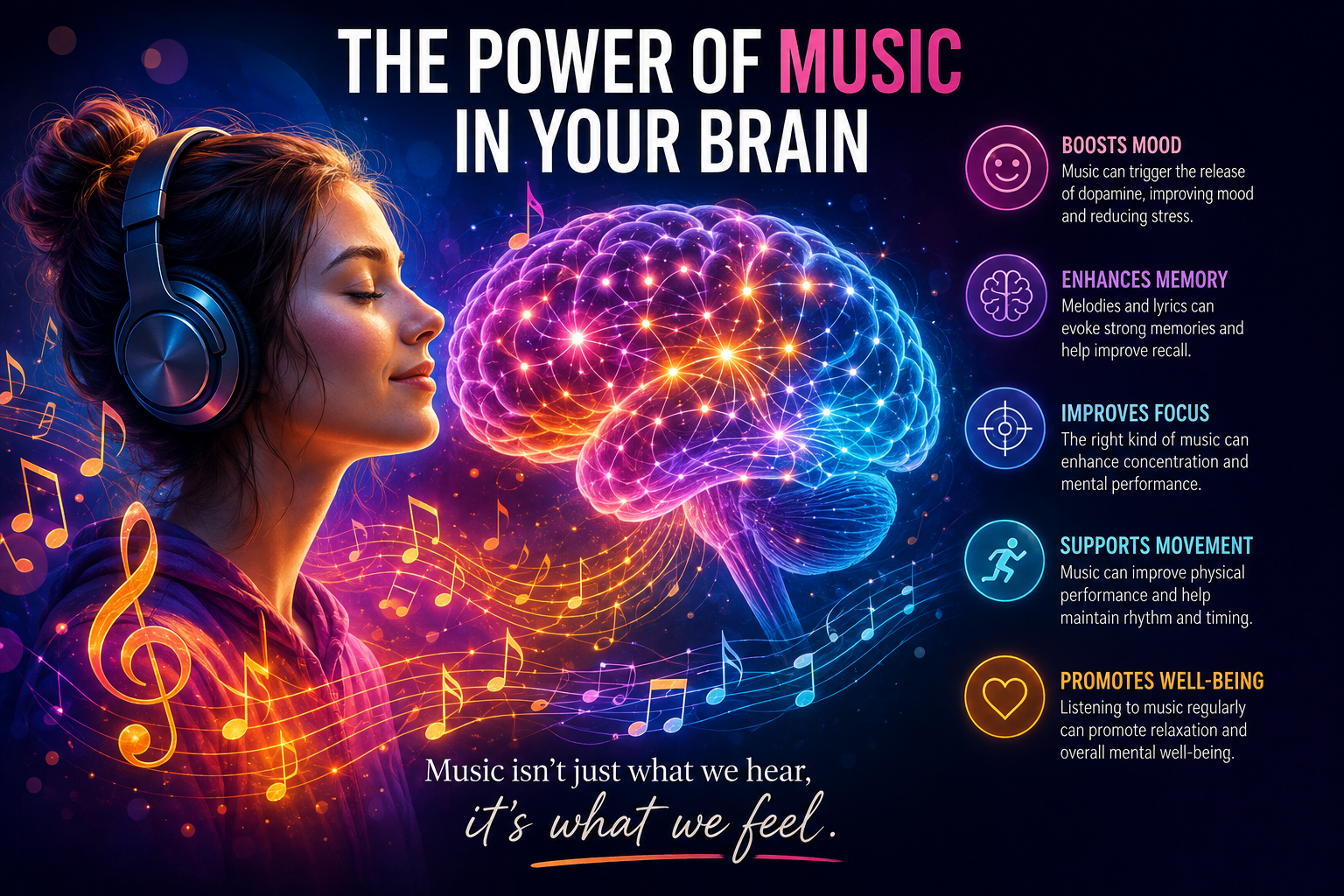
Music is much more than entertainment. A song, melody, rhythm, or even a familiar voice can trigger powerful reactions in the brain. Music can make us feel happy, calm, energetic, nostalgic, or emotional within seconds.
Scientists and researchers have studied the relationship between music and the brain for decades. Research suggests that music can influence several brain systems involved in emotion, memory, attention, movement, and reward.
How Does Music Affect the Brain?
When we listen to music, the brain does not process it in just one location. Different areas work together to interpret rhythm, melody, pitch, language, emotion, and memories associated with the music.
Music can engage brain networks involved in:
- Emotion and mood
- Memory and learning
- Attention and concentration
- Movement and coordination
- Reward and motivation
- Language processing
- Social interaction
1. Music Can Influence Our Mood
One of the most noticeable effects of music is its influence on emotions.
Upbeat and energetic music may make people feel more positive or motivated, while slower and softer music can promote relaxation. However, the effect is highly individual. A song that makes one person happy may make another person emotional because of personal memories associated with it.
Pleasant music can engage the brain’s reward system and may be associated with the release of neurotransmitters such as dopamine, which plays an important role in motivation, pleasure, and reward.
2. Music and Memory
Have you ever heard an old song and suddenly remembered a person, place, or event from many years ago?
Music has a remarkable connection with memory. Familiar songs can activate brain networks associated with autobiographical memories. This may explain why music from childhood or teenage years can bring back surprisingly detailed memories.
The connection between music and memory is also being studied in conditions involving memory impairment. Familiar music may sometimes help people access memories and emotions that are otherwise difficult to recall.
3. Music May Help With Concentration
Music can affect attention and mental performance, but the result depends on the person, the task, and the type of music.
For some people, quiet instrumental music can make repetitive work more enjoyable and help them maintain focus. For others, music—especially music with lyrics—can become a distraction.
Complex tasks that require reading, writing, or remembering information may be more difficult when music competes for attention.
4. Music and Stress
Music is frequently used as a way to relax. Slow, familiar, and personally enjoyable music may help create a calmer mental state.
Listening to music can also provide a temporary break from stressful thoughts and environmental distractions. Some research suggests that music-based interventions can influence physiological measures associated with stress, although effects vary between individuals.
This is why many people naturally listen to calming music after a stressful day.
5. Music and Exercise
Music and physical activity have a strong connection. A fast rhythm can encourage movement and provide a sense of energy during exercise.
Music may also make exercise feel more enjoyable and can influence how people perceive physical effort. The rhythm of music can synchronize with repetitive movements such as running, cycling, or walking.
This does not mean music magically increases physical ability, but it can influence motivation, enjoyment, and perception of effort.
6. Music Can Trigger Nostalgia
Music is one of the strongest triggers of nostalgia.
A particular song may remind you of:
- School or college
- Childhood memories
- Friends
- A relationship
- A holiday
- A festival
- A particular period of your life
This happens because music can become strongly associated with experiences and emotions. When the song is heard again, those associations may be reactivated.
That is why an old song can sometimes feel like a “time machine.”
7. Why Can Sad Music Feel Good?
Interestingly, people sometimes enjoy listening to sad music even when they are not feeling sad.
Sad music can provide an emotional experience without the listener actually experiencing the event described in the song. It may encourage reflection, nostalgia, emotional release, or a feeling of being understood.
The experience is highly personal. Some people find sad music comforting, while others prefer cheerful music when they are upset.
8. Music and the Brain’s Reward System
Music can activate the brain’s reward-related networks. When people hear music they particularly enjoy, the brain can respond to musical anticipation and pleasurable moments.
Dopamine is one of the important neurotransmitters involved in this reward process. This may help explain why people repeatedly listen to their favorite songs.
The anticipation of a familiar chorus, beat, or musical transition can itself become rewarding.
9. Music and Language
Music and language are different forms of communication, but they share some brain processes.
Songs combine words, rhythm, melody, pronunciation, and emotion. Because of this, musical activities can engage brain networks involved in auditory processing and language.
This is one reason music is sometimes incorporated into educational and rehabilitation approaches.
10. Can Music Make You Smarter?
This is where we should be careful.
You may have heard claims that listening to classical music makes people permanently smarter. Scientific evidence does not support the simple idea that listening to a particular type of music automatically increases intelligence.
Music can influence mood, attention, arousal, and motivation, which may indirectly affect performance. Learning to play an instrument is also a much more complex activity because it involves sustained practice, auditory processing, motor coordination, reading, memory, and attention.
So rather than saying “music makes you smarter,” it is more accurate to say that musical activities can engage multiple cognitive skills, while their effects on broader intelligence are more complicated.
11. Music and the Developing Brain
Musical training during childhood involves many skills simultaneously.
- Listening carefully
- Remembering sequences
- Coordinating hands and fingers
- Reading musical notation
- Maintaining rhythm
- Practicing repeatedly
- Paying attention to feedback
These activities can provide rich cognitive and motor experiences. However, this does not mean every child who learns an instrument will automatically have superior intelligence. Many factors contribute to cognitive development.
12. Music and Mental Well-Being
Music can be an important part of everyday emotional well-being.
People often use music to:
- Relax before sleeping
- Improve their mood
- Exercise
- Travel
- Celebrate special occasions
- Deal with boredom
- Remember important moments
- Connect socially with others
13. Is All Music Good for the Brain?
Not necessarily. The effects of music depend on several factors, including volume, personal preference, musical complexity, context, and the activity being performed.
Listening to music at extremely high volumes for long periods can damage hearing. Loud headphones and earbuds are particularly important to use responsibly.
Music can also become distracting when someone needs deep concentration.
How to Use Music More Effectively
For Relaxation
Try slower, softer music that you personally find calming.
For Exercise
Energetic music with a strong rhythm may help increase motivation and make exercise more enjoyable.
For Studying
Try instrumental or familiar low-distraction music and see whether it improves or reduces your concentration.
For Creative Activities
Experiment with different genres and tempos to find what helps you enter a productive state.
For Improving Your Mood
Choose music that you genuinely enjoy rather than assuming a particular genre is universally beneficial.
The Most Important Factor: Your Personal Connection to Music
There is no single genre that is best for everyone’s brain.
Classical music, rock, electronic music, Indian classical music, film songs, jazz, folk music, or even simple ambient sounds can affect different people differently.
Your memories, personality, culture, current mood, and personal experiences all influence how you respond to music.
A song that means nothing to one person may carry enormous emotional significance for another.
Conclusion
Music is a powerful form of sensory and emotional stimulation. It can influence mood, activate reward-related brain systems, trigger memories, support motivation, and affect attention and relaxation.
However, music is not a magic treatment or a shortcut to intelligence. Its effects depend heavily on the individual and the context in which it is experienced.
Perhaps the most fascinating thing about music is that something as simple as a melody can connect sound, emotion, movement, memory, and personal experience inside the brain.
The next time a song suddenly changes your mood or brings back an old memory, remember: your brain isn’t simply hearing the music—it is experiencing it.