Best Antioxidants: Benefits, Natural Sources & Supplements
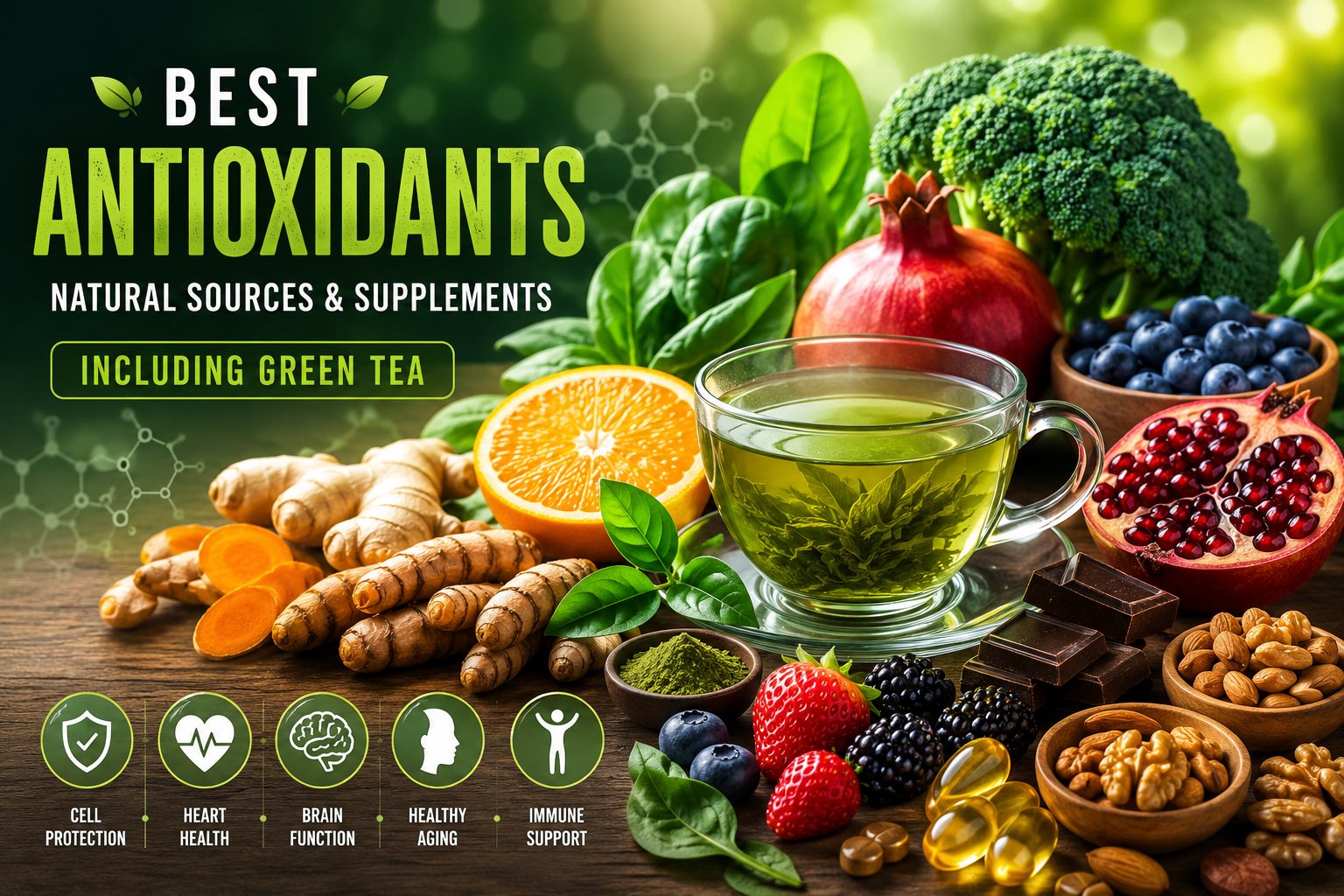
Antioxidants help protect your body’s cells from damage caused by free radicals—unstable molecules produced during normal metabolism, pollution, smoking, UV rays, stress, poor diet, and inflammation. While your body naturally produces some antioxidants, consuming antioxidant-rich foods provides additional protection and supports overall health.
What Do Antioxidants Do?
Antioxidants neutralize free radicals before they can damage healthy cells. Long-term oxidative stress has been linked to aging and several chronic diseases.
- Protect cells from oxidative damage
- Support heart health
- Help maintain healthy brain function
- Support healthy skin and collagen production
- Protect eye health
- Support immune function
- Reduce oxidative stress caused by pollution and UV exposure
- Support healthy aging
- Help recovery after normal exercise
Top Natural Antioxidant Foods
| Food | Main Antioxidants | Major Benefits |
|---|---|---|
| 🫐 Blueberries | Anthocyanins | Brain, heart & healthy aging |
| 🍓 Strawberries | Vitamin C, Polyphenols | Skin & immune support |
| 🍇 Grapes | Resveratrol | Heart health |
| 🍒 Cherries | Anthocyanins | Recovery & inflammation support |
| 🍅 Tomatoes | Lycopene | Heart & prostate health |
| 🥬 Spinach | Lutein, Vitamin C | Eye health |
| 🥦 Broccoli | Sulforaphane | Cell protection |
| 🥕 Carrots | Beta-Carotene | Vision support |
| 🥜 Walnuts | Vitamin E, Polyphenols | Brain & heart health |
| 🍫 Dark Chocolate (70–90%) | Flavanols | Heart & circulation |
| 🫒 Extra Virgin Olive Oil | Polyphenols | Anti-inflammatory support |
| 🌿 Turmeric | Curcumin | Inflammation support |
| 🫚 Ginger | Gingerols | Digestive & antioxidant support |
| 🧄 Garlic | Organosulfur Compounds | Cardiovascular support |
Green Tea – One of Nature’s Most Powerful Antioxidants

Green tea is one of the richest natural sources of antioxidants, especially
EGCG (Epigallocatechin Gallate), a powerful polyphenol studied for its health benefits.
Benefits of Green Tea
- Powerful antioxidant activity
- Supports cardiovascular health
- May improve insulin sensitivity
- Supports healthy brain aging
- Helps protect cells from oxidative stress
- May slightly increase fat oxidation when combined with diet and exercise
- Contains calming amino acid L-Theanine
Best Antioxidant Supplements
| Supplement | Main Benefit | Typical Daily Intake* |
|---|---|---|
| Vitamin C | Immune support & collagen production | 75–90 mg |
| Vitamin E | Protects cell membranes | 15 mg |
| Selenium | Supports antioxidant enzymes | 55 mcg |
| Zinc | Immune & antioxidant support | 8–11 mg |
| Coenzyme Q10 (CoQ10) | Heart & cellular energy | 100–200 mg |
| Alpha-Lipoic Acid | Recycles antioxidants | 300–600 mg |
| Astaxanthin | Skin, eyes & exercise recovery | 4–12 mg |
| Curcumin | Inflammation support | 500–1000 mg |
| Lycopene | Heart & prostate support | 10–20 mg |
| Lutein + Zeaxanthin | Eye health | 10 mg + 2 mg |
*Typical ranges used in research or commonly found in supplements. Individual needs vary.
Best Antioxidant Drinks
- 🍵 Green Tea
- 🍵 Matcha Tea
- ☕ Coffee
- 🫐 Blueberry Smoothie
- 🍒 Tart Cherry Juice
- 🍇 Pomegranate Juice
- 🌺 Hibiscus Tea
Sample Antioxidant-Rich Daily Diet
- Breakfast: Oats, blueberries, walnuts & green tea
- Lunch: Spinach salad with tomatoes, olive oil & grilled chicken
- Snack: Orange, guava and almonds
- Dinner: Salmon (or lentils), broccoli and sweet potato
- Dessert: 2–3 squares of 85% dark chocolate
Final Thoughts
A colorful diet rich in fruits, vegetables, herbs, spices, nuts, seeds, whole grains, and beverages like green tea naturally provides a wide variety of antioxidants that work together to support your health. While supplements can be useful in certain situations, they should complement—not replace—a balanced diet and healthy lifestyle.