Electric Cars (EVs) in India: Price, Features, Running Cost & Complete Buying Guide
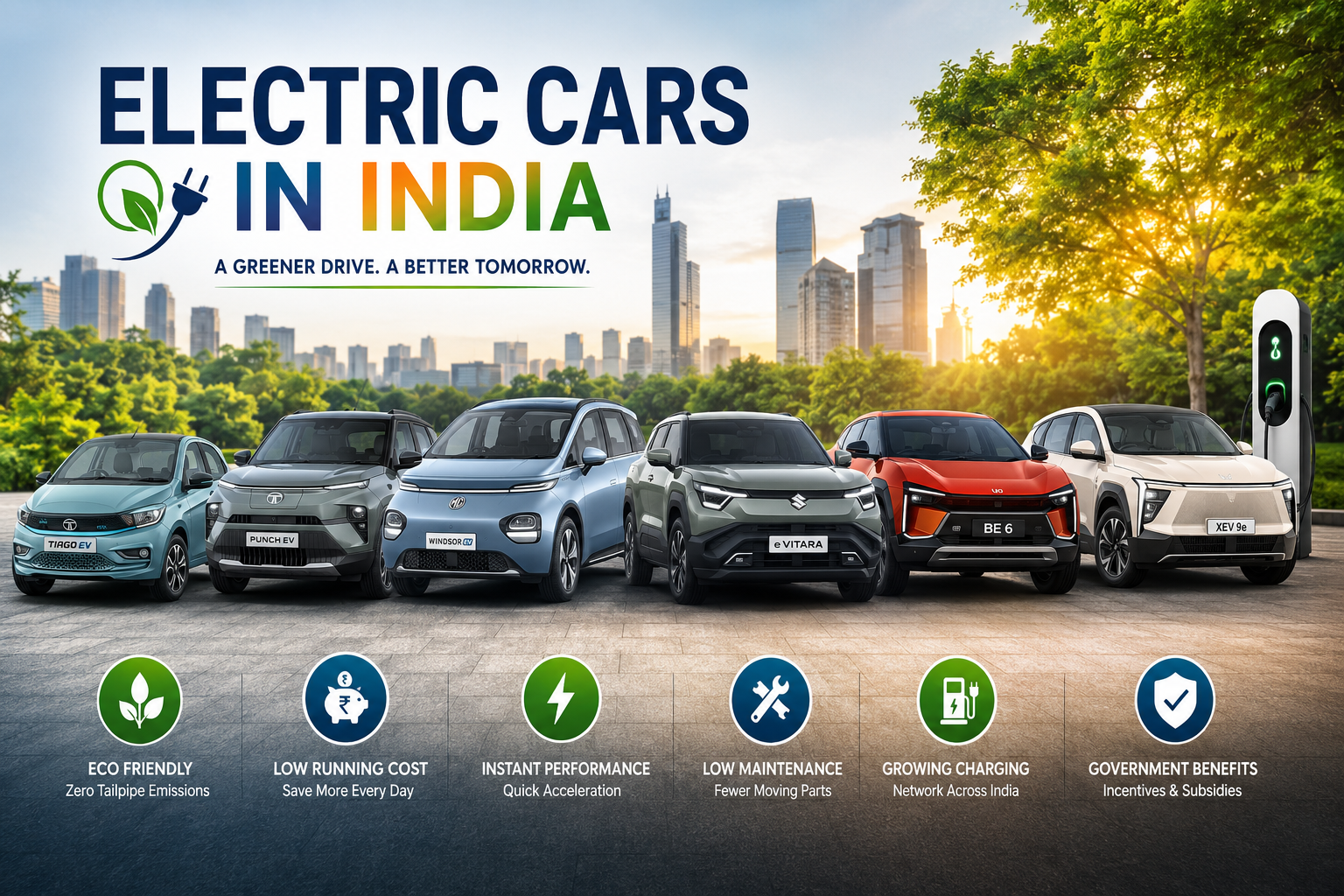
Electric Vehicles (EVs) are rapidly transforming the Indian automobile market. With increasing fuel prices, government incentives, lower maintenance costs, and expanding charging infrastructure, more Indian buyers are considering electric cars than ever before. Whether you’re looking for an affordable city commuter or a premium long-range SUV, there is now an EV for almost every budget.
Why Buy an Electric Car?
- Lower running cost compared to petrol and diesel cars.
- Zero tailpipe emissions, making them environmentally friendly.
- Minimal maintenance due to fewer moving parts.
- Silent and smooth driving experience.
- Instant torque provides quick acceleration.
- Government incentives in several states.
- Growing public fast charging network across India.
Popular Electric Cars in India (2026)
| Model | Starting Price* | Claimed Range | Body Type | Best For |
|---|---|---|---|---|
| Tata Tiago EV | ₹6.99 Lakh | 223–293 km | Hatchback | City Driving |
| Tata Punch EV | ₹9.69 Lakh | 315–468 km | Compact SUV | Daily Commute |
| MG Windsor EV | ₹14.10 Lakh | 332–449 km | MPV | Family Usage |
| Maruti Suzuki e Vitara | ₹15.99 Lakh | 440–543 km | SUV | Family & Highway |
| Mahindra BE 6 | ₹18.90 Lakh | 556–683 km | SUV Coupe | Long Distance |
| Mahindra XEV 9e | ₹21.90 Lakh | 542–656 km | Premium SUV | Luxury Buyers |
*Prices are approximate ex-showroom prices and may vary depending on variant, city, and state.
Charging Options
| Charging Type | Time Required | Ideal For |
|---|---|---|
| 15A Home Socket | 8–15 Hours | Overnight Charging |
| AC Wall Box | 5–8 Hours | Daily Home Charging |
| DC Fast Charger | 20–60 Minutes (10-80%) | Highway Travel |
Estimated Running Cost
- Electric Car: Approximately ₹1–2 per km
- Petrol Car: Approximately ₹7–10 per km
- Diesel Car: Approximately ₹5–7 per km
If you drive 1,500 km every month, an electric vehicle can save thousands of rupees annually in fuel expenses.
Advantages of EVs
- Very low running cost.
- Minimal servicing requirements.
- No engine oil changes.
- Smooth and quiet ride.
- Eco-friendly transportation.
- Government subsidies in some states.
- Regenerative braking improves efficiency.
Disadvantages of EVs
- Higher initial purchase price.
- Charging infrastructure is still developing in smaller towns.
- Long charging time compared to refueling petrol or diesel.
- Battery replacement can be expensive after many years.
- Long-distance travel requires charging planning.
Battery Warranty
Most manufacturers provide battery warranties ranging from 8 years or around 160,000 km, depending on the brand and model.
Maintenance Cost Comparison
| Component | Petrol Car | Electric Car |
|---|---|---|
| Engine Oil | Required | Not Required |
| Gearbox | Complex | Simple |
| Spark Plugs | Yes | No |
| Clutch | Usually Yes | No |
| Brake Wear | Higher | Lower (Regenerative Braking) |
Who Should Buy an EV?
- Daily commuters driving less than 100 km per day.
- People with home parking and charging access.
- Families wanting lower fuel expenses.
- Environment-conscious buyers.
- City drivers looking for a quiet and comfortable ride.
Who Should Wait?
- Drivers frequently traveling 500+ km in a day.
- People without access to home charging.
- Residents in remote areas with limited charging infrastructure.
Frequently Asked Questions (FAQs)
How long does an EV battery last?
Typically 8–15 years depending on driving habits, charging practices, and climate.
Can I charge an EV at home?
Yes. Most EV owners charge overnight using a home wall charger or a compatible household connection.
Is it cheaper to maintain an EV?
Yes. Electric cars generally require fewer routine maintenance tasks because they have fewer mechanical components than petrol or diesel vehicles.
Can I take an EV on long trips?
Yes, provided you plan charging stops in advance using available charging networks.
Final Thoughts
The Indian electric vehicle market has matured significantly, offering options from affordable hatchbacks to premium SUVs. Buyers should compare not only the purchase price but also the driving range, charging speed, service network, warranty, and long-term ownership costs. If your daily driving is mostly within the city and you have convenient charging access, an EV can offer substantial savings and a refined driving experience.
Disclaimer: Prices, specifications, claimed driving ranges, charging times, and features may change over time and can vary by variant and location. Always verify the latest information with the manufacturer’s official website or an authorized dealership before making a purchase decision.