The Hidden Dangers of Self-Medicating with Painkillers and Antibiotics
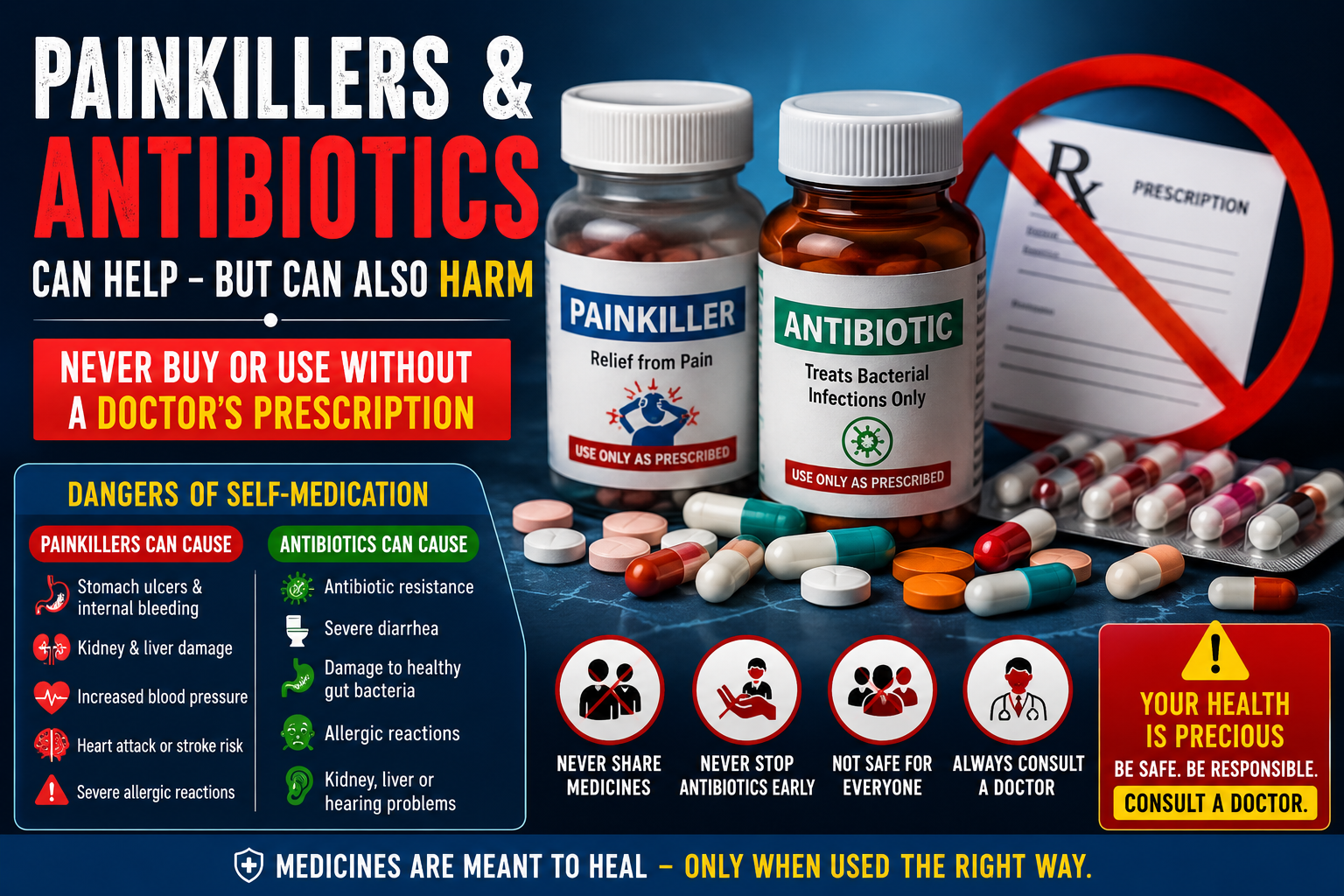
Modern medicines have saved millions of lives. However, using medicines without proper medical advice can be dangerous. Many people buy painkillers and antibiotics directly from pharmacies or use leftover medicines from previous illnesses. This habit can lead to serious health problems, delayed diagnosis, and even life-threatening complications.

⚠️ Never Buy or Use Medicines Without a Doctor’s Prescription
Medicines should only be taken when prescribed by a qualified healthcare professional. Every medicine has specific uses, correct dosages, possible side effects, and interactions with other medicines. Taking the wrong medicine can make your condition worse instead of better.
Common Risks of Self-Medication
- Delayed diagnosis of serious diseases.
- Masking symptoms that require immediate medical attention.
- Severe allergic reactions.
- Damage to the liver or kidneys.
- Drug interactions with medicines you already take.
- Incorrect dosage leading to poisoning or treatment failure.
- Development of antibiotic-resistant bacteria.
Danger of Painkillers

Painkillers such as ibuprofen, diclofenac, naproxen, aspirin, and similar medicines can temporarily reduce pain but may also hide serious medical conditions.
Possible Side Effects
- Stomach ulcers and internal bleeding.
- Kidney damage after repeated use.
- Liver damage from excessive doses.
- Increased blood pressure.
- Higher risk of heart attack or stroke with long-term use of some NSAIDs.
- Serious allergic reactions.
Danger of Antibiotics

Antibiotics only work against bacterial infections. They do not treat viral illnesses such as the common cold, flu, or most sore throats.
Why Misusing Antibiotics Is Dangerous
- Creates antibiotic-resistant bacteria.
- Makes future infections harder to treat.
- May cause severe diarrhea.
- Can damage healthy bacteria in your gut.
- May trigger allergic reactions.
- Some antibiotics can affect the kidneys, liver, hearing, or heart.
Never Share Medicines
A medicine prescribed for one person may not be safe for another. Age, weight, allergies, pregnancy, kidney function, liver health, and existing medical conditions all influence which medicines are appropriate.
Never Stop Antibiotics Early
If a doctor prescribes antibiotics, always complete the full course unless instructed otherwise. Stopping treatment early may allow bacteria to survive and become resistant.
Special Care for Children and Elderly
Children and older adults are more sensitive to medicines. Even a normal adult dose may be harmful to them. Always consult a healthcare professional before giving any medicine.
When Should You See a Doctor?
- High fever lasting more than two days.
- Severe or persistent pain.
- Difficulty breathing.
- Chest pain.
- Persistent vomiting or diarrhea.
- Blood in stool or vomit.
- Sudden swelling or severe allergic reactions.
- Symptoms that continue or worsen after taking medicine.
⚠️ Important Health Warning
Never purchase, start, stop, or combine painkillers, antibiotics, steroids, or any prescription medicine without consulting a qualified doctor.
Using medicines without proper medical advice can lead to serious complications, permanent organ damage, treatment failure, antibiotic resistance, severe allergic reactions, hospitalization, or even death.
Always seek professional medical evaluation instead of relying on internet articles, social media, friends, or previous prescriptions. Only a licensed healthcare professional can determine the correct medicine, dosage, and duration based on your individual medical condition.
Conclusion
Medicines are powerful tools when used correctly, but they can become dangerous when taken without medical supervision. Painkillers and antibiotics should never be used simply because they worked for someone else or were effective in the past. If you feel unwell, consult a qualified healthcare professional instead of self-medicating.
Medical Disclaimer: This article is for educational purposes only and should not be considered medical advice. It does not replace consultation, diagnosis, or treatment by a qualified healthcare professional. If you have any illness or medical emergency, seek immediate medical care. Never delay or avoid visiting a doctor based on information found online.