Traditional Kitchen Practices That Can Improve Nutrition
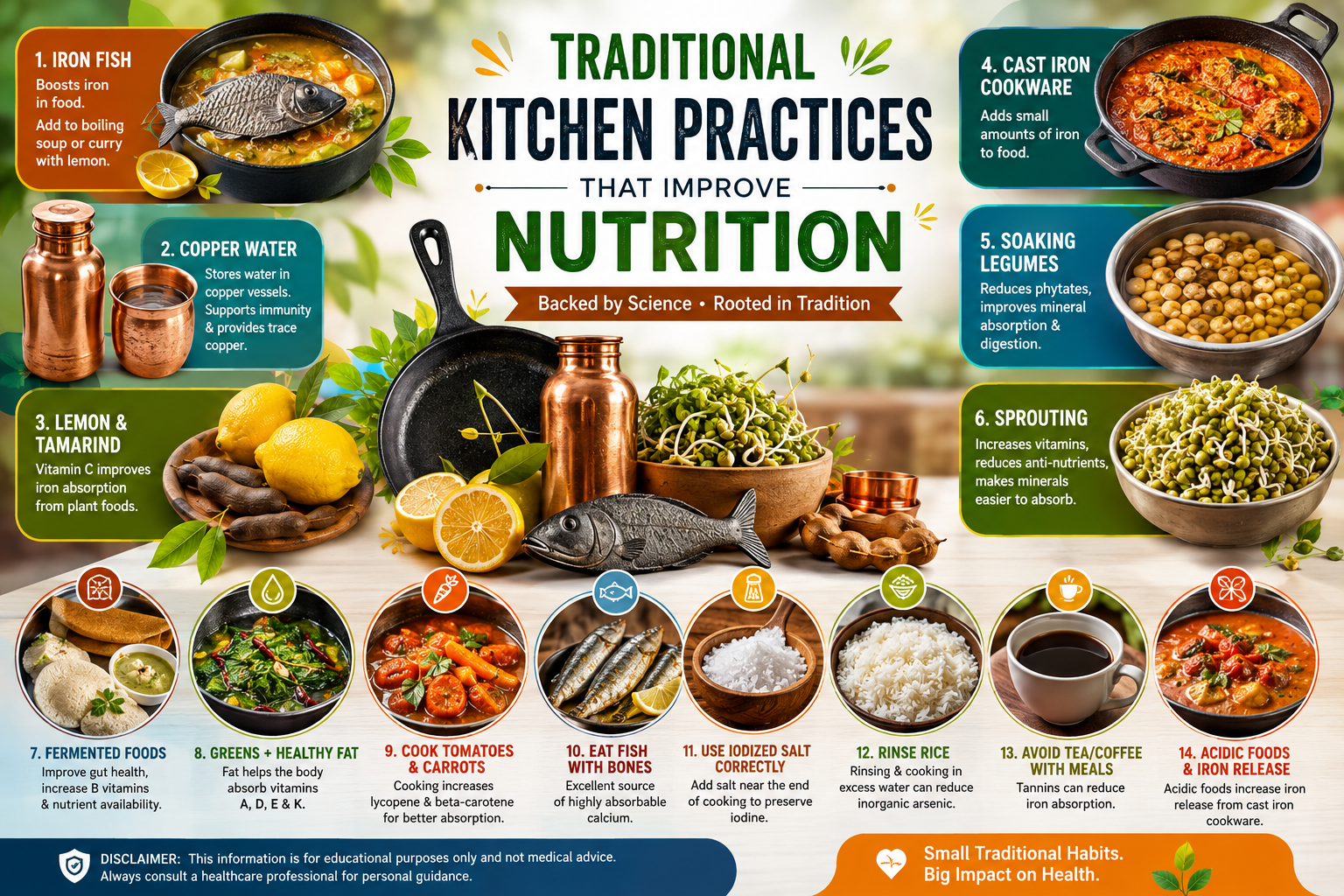
For centuries, people have unknowingly used cooking methods that improve nutrition, reduce harmful compounds, or make minerals more available. While these practices should never replace a balanced diet or medical treatment, many are supported by scientific research.
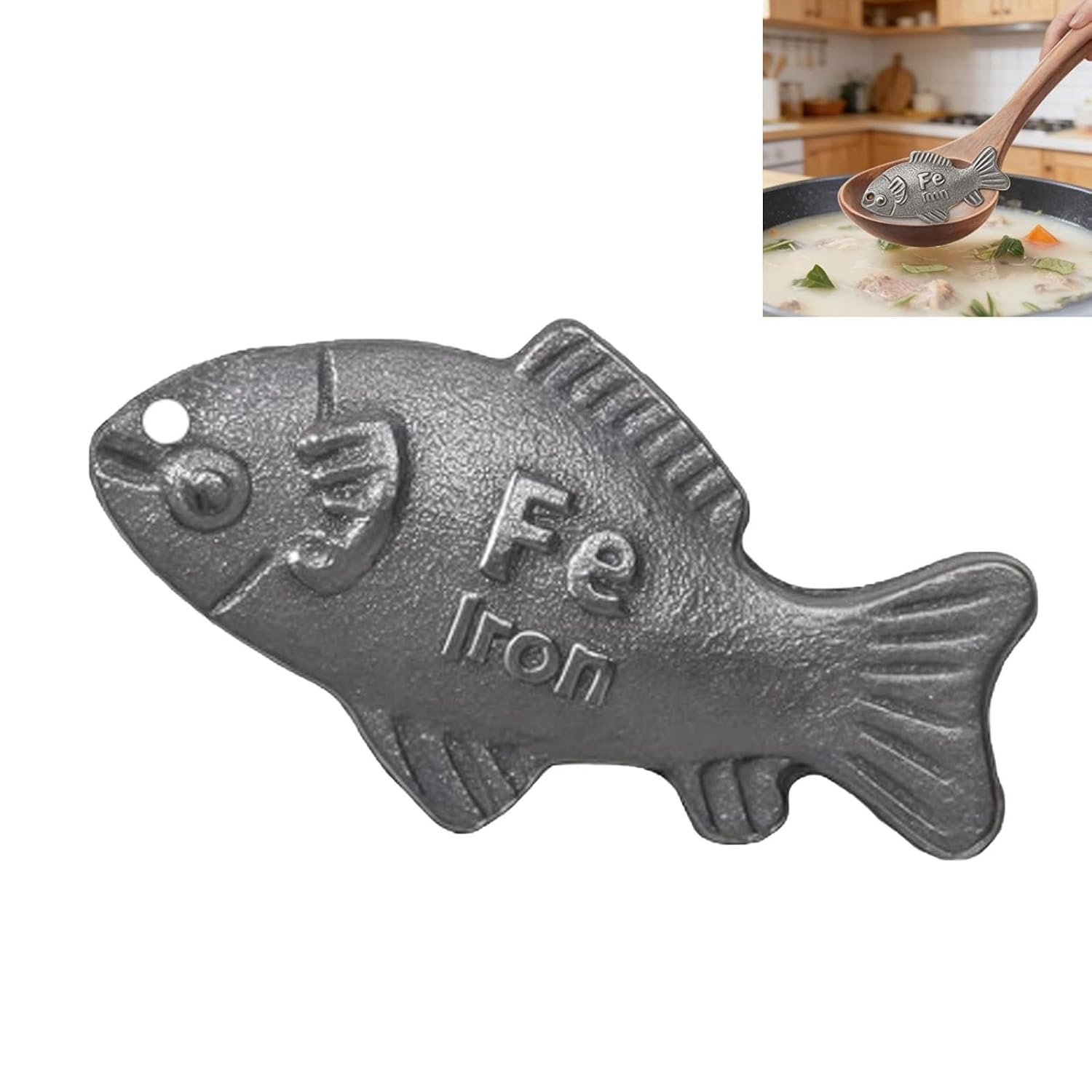
🐟 1. Cooking with an Iron Fish , Lucky Iron Fish
The Lucky Iron Fish is a specially designed iron ingot developed to help people in Cambodia reduce iron deficiency. When added to boiling water, soups, or curries along with a small amount of acid such as lemon juice, tiny amounts of iron dissolve into the food.
How it works
- Add the iron fish to boiling soup or water.
- Boil for about 10 minutes.
- Add a few drops of lemon juice or another acidic ingredient.
- Remove the fish before serving.
Evidence: Several studies found improvements in iron status when used consistently in populations with iron deficiency, although results have varied depending on how regularly people used it.
Important: It should not be used by people with iron overload conditions such as hemochromatosis.
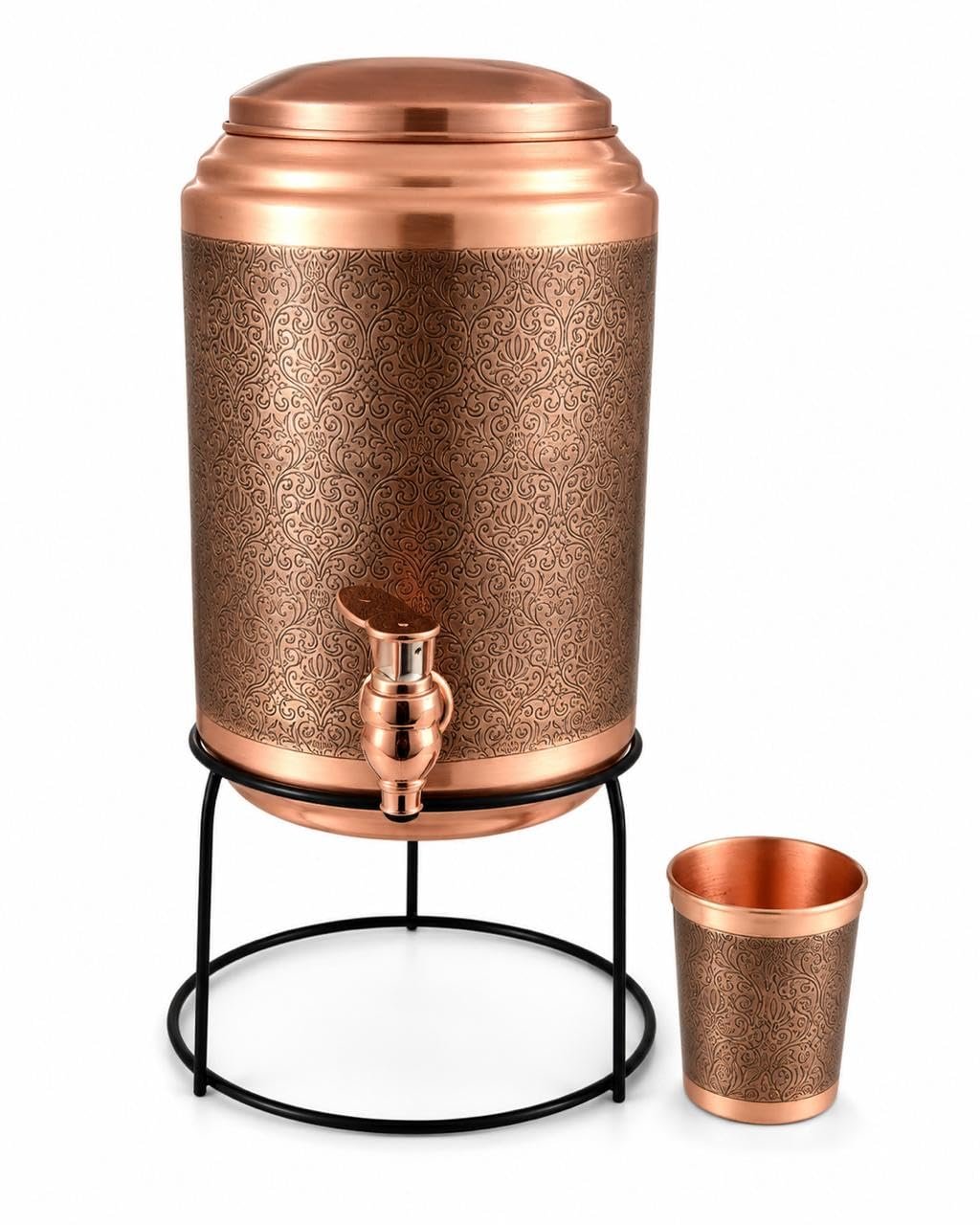
🥤 2. Drinking Water Stored in Copper Vessels
Keeping drinking water in a clean copper vessel for several hours allows a very small amount of copper to dissolve into the water.
Benefits
- Copper is an essential mineral.
- Supports formation of red blood cells.
- Helps maintain nerves and connective tissue.
- Copper surfaces naturally kill many bacteria.
Evidence: Scientific studies show copper surfaces have antimicrobial properties. Water stored in copper vessels can contain small amounts of copper, but it should not be relied upon as the primary source of dietary copper.
Do not overuse: Excess copper intake can be harmful.
🍋 3. Adding Lemon or Tamarind to Improve Iron Absorption
Vitamin C dramatically increases the absorption of non-heme iron found in vegetables, lentils, beans, and grains.
Examples
- Squeeze lemon over spinach.
- Add tamarind to lentil curry.
- Eat guava or oranges with meals.
Evidence: This is one of the most well-established nutritional recommendations.
🍲 4. Cooking in Cast Iron Cookware
Food cooked in cast iron pans can absorb measurable amounts of iron.
Acidic foods like tomato curry usually absorb more iron than dry foods.
Evidence: Multiple studies confirm increased iron content in foods cooked in cast iron cookware.
🌾 5. Soaking Beans and Lentils Before Cooking
Soaking reduces compounds called phytates that interfere with the absorption of iron, zinc, calcium, and magnesium.
Benefits
- Improves mineral absorption.
- Reduces cooking time.
- May reduce gas-producing compounds.
🌱 6. Sprouting Grains and Pulses
Sprouting naturally activates enzymes that reduce phytates and increase vitamin C and some B vitamins.
This makes minerals easier for the body to absorb.
🥣 7. Fermented Foods Improve Nutrient Availability
Traditional fermentation helps beneficial bacteria break down anti-nutrients and improve digestibility.
Examples include:
- Idli
- Dosa batter
- Curd
- Kanji
- Kimchi
🥬 8. Pair Leafy Greens with Healthy Fat
Vitamins A, D, E and K are fat-soluble.
Cooking vegetables with a small amount of oil improves absorption.
🥕 9. Cook Tomatoes and Carrots
Cooking increases the availability of:
- Lycopene from tomatoes.
- Beta-carotene from carrots.
A little oil further improves absorption.
🐟 10. Eat Fish with Bones for Calcium
Small fish eaten with soft bones provide highly absorbable calcium.
Examples include sardines and anchovies.
🧂 11. Use Iodized Salt Correctly
Iodine can slowly be lost during long cooking.
Adding iodized salt near the end of cooking helps preserve more iodine.
🍚 12. Rinse Rice to Reduce Surface Arsenic (Where Relevant)
Thorough washing and cooking rice in excess water can reduce inorganic arsenic, especially in areas where rice naturally contains higher levels.
🥣 13. Don’t Drink Tea or Coffee Immediately with Iron-Rich Meals
Tannins in tea and coffee reduce iron absorption.
Waiting about one hour after meals is recommended if iron deficiency is a concern.
🪵 14. Acidic Foods Can Increase Mineral Release from Iron Cookware
Tomato, tamarind, kokum, vinegar and lemon increase the amount of iron released from cast iron cookware.
This does not remove fluoride from water or food. The common belief that sour foods remove fluoride lacks strong scientific evidence.
❌ Common Myths
- ❌ Sour foods remove fluoride from drinking water – No good scientific evidence.
- ❌ Copper water cures all diseases – False.
- ❌ Iron cookware alone can cure anemia – False. Diet and medical treatment may still be needed.
- ❌ Himalayan salt provides enough minerals to replace a healthy diet – False.
Conclusion
Traditional cooking methods often have real nutritional benefits. Using cast iron cookware, combining vitamin C with plant-based iron, soaking and sprouting legumes, fermenting foods, and storing water safely in copper vessels are examples with scientific support. However, they should complement—not replace—a balanced diet and medical advice when nutritional deficiencies are suspected.