Two Festivals You Should Never Miss in Kerala – Onam & Thrissur Pooram
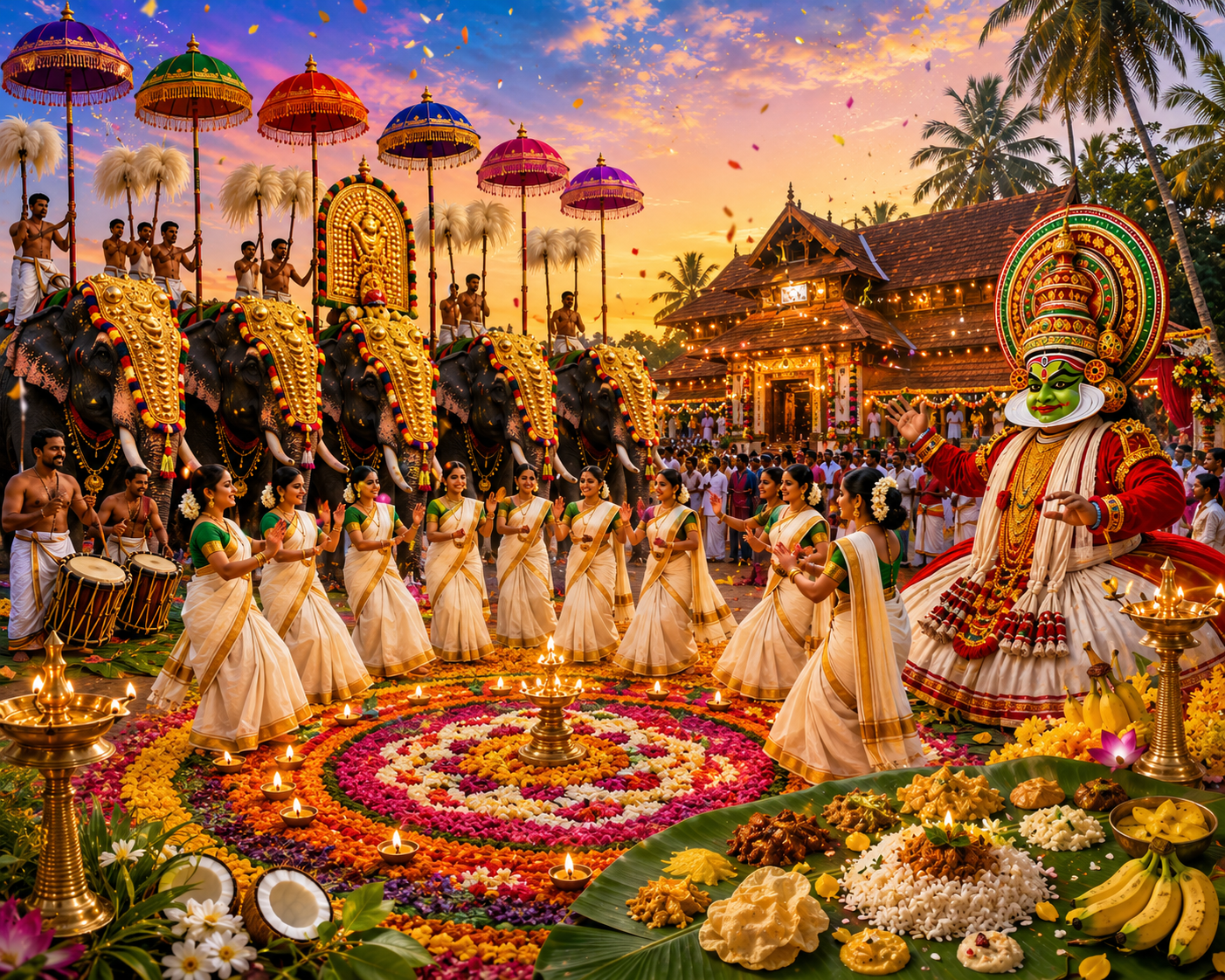
I’ve lived away from Kerala for years, but every time I plan a visit home (or drag friends along), I check two dates first: Onam and Thrissur Pooram. Miss them and you miss the soul of the place. These aren’t just “events.” They’re living, breathing expressions of Kerala’s culture — one full of quiet joy and abundance, the other pure spectacle and thunder.
Here’s why these two stay at the top of my list, and what you should actually experience if you’re timing your trip around them.
Onam: The Festival of Homecoming and Abundance
Onam is Kerala’s biggest festival — a 10-day harvest celebration that falls in the Malayalam month of Chingam (usually late August to early September). It marks the legendary annual return of the just and generous King Mahabali. Legend says the gods grew jealous of his perfect rule and sent Vishnu (as Vamana) to send him to the underworld — but granted him permission to visit his people once a year. Onam is that homecoming. What makes it special for visitors is how inclusive and joyful it feels. You’ll see flower carpets (pookalam) blooming outside almost every house, growing more elaborate each day. People wear new clothes (Onakkodi), especially the elegant white-and-gold kasavu sarees and mundus. Cultural programs, traditional games, and tiger dances (Pulikali) fill the streets. The absolute highlight is the Onasadya — the grand vegetarian feast served on a banana leaf. Expect 20–26 dishes: rice, sambar, avial, olan, thoran, pachadi, pickles, chips, and multiple kinds of payasam. It’s not just food; it’s an experience of abundance and hospitality. Sit down for one (many hotels and restaurants offer authentic versions) and you’ll understand why Keralites say “Onam is for everyone.” Don’t miss the snake boat races (Vallamkali), especially the more traditional ones like Aranmula. The sight of long, snake-like boats with dozens of rowers moving in perfect rhythm, accompanied by vanchipattu songs, is pure adrenaline mixed with tradition. Practical tip: Onam is celebrated statewide, so you can experience it almost anywhere. Kochi, Alappuzha (for boat races), and rural villages offer different flavours. Book early if you want a good Onasadya experience or a houseboat during the festival period. The monsoon is usually easing by then, and the landscape is lush.Thrissur Pooram: The Mother of All Poorams
If Onam is warmth and hospitality, Thrissur Pooram is drama, power, and sensory overload — in the best possible way. Held at the Vadakkunnathan Temple in Thrissur during the Malayalam month of Medam (April–May), this is widely called the “mother of all poorams.” It was shaped in the late 18th century by Sakthan Thampuran, the Maharaja of Cochin, and remains one of Asia’s largest temple festivals. The core is a friendly but intense rivalry between two major temple groups (mainly Paramekkavu and Thiruvambadi) along with several participating temples. Deities are carried on magnificently caparisoned elephants. The visual is unforgettable: rows of elephants decorated with gold ornaments (nettipattam), standing tall against the temple backdrop. Key moments you shouldn’t miss:- Ilanjithara Melam — a massive percussion performance under the Ilanji tree inside the temple grounds. Hundreds of artists on chenda, elathalam, and other instruments create a rhythmic storm that builds for hours.
- Kudamattam — the ceremonial exchange of colourful parasols on the elephants’ backs. It’s theatrical, competitive, and visually stunning.
- The fireworks (vedikkettu) in the early morning hours after the main day. They are legendary for their scale and intensity.