Vegan Resources from the Ocean: Nature’s Sustainable Blue Treasure
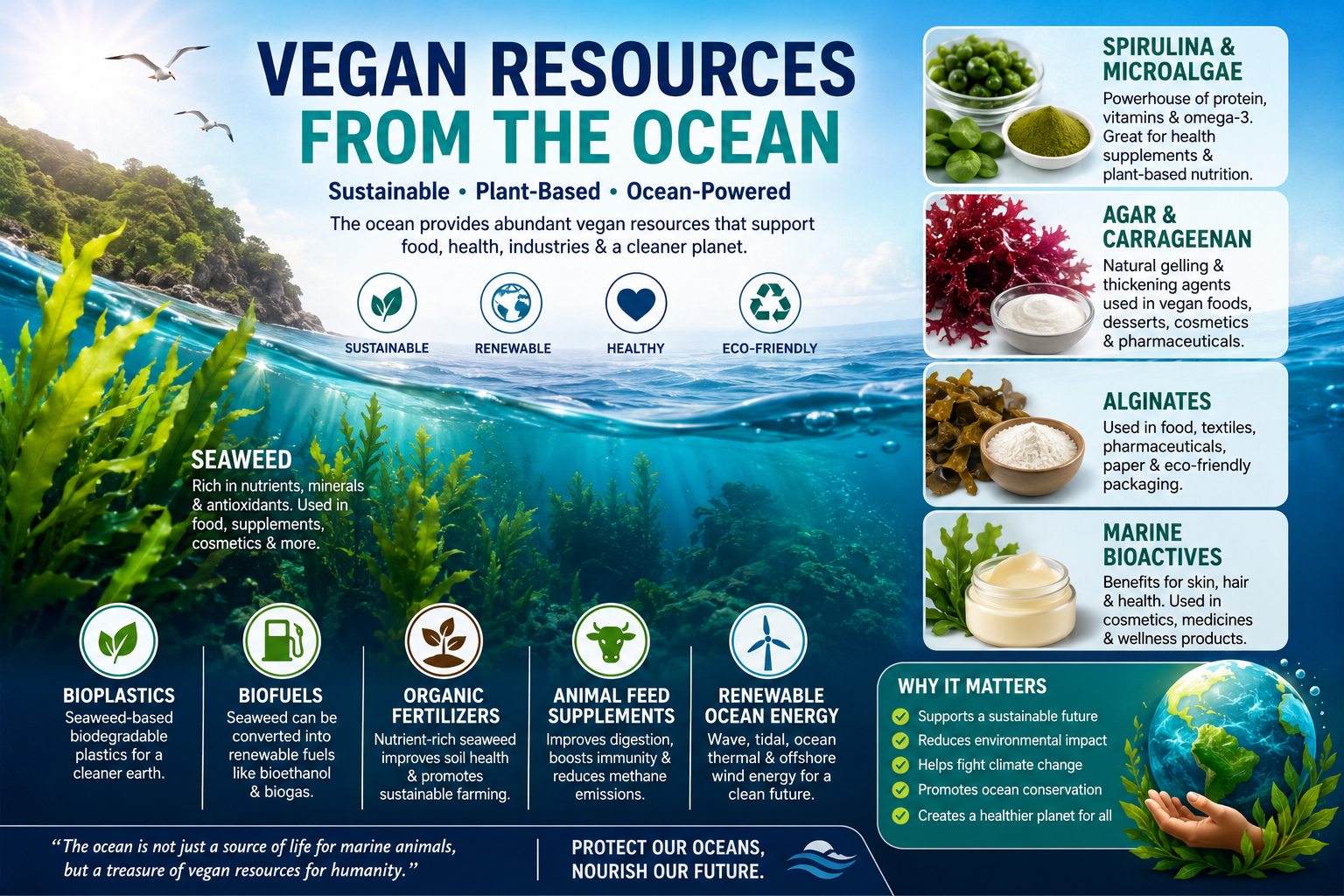
The ocean is often associated with seafood, but it is also one of Earth’s greatest sources of vegan resources. Marine plants, seaweeds, algae, and microorganisms provide nutritious food, renewable energy, eco-friendly materials, medicines, and industrial products without relying on marine animals.
As the world searches for sustainable alternatives to land-based agriculture and fossil fuels, ocean-based vegan resources are becoming increasingly important. Scientists believe we have explored only a small fraction of the ocean’s biodiversity, meaning many valuable discoveries are still waiting beneath the waves.
1. Seaweed – The Ocean’s Superfood
Seaweed is the largest and most valuable vegan resource harvested from the ocean. Unlike traditional crops, seaweed requires no farmland, fresh water, pesticides, or fertilizers.
Popular Edible Seaweeds
- Nori
- Kelp
- Wakame
- Kombu
- Dulse
- Sea Lettuce
Health Benefits
- Rich in iodine
- Excellent source of calcium
- High in iron
- Contains antioxidants
- Good source of dietary fiber
- Low in calories
- Rich in Vitamins A, C, E and K
Common Uses
- Sushi
- Soups
- Salads
- Healthy snacks
- Seasonings
- Smoothies
2. Agar – Natural Vegan Gelatin
Agar is extracted from red seaweed and is widely used as a plant-based alternative to animal gelatin.
- Jelly
- Ice Cream
- Vegan Desserts
- Bakery Products
- Laboratory Culture Media
3. Carrageenan
Carrageenan is another natural extract obtained from red seaweed. It works as a thickener and stabilizer.
Used In
- Plant-based milk
- Ice cream
- Yogurt alternatives
- Toothpaste
- Cosmetics
- Pharmaceuticals
4. Alginates
Alginates are extracted from brown seaweed and have hundreds of industrial applications.
- Food Industry
- Textile Printing
- Medical Dressings
- Paper Manufacturing
- Cosmetics
5. Spirulina and Marine Microalgae
Marine algae are among the most nutritious plant-based resources on Earth.
Rich In
- Protein
- Iron
- Vitamin B Complex
- Omega-3 Fatty Acids
- Antioxidants
Used For
- Protein Powders
- Health Supplements
- Energy Bars
- Smoothies
- Plant-based Omega-3 Capsules
6. Ocean-Based Medicines
Scientists are studying marine algae and microorganisms for compounds that may help develop new medicines.
- Antiviral Drugs
- Anti-inflammatory Medicines
- Cancer Research
- Antioxidants
- Natural Antibiotics
7. Seaweed Bioplastics
Seaweed can be converted into biodegradable plastic alternatives that naturally decompose.
- Shopping Bags
- Food Packaging
- Drinking Straws
- Disposable Cutlery
- Compostable Containers
8. Biofuels
Seaweed is being researched as a renewable source of clean energy.
- Bioethanol
- Biodiesel
- Biogas
Unlike many crops, seaweed does not compete with farmland or freshwater resources.
9. Organic Fertilizers
Seaweed has been used as a natural fertilizer for centuries.
Benefits
- Improves soil quality
- Provides trace minerals
- Enhances plant growth
- Improves water retention
10. Cosmetics
Marine plants are widely used in skincare and beauty products.
- Face Creams
- Moisturizers
- Face Masks
- Soap
- Shampoo
- Anti-aging Products
11. Renewable Ocean Energy
The ocean also provides sustainable energy resources.
- Wave Energy
- Tidal Energy
- Offshore Wind Farms
- Ocean Thermal Energy
Are We Fully Using These Resources?
No. Scientists estimate that much of the ocean remains unexplored.
Many species of seaweed, algae, and microorganisms have never been studied. Future discoveries could provide:
- New medicines
- Better biodegradable plastics
- Cleaner renewable fuels
- Healthier foods
- Improved fertilizers
- Sustainable industrial materials
Threats to Ocean Vegan Resources
Plastic Pollution
Millions of tons of plastic enter the ocean each year, harming marine ecosystems and contaminating seaweed with microplastics.
Climate Change
Rising ocean temperatures reduce seaweed growth and alter marine habitats.
Ocean Acidification
Increasing carbon dioxide changes seawater chemistry, affecting marine plants and algae.
Chemical Pollution
Industrial waste, pesticides, fertilizers, and sewage pollute coastal waters where many marine plants grow.
Oil Spills
Oil spills coat seaweed and damage coastal ecosystems, reducing photosynthesis and biodiversity.
Coastal Development
Harbors, dredging, and land reclamation destroy natural seaweed habitats.
The Future of Ocean Vegan Resources
The blue economy is expected to grow rapidly over the coming decades. Scientists believe seaweed and marine algae will play a major role in:
- Plant-based foods
- Sustainable protein
- Renewable energy
- Bioplastics
- Carbon capture
- Green chemicals
- Future medicines
Conclusion
The ocean is far more than a source of seafood. It provides an incredible range of vegan resources that can help feed the world’s growing population, reduce pollution, support renewable energy, and create sustainable industries. Protecting marine ecosystems from pollution, climate change, and habitat destruction is essential to ensure these valuable resources remain available for future generations.
Top International Institutions for Marine & Ocean Studies
- Wageningen University & Research – Netherlands
- James Cook University – Australia
- University of Tasmania – Australia
- University of Hawaii at Mānoa – USA
- Scripps Institution of Oceanography – USA
- Woods Hole Oceanographic Institution – USA
- University of Southampton – United Kingdom
- University of Plymouth – United Kingdom
- Norwegian University of Science and Technology (NTNU) – Norway
- University of Bergen – Norway
- Hokkaido University – Japan
- The University of Tokyo – Japan
- Pukyong National University – South Korea
- Dalhousie University – Canada
Top Indian Institutions for Marine & Ocean Studies
- Central Marine Fisheries Research Institute (CMFRI) – Kochi, Kerala
- Central Salt & Marine Chemicals Research Institute (CSMCRI) – Gujarat
- National Institute of Ocean Technology (NIOT) – Chennai
- Indian National Centre for Ocean Information Services (INCOIS) – Hyderabad
- National Centre for Polar and Ocean Research (NCPOR) – Goa
- Kerala University of Fisheries and Ocean Studies (KUFOS) – Kochi
- Cochin University of Science and Technology (CUSAT) – Kochi
- Andhra University – Visakhapatnam
- Annamalai University – Tamil Nadu
- Goa University – Goa
- Pondicherry University – Puducherry
- Madurai Kamaraj University – Tamil Nadu