Where to See the Best Arabic Architecture in the GCC
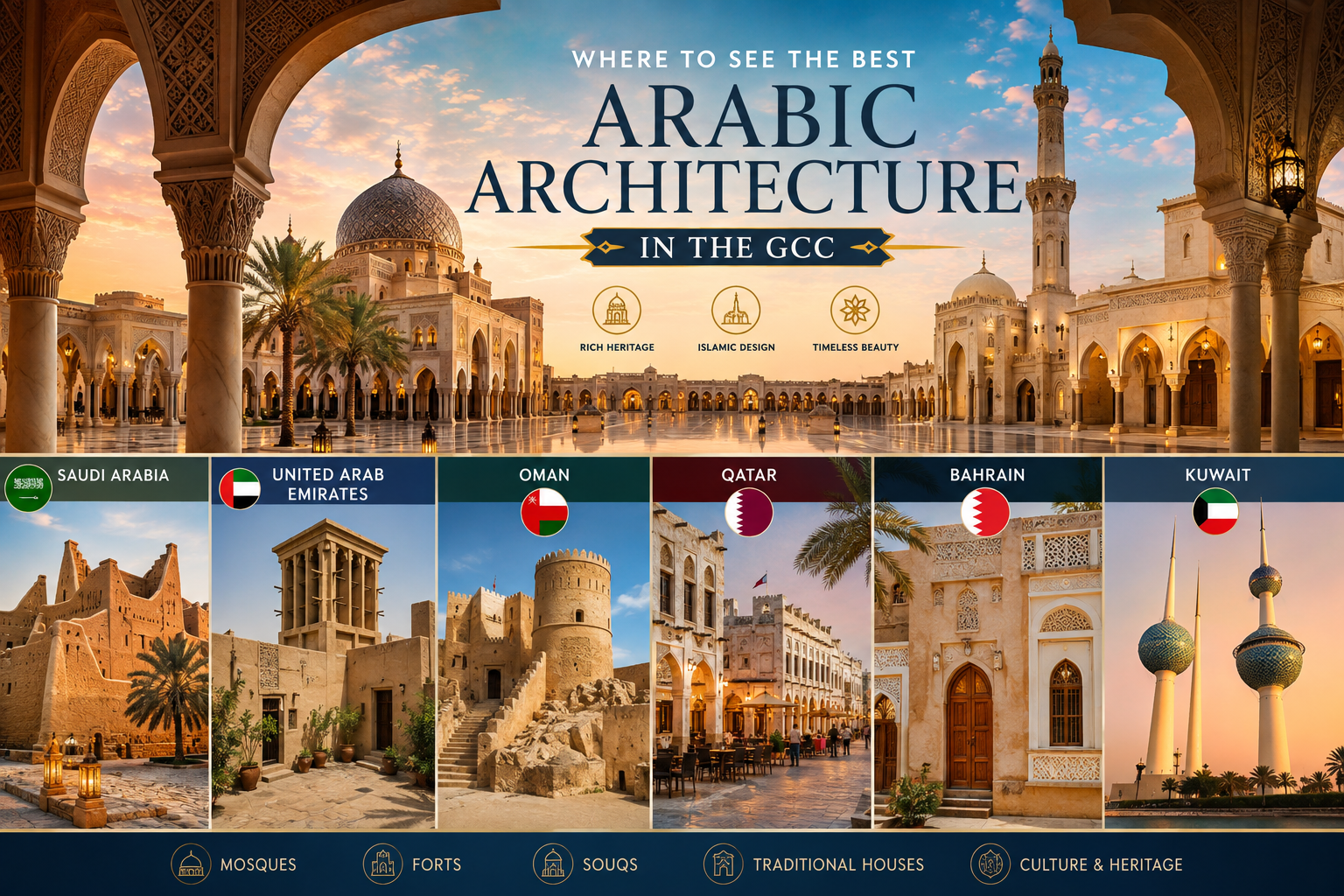
The Arabian Gulf is famous for futuristic skyscrapers, luxury hotels and spectacular modern cities. But beyond the glass towers lies another side of the Gulf — a world of traditional Arabic architecture, Islamic design, old souqs, mosques, forts, courtyards and historic homes.
If you want to experience the architectural heritage of the Arab world, the six GCC countries — Saudi Arabia, United Arab Emirates, Qatar, Oman, Bahrain and Kuwait — each offer something different.
1. Saudi Arabia – The Heart of Najdi and Hejazi Architecture
Saudi Arabia is one of the best places in the GCC to experience historic Arabian architecture because of its enormous geographical and cultural diversity.
Al-Diriyah – Riyadh
Al-Diriyah is one of the most important places to experience Najdi architecture.
Traditional buildings are characterized by:
- Mud-brick walls
- Small exterior windows
- Decorative geometric patterns
- Courtyard houses
- Narrow streets
- Earth-coloured façades
The architecture was designed for the desert climate, helping buildings remain cooler while providing privacy.
Historic Jeddah – Al-Balad
Jeddah provides a completely different architectural experience.
The historic Al-Balad district is known for:
- Tall traditional houses
- Wooden rawasheen balconies
- Decorative façades
- Narrow streets
- Historic markets
- Traditional Hijazi architecture
The combination of wood, coral-stone construction and colourful details makes old Jeddah particularly distinctive.
AlUla
AlUla is another extraordinary destination where architecture and desert landscapes come together.
Traditional settlements were built using locally available materials and adapted to the surrounding environment.
Best for: Najdi, Hijazi, desert and traditional Arabian architecture.
2. United Arab Emirates – Traditional Gulf Architecture Meets Modern Design
When people think about UAE architecture, they often imagine Dubai’s skyscrapers. But the UAE also has some excellent examples of traditional Gulf architecture.
Al Fahidi Historical Neighbourhood – Dubai
One of the best places to see traditional Emirati architecture in Dubai is the Al Fahidi Historical Neighbourhood.
Look for:
- Wind towers
- Courtyard houses
- Thick walls
- Narrow lanes
- Traditional doors
- Decorative plasterwork
The famous barjeel, or wind tower, was an early form of passive cooling. It helped bring air into traditional houses before modern air conditioning.
Sharjah
Sharjah has preserved many traditional buildings and cultural areas.
The city is particularly interesting for people who want to see how traditional Islamic and Gulf architecture has been incorporated into a modern urban environment.
Al Ain
Al Ain provides another perspective on Emirati heritage, with forts, traditional settlements and oasis architecture.
Best for: Emirati architecture, wind towers, courtyards, forts and restored heritage districts.
3. Oman – One of the Best Countries for Traditional Arabian Architecture
If your main interest is authentic traditional Arabian architecture, Oman should be near the top of your list.
Omani architecture has a very distinctive identity, with forts, castles, mosques, mud-brick houses, decorative arches and traditional settlements.
Nizwa
Nizwa is famous for its historic fort and traditional souq.
The architecture reflects Oman’s historical relationship with desert settlements, trade and Islamic culture.
Bahla
Bahla is particularly famous for its historic fort and traditional mud-brick architecture.
Muscat
Muscat combines traditional Omani architecture with modern development.
Many important buildings use:
- White façades
- Islamic arches
- Domes
- Decorative details
- Omani architectural motifs
The Sultan Qaboos Grand Mosque is also one of the region’s most impressive examples of modern Islamic architecture.
Best for: Forts, mud-brick architecture, Islamic architecture, arches and traditional Omani design.
4. Qatar – Traditional Architecture in a Modern City
Doha is famous for its modern skyline, but Qatar has preserved several places where visitors can experience traditional Qatari architecture.
Souq Waqif – Doha
Souq Waqif is one of the best-known places to experience traditional Gulf-style architecture in Qatar.
The area features:
- Narrow pedestrian streets
- Traditional markets
- Earth-coloured walls
- Wooden doors
- Courtyard-style buildings
- Traditional restaurants and shops
It provides an excellent contrast with Doha’s modern skyscrapers.
Al Zubarah
For a deeper look into Qatar’s history, visit Al Zubarah.
The historic settlement and fort provide an insight into Qatar’s pearl-trading and coastal heritage. Al Zubarah Fort is also recognized as part of a UNESCO World Heritage site.
Best for: Traditional souqs, coastal architecture, forts and Qatari heritage.
5. Bahrain – The Architecture of Pearl Diving and Old Muharraq
Bahrain has a fascinating architectural heritage connected to the country’s historic pearl-diving industry.
Muharraq
Muharraq is one of the best places in the Gulf to explore historic Gulf houses.
The Pearling Path connects historic buildings, traditional homes, cultural spaces and restored structures associated with Bahrain’s pearl-diving history.
Traditional houses often feature:
- Internal courtyards
- Decorative doors
- Plaster details
- Privacy-oriented layouts
- Traditional Gulf proportions
The architecture provides a fascinating look at how wealthy pearl merchants once lived.
Best for: Traditional Gulf houses, pearl-trade heritage and historic urban architecture.
6. Kuwait – Traditional Gulf Architecture and Modernist Landmarks
Kuwait’s traditional architecture has changed dramatically with rapid urban development, but there are still places where its architectural history can be explored.
Kuwait is also interesting because it combines traditional Gulf influences with some remarkable 20th-century modern architecture.
Kuwait City
The city contains a mixture of:
- Traditional Gulf influences
- Islamic architectural elements
- Modernist buildings
- Contemporary skyscrapers
The Kuwait Towers are particularly famous and have become one of the country’s architectural symbols.
Kuwait is therefore an interesting destination if you want to compare old Gulf architecture with modern Arab architecture.
Best for: Modern Gulf architecture, Islamic influences and architectural contrasts.
Which GCC Country Has the Best Arabic Architecture?
There is no single winner because each country has developed its own architectural identity.
| Country | Best Architecture Experience |
|---|---|
| 🇸🇦 Saudi Arabia | Najdi & Hijazi architecture |
| 🇦🇪 UAE | Emirati houses & wind towers |
| 🇴🇲 Oman | Forts, castles & traditional villages |
| 🇶🇦 Qatar | Souqs, forts & Qatari heritage |
| 🇧🇭 Bahrain | Pearl-era houses & Muharraq |
| 🇰🇼 Kuwait | Gulf heritage & modern architecture |
My Top Choices
🥇 Oman – Best for Traditional Arabian Architecture
Oman is arguably one of the strongest choices if your goal is to see traditional architecture rather than futuristic skyscrapers.
Nizwa, Bahla, Muscat and other historic areas showcase forts, traditional houses, arches and Islamic design.
🥈 Saudi Arabia – Best for Variety
Saudi Arabia offers enormous architectural diversity.
You can experience Najdi mud-brick architecture in Diriyah, Hijazi architecture in Jeddah and historic desert settlements around AlUla.
🥉 Bahrain – Best for Historic Gulf Houses
Muharraq is particularly interesting because its architecture is closely connected with the history of pearl diving and traditional Gulf family houses.
Arabic Architecture Is More Than Mosques
One important thing to remember is that Arabian architecture is not limited to mosques.
Traditional Gulf architecture can be found in:
- Houses
- Souqs
- Forts
- Palaces
- Caravan routes
- Courtyards
- Wind towers
- City gates
- Traditional markets
- Coastal settlements
Climate also played an important role. The hot and dry environment of much of the GCC encouraged architectural solutions such as courtyards, thick walls, shaded passages and ventilation systems.
Final Thoughts
The GCC is often associated with futuristic skylines such as Dubai, Doha and Riyadh. However, underneath the modern cities is a much older architectural tradition.
From the mud-brick buildings of Saudi Arabia to the wind towers of the UAE, the forts of Oman, the souqs of Qatar, the pearl houses of Bahrain and the modernist landmarks of Kuwait, every GCC country offers a different architectural story.
If you want to photograph authentic Arabic architecture, don’t only visit the famous skyscrapers. Walk through the old neighbourhoods, visit traditional souqs, explore historic forts and look closely at the doors, courtyards, windows and decorative details.
That is where the real architectural character of the Gulf can be found.