Fake Profiles Using Stolen Photos on Social Media: The Growing Threat of Digital Impersonation
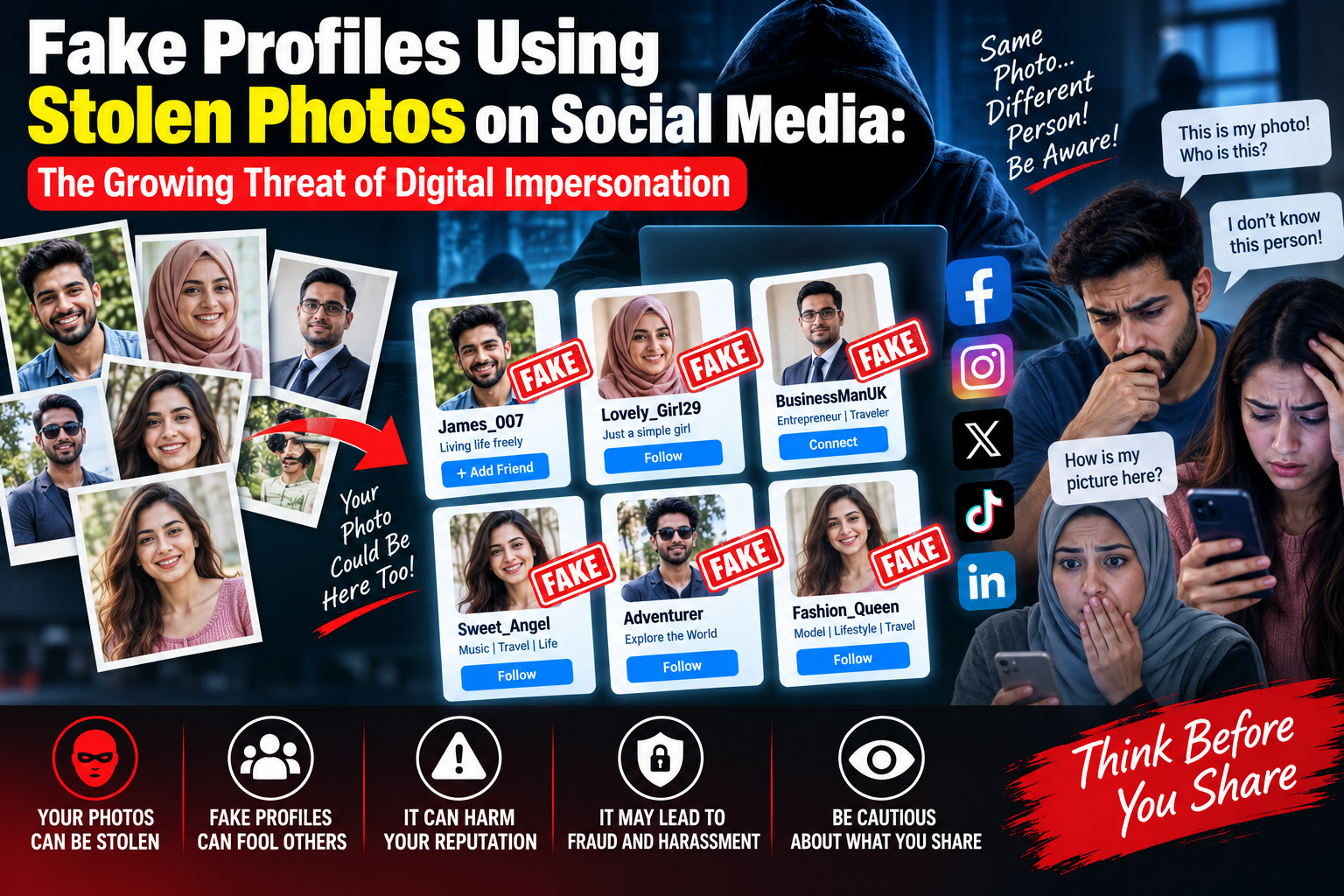
Social media has transformed how we connect, share, and build communities. At the same time, it has created a serious and growing problem: fake profiles built with stolen photos. These accounts use real people’s pictures without permission to create false identities. The practice—often called catfishing, photo theft, or digital impersonation—causes emotional distress, financial loss, reputation damage, and sometimes real-world safety risks.
This comprehensive guide explains how these fakes work, why they are created, how to spot them, what the blue tick and star badges really mean, and exactly what to do if your photos are misused.
What Is a Fake Profile Using Stolen Photos?
A fake profile in this context is an account that:
- Uses photographs of a real person taken from public posts, Google Images, dating sites, professional profiles, or data leaks.
- Presents a fabricated name, bio, location, job, or life story.
- Is controlled by someone other than the person shown in the photos.
These accounts appear on Instagram, Facebook, TikTok, X (Twitter), LinkedIn, Snapchat, dating apps, and other platforms. Creators sometimes lightly edit the images, mix photos from different people, or use AI tools to generate extra pictures that look consistent with the stolen ones.
Why Do People Create These Profiles?
Common motivations include:
- Romance scams and catfishing — Building emotional relationships (sometimes lasting months) to extract money, gifts, or personal information.
- Harassment and revenge — Targeting an ex-partner, rival, or someone the creator dislikes by posting under their likeness.
- Fraud and social engineering — Using a trusted-looking face to promote scams, phishing links, fake investments, or product promotions.
- Attention and ego — Running a more attractive or successful online persona to gain likes, followers, and validation.
- Identity theft for darker purposes — Spreading misinformation, cyberbullying, or facilitating real-world meetings under false pretenses.
How These Profiles Are Typically Built
The process is often simple and low-effort:
- Collect photos from public sources or search engines.
- Create a new account with a slightly altered or completely invented name.
- Write a believable bio and post a mix of stolen photos plus generic lifestyle images.
- Engage with real users through likes, comments, and direct messages to build credibility.
- In more advanced cases, use AI to generate additional images or slight variations of the original photos.
Because algorithms reward engagement, a well-managed fake account can gain followers quickly and appear legitimate.
Real-World Consequences for Victims
The person whose photos are stolen can suffer serious harm:
- Emotional distress — Discovering your face is being used to flirt, scam, or harass strangers feels deeply violating.
- Reputation damage — Friends, family, employers, or clients may see the fake profile and assume the real person is involved in inappropriate or criminal behavior.
- Harassment of contacts — The scammer may message the victim’s friends or colleagues, creating confusion and conflict.
- Financial and legal fallout — People who lose money to the fake profile sometimes confront the real person, leading to threats or complaints.
- Safety risks — In extreme cases the account is used for stalking, blackmail, or arranging meetings under false identities.
How to Spot a Fake Profile
Watch for these red flags:
- Limited or inconsistent posting history.
- Photos that look too polished or appear elsewhere online under different names (use reverse image search).
- Reluctance to video call or meet in person.
- Overly romantic, urgent, or money-related language early in conversations.
- Requests for money, gift cards, personal documents, or “verification” photos.
- Followers and following lists that do not match the claimed lifestyle.
- Slight username differences (extra letters, numbers, or underscores) compared with the real person’s known accounts.
Understanding Blue Ticks and Star Badges (How to Recognize Real Accounts)
Many people rely on the blue tick (checkmark) or a star badge to decide if an account is real. Here’s what they actually mean in 2026:
Blue Tick / Blue Checkmark
- X (Twitter): Mostly means the account has an active X Premium subscription and meets basic eligibility rules. It does not guarantee full identity verification in every case. Gold checks are for organizations; gray checks are for government accounts.
- Instagram & Facebook (Meta): Can come from traditional notability verification or the paid Meta Verified subscription (which includes ID checks). Both look the same.
- TikTok: Still largely based on notability and authenticity (not easily bought).
- LinkedIn: Often free identity verification via ID or work email.
Star Badge
Less common. On some platforms (such as certain Bluesky verification systems) a star-like mark appears for trusted providers. On other apps it may indicate creator status, achievements, or business tools rather than identity confirmation.
Critical reality check: A blue tick or star makes an account more likely to be legitimate than a completely unverified one, but it is not absolute proof. Paid verification systems exist, and sophisticated fakes have obtained badges before. Always combine the badge with other checks.
Best Way to Confirm a Real Account
- Open the profile yourself on the official app or website (never trust a screenshot).
- Tap or click the badge to read the platform’s explanation.
- Compare the username and bio with the person’s official website or other known verified accounts.
- Run a reverse image search on the profile photos.
- Look for consistent posting history and engagement that matches the claimed identity.
- Prefer accounts linked from official websites or verified channels.
What to Do If Your Photos Are Being Used
Act quickly:
- Document everything — Take clear screenshots of the profile, posts, and any messages.
- Report the account — Use the platform’s official tools for impersonation or fake accounts. Most platforms have dedicated reporting flows.
- Request removal — Provide evidence; platforms often remove clear photo-theft accounts once verified.
- Warn your network — Briefly inform close friends and family so they are not confused or targeted.
- Strengthen your privacy — Review who can see your photos, limit public posts, and consider watermarking important images.
- Seek legal help if needed — In cases of ongoing harassment, financial loss, or defamation, consult a lawyer familiar with online impersonation laws in your country.
- Monitor regularly — Periodically reverse-search your own photos to catch misuse early.
Platform Responsibilities and Broader Solutions
Social media companies have improved detection tools (facial recognition matching, AI-based fake-account detection, and faster reporting), yet creating accounts remains easy and enforcement is often reactive. Stronger identity verification options, better cross-platform cooperation, clearer rules around digital likeness rights, and ongoing user education would reduce the problem. The most effective defense remains individual awareness: knowing how to reverse-search images, recognizing common scam patterns, and treating online faces with healthy skepticism.
Final Thoughts
Fake profiles built with stolen photos turn ordinary images into tools of deception. They exploit trust, technology, and human psychology. While complete prevention is difficult on an open internet, awareness, quick reporting, careful verification of badges, and cautious online behavior significantly reduce the harm.
A blue tick or star is a useful signal—but never the only one. Protect your digital likeness the same way you protect your physical privacy. If you discover your photos being misused, report immediately with clear evidence. Platforms respond faster when the case is well documented.
Stay vigilant, verify before you trust, and remember: a face online is not always the person it claims to be.