Robots That Clean Drainage: How Technology Is Transforming Sewer and Drain Maintenance
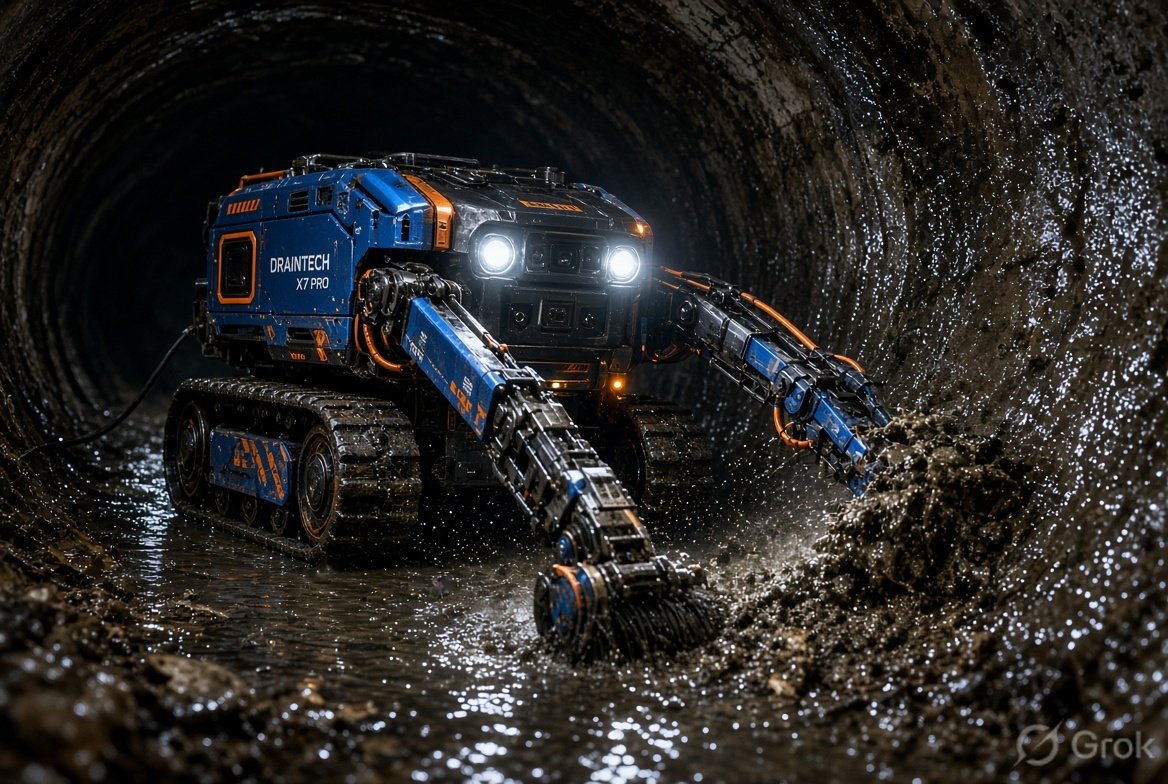
Drainage systems are the unsung heroes of modern cities. They carry away wastewater, prevent flooding, and protect public health. Yet keeping them clear has long been dirty, dangerous, and labor-intensive work. Manual scavenging or workers entering confined pipes and manholes exposes people to toxic gases, disease, physical injury, and even death.
Today, specialized robots are changing that reality. From India’s Bandicoot robots to tunnel-focused systems like DrainBot and advanced jetting/inspection units, drainage-cleaning robots are making maintenance safer, more efficient, and more sustainable.
Why Traditional Drainage Cleaning Is Problematic
- Health and safety risks: Workers face hydrogen sulfide, methane, pathogens, and the constant threat of collapses or drowning.
- Inefficiency: Manual methods are slow, incomplete, and often reactive (after a blockage causes flooding or backups).
- Environmental and social costs: In many places, the practice is tied to discrimination and is legally banned, yet enforcement lags without practical alternatives.
- Infrastructure strain: Aging pipes clog with grease, roots, silt, debris, and solids, leading to overflows and costly emergency repairs.
Robots address these issues by going where humans shouldn’t.
Real Products Leading the Way
1. Bandicoot Robot – Genrobotics (India)
One of the most well-known drainage-cleaning robots is the Bandicoot developed by Genrobotics (Kerala, India). This multi-legged robotic scavenger is designed specifically to end manual scavenging.
- Features robotic legs, night-vision cameras, gas sensors, and gripper/cutter tools
- Can clean open drains, covered drains, and manholes
- Removes solid waste and silt without requiring workers to enter the manhole
- Over 220 units have been deployed across Indian cities
- Used by municipal corporations in Delhi, Howrah, and many other cities
The Bandicoot has become a symbol of safer sanitation technology in India and is actively helping cities comply with laws banning manual scavenging.
2. DrainBot – Autonomous Tunnel Drainage System
DrainBot is the world’s first fully autonomous system developed specifically for tunnel drainage maintenance. Unlike traditional high-pressure water jetting, it uses mechanical cleaning.
- Runs on electricity (battery-powered)
- Zero water consumption during cleaning
- Operates without human presence inside the tunnel
- Significantly reduces tunnel locking times and CO₂ emissions
- Collects sensor data while cleaning for predictive maintenance
It is particularly useful for road and railway tunnels where traditional cleaning causes major traffic disruptions.
3. Envirobot Viper – Combo Jetter + Inspection Camera
The Viper unit from Envirobot combines high-pressure water jetting with a steerable inspection camera in a single tool.
- Allows technicians to clean and inspect simultaneously
- Works in pipes from approximately 3 to 16 inches in diameter
- Camera is integrated into the high-pressure hose
- Can navigate 45° and 90° bends
- Provides video documentation for customers
This product is popular among plumbing and trenchless companies because it eliminates the need for separate inspection and cleaning passes.
4. Homosep Atom – Solinas (IIT Madras Startup)
Homosep Atom, developed by Solinas (incubated at IIT Madras), is India’s first end-to-end septic tank and manhole cleaning robot.
- Combines blade cleaning, desilting, suction, and storage in one device
- Designed for septic tanks and smaller sewers
- Enables workers to clean from outside the confined space
- Already deployed in 16+ Indian cities
- Supports the Swachh Bharat mission by eliminating the need for humans to enter tanks
5. Other Notable Systems
- Drain-Jet Robotics (Mauerspecht) – Ultra-high-pressure water-jet robots (Bruno, Bruno Mini) for removing roots, concrete, and heavy deposits in sewers.
- YG Series Sewer Cleaning Robots – Remote-controlled tracked robots designed for municipal pipelines (600mm and above) with powerful sludge removal pumps.
- Pipebot Patrol (UK project) – Autonomous sewer inspection robot focused on early blockage detection before flooding occurs.
Key Benefits of Robotic Drainage Cleaning
- Dramatically improved safety — Workers stay above ground
- Higher efficiency and lower costs — Faster cleaning and fewer emergency callouts
- Better data and prevention — Cameras and sensors create maps and detect early problems
- Environmental gains — Reduced water use (in mechanical systems) and fewer overflows
- Social impact — Helps end hazardous and discriminatory forms of manual labor
Challenges and the Future
While these robots are highly effective, challenges remain. High initial cost, the need for trained operators, and difficulty navigating very old or irregular pipe networks can slow adoption. However, prices are gradually falling, and autonomy is improving rapidly.
The future points toward fully autonomous patrol robots that continuously monitor and clean networks, AI-powered predictive maintenance, and greater integration with smart city systems.
Conclusion
Robots that clean drainage are no longer experimental novelties — they are practical tools already protecting workers, preventing floods, and extending the life of critical infrastructure. Products like the Bandicoot, DrainBot, Envirobot Viper, and Homosep Atom prove that safer, cleaner, and more efficient sanitation is possible today.
As cities grow denser and climate pressures increase the importance of reliable drainage, these machines will become essential. The drains still need cleaning — now the robots can do the dirty work.