Pregnancy Care Across Different Indian States: A Detailed Guide for Expecting Mothers
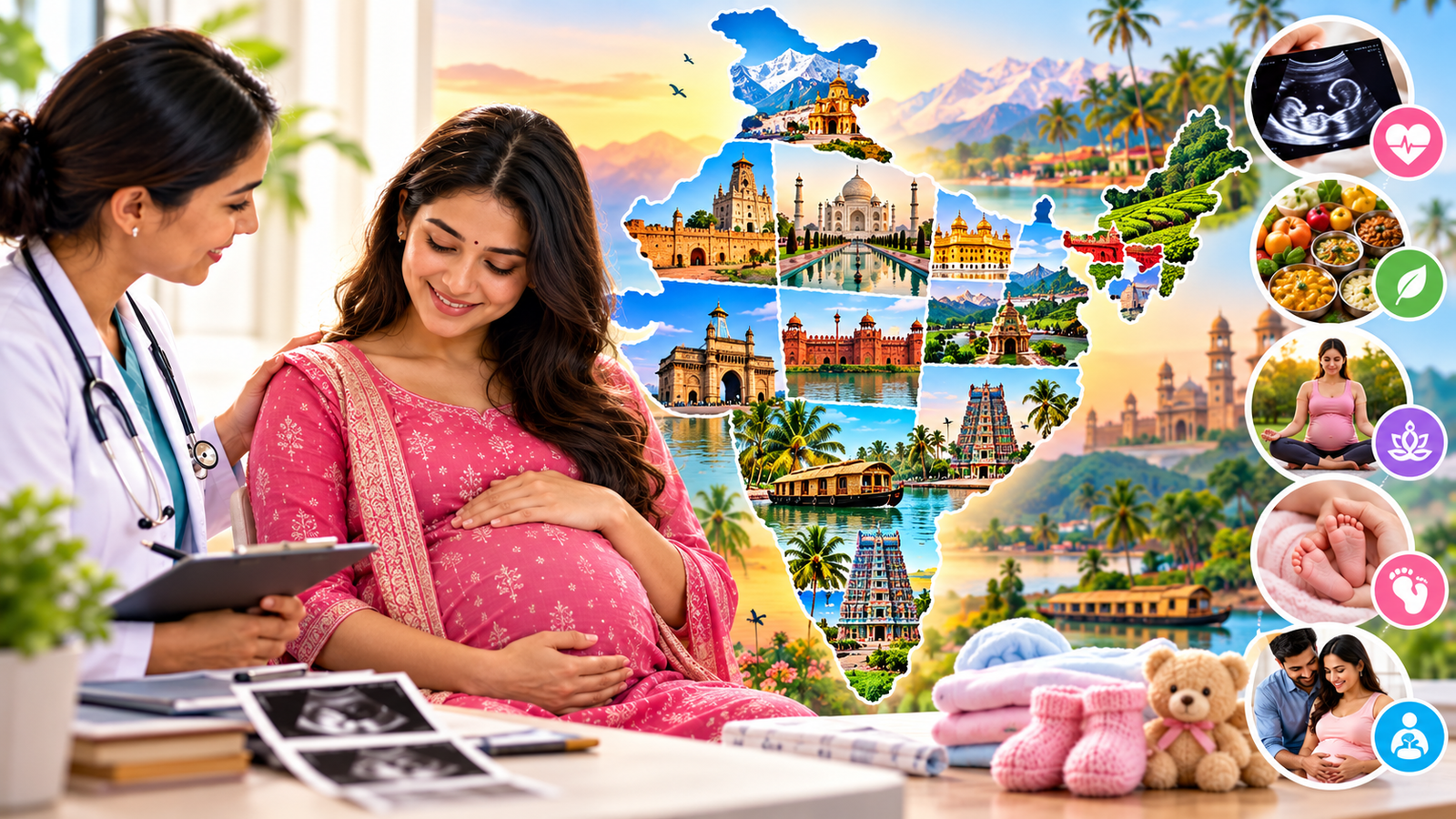
Pregnancy Care Across Different Indian States: A Detailed Guide for Expecting Mothers
India has made remarkable progress in maternal health over the last two decades. The national Maternal Mortality Ratio (MMR) has fallen to around 87–88 deaths per 100,000 live births (SRS 2021–23 / 2022–24). Institutional deliveries have crossed 90%, and antenatal care coverage continues to improve. Yet, the quality and accessibility of pregnancy care still vary significantly from one state to another.
Southern states such as Kerala, Tamil Nadu, Andhra Pradesh, and Maharashtra have achieved outcomes comparable to many developed countries, while Empowered Action Group (EAG) states like Odisha, Madhya Pradesh, Uttar Pradesh, and Chhattisgarh continue to face higher risks. This detailed guide explains the key differences, highlights the best and most challenging states, and provides practical advice for pregnant women across India.
Why Pregnancy Care Differs Across Indian States
Several factors create this variation:
- Health infrastructure – Density of Primary Health Centres (PHCs), Community Health Centres (CHCs), and specialised maternity hospitals.
- Human resources – Availability of obstetricians, staff nurses, ANMs, and ASHA workers.
- Socio-economic conditions – Education levels of women, poverty, nutrition, and early marriage rates.
- Government scheme implementation – Effectiveness of Janani Suraksha Yojana (JSY), Janani Shishu Suraksha Karyakram (JSSK), and state-specific programmes.
- Geography – Remote hilly, tribal, and flood-prone areas face greater access barriers.
National schemes provide a common foundation, but state-level execution determines real outcomes.
National Snapshot of Pregnancy Care in India
Key national indicators (based on NFHS-5 2019–21 and latest SRS data):
- Institutional deliveries: ~90–95%
- Births attended by skilled health personnel: ~91%
- At least 4 antenatal care (ANC) visits: ~58–65%
- First trimester ANC registration: ~70–76%
- Iron-Folic Acid (IFA) tablets for 100+ days: still a major gap in many states
- Postnatal care within 2 days of delivery: ~78%
Free services under JSSK include delivery (including C-section), medicines, diagnostics, diet, and transport in public facilities. JSY provides cash incentives for institutional delivery, especially for BPL and rural women.
Top-Performing States for Pregnancy Care
1. Kerala
Consistently the best performer with MMR around 24–30. Near-universal institutional deliveries (99.9%), high full ANC coverage, excellent postnatal care, and strong public health system. High female literacy and early health-seeking behaviour contribute significantly.
2. Tamil Nadu
MMR around 25–35. Institutional deliveries close to 100%. Outstanding ANC coverage (over 90% mothers receive 4+ visits in recent data) and robust postnatal care systems. Strong government hospitals and ambulance network.
3. Andhra Pradesh & Telangana
MMR in the 30–50 range. Very high institutional delivery rates (97%+) and improving ANC indicators. Telangana shows particularly strong first-trimester registration and IFA consumption in recent surveys.
4. Maharashtra
MMR around 36–37. High institutional deliveries and good overall maternal care infrastructure, especially in urban and western regions.
5. Gujarat
MMR around 51–64. Steady improvement in coverage of ANC and institutional births with strong state health programmes.
Common strengths of top states: High female literacy, better nutrition, stronger primary healthcare, effective ASHA and ANM networks, and better implementation of national schemes.
States Facing Greater Challenges
Highest MMR States (SRS 2021–23)
- Odisha – 153
- Chhattisgarh – 146
- Madhya Pradesh – 142
- Uttar Pradesh – 141
- Assam – 110
Other High-Burden Areas
Bihar, Jharkhand, Rajasthan, and several Northeastern states (especially Nagaland, Arunachal Pradesh, Meghalaya) show lower full ANC coverage, lower institutional delivery rates in some pockets, and higher anaemia prevalence among women.
Common challenges: Shortage of specialists in rural and tribal areas, higher rates of anaemia and malnutrition, early marriage and higher fertility in some regions, difficult terrain, and uneven scheme implementation.
Key Regional Differences
Southern States (Kerala, Tamil Nadu, Andhra Pradesh, Telangana, Karnataka)
Best overall outcomes. Institutional deliveries often exceed 97–99%. High quality of ANC and postnatal care. C-section rates are higher (especially in private facilities), which needs careful monitoring.
Western States (Maharashtra, Gujarat, Goa)
Strong performance with good infrastructure and coverage. Goa ranks among the highest in full ANC utilisation.
Northern & Central States (UP, Bihar, MP, Rajasthan, Haryana, Punjab)
Mixed picture. Significant improvement in institutional deliveries due to JSY, but full ANC (especially 4+ visits and 100 days IFA) remains lower in UP and Bihar. Punjab and Haryana perform better on many indicators.
Eastern States (Odisha, West Bengal, Jharkhand)
Odisha has high MMR despite good progress in institutional deliveries. West Bengal shows moderate performance. Tribal and remote areas face access barriers.
Northeastern States
High variation. Assam has relatively high MMR. States like Nagaland and Arunachal Pradesh still have lower institutional delivery and ANC coverage compared to the national average, though progress is visible.
Important Government Schemes Available Across India
- Janani Suraksha Yojana (JSY) – Cash incentive for institutional delivery (higher in low-performing states and for rural/BPL women).
- Janani Shishu Suraksha Karyakram (JSSK) – Free delivery, C-section, medicines, diagnostics, blood, diet, and transport in public health facilities.
- Pradhan Mantri Surakshit Matritva Abhiyan (PMSMA) – Free specialised antenatal check-ups on the 9th of every month for high-risk pregnancies.
- ASHA workers – Community-level support for registration, ANC, delivery, and postnatal care.
- Mother and Child Protection (MCP) Card – Tracks ANC, immunisation, and growth.
- State-specific schemes (e.g., additional incentives, free ambulance services, or nutrition programmes).
Practical Tips for Pregnancy Care in Any Indian State
- Register early – Visit the nearest Anganwadi, ASHA, or PHC as soon as you confirm pregnancy. Get the MCP card.
- Complete ANC visits – Aim for at least 4 visits (preferably more). First visit should be in the first trimester.
- Take IFA tablets regularly – Anaemia is still a major risk factor. Consume iron and folic acid as advised.
- Choose institutional delivery – Prefer government facilities for free services under JSSK or accredited private facilities.
- Know the emergency signs – Severe headache, blurring of vision, swelling, reduced fetal movements, heavy bleeding, or prolonged labour need immediate care. Call 108/102 ambulance.
- Postnatal care is critical – Ensure check-up within 48 hours and continue follow-up. Mental health support is important.
- Utilise ASHA and ANM – They are your first point of contact for guidance, transport, and scheme benefits.
- Nutrition & rest – Focus on balanced diet, adequate rest, and avoid heavy physical labour, especially in the third trimester.
Addressing Disparities
Even within better-performing states, tribal, rural, and urban poor populations often have lower coverage. Anaemia remains high among women in most states. Early marriage and teenage pregnancy continue to elevate risk in some regions. Strengthening primary care, ensuring specialist availability in rural areas, improving nutrition, and empowering ASHAs remain key priorities for equitable outcomes.
Conclusion
India’s maternal health story is one of significant national progress with persistent state-level differences. Southern states show what is possible with strong systems and social development, while high-burden states are steadily improving through focused interventions.
Regardless of the state you live in, early registration, regular antenatal check-ups, institutional delivery, and postnatal follow-up can dramatically reduce risks. Make full use of free government schemes and community health workers.
For the latest state-specific data and scheme details, refer to the Ministry of Health & Family Welfare website, your state health department portal, or the nearest ASHA/ANM.
Wishing every mother a safe pregnancy and healthy motherhood — across every state of India.