Driving After Taking Medicine: Important Warnings About Cough Syrup, Cold Medicines and Painkillers
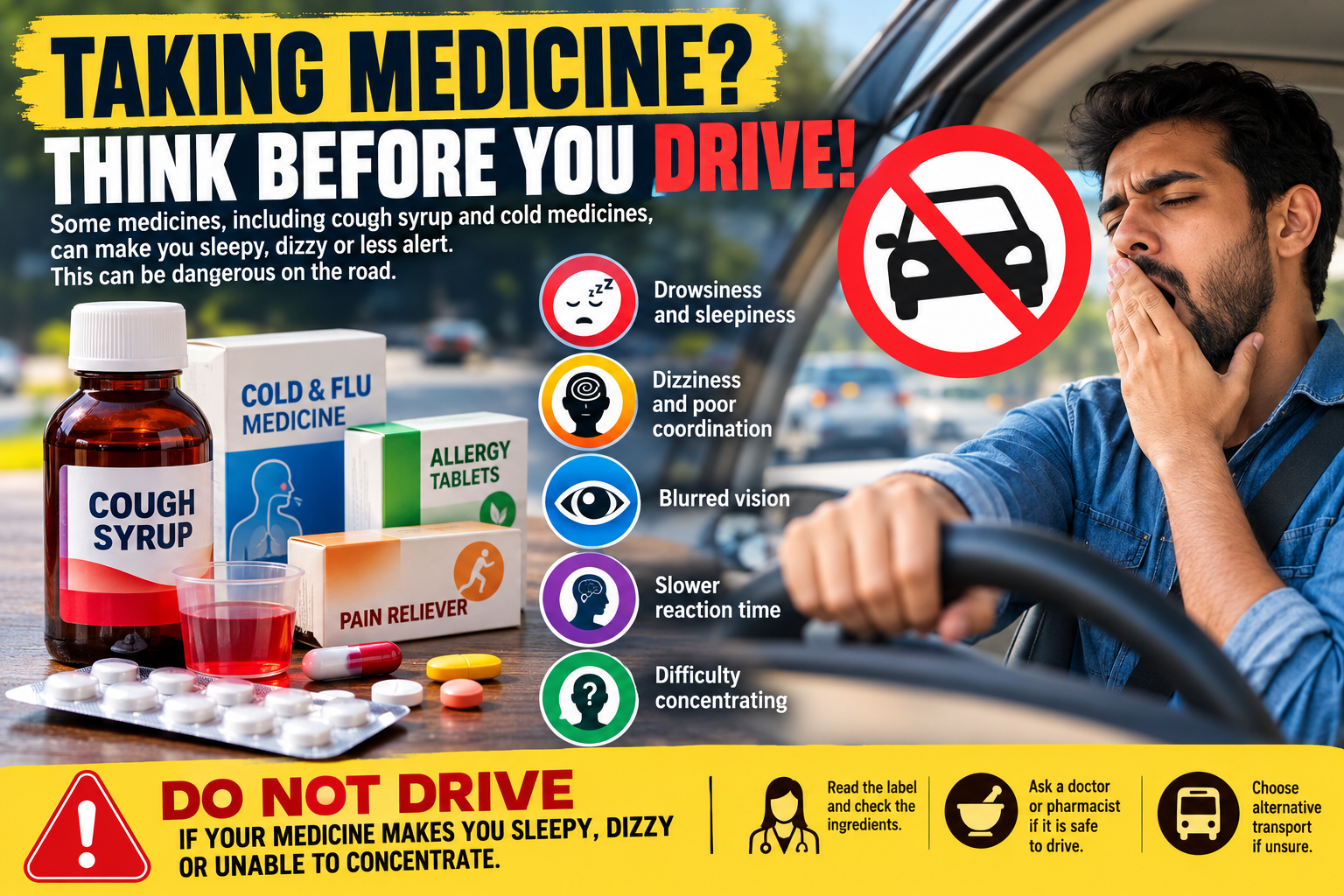
Can you drive a car or ride a motorcycle after taking cough syrup? The answer depends on the ingredients in the medicine, its effects on your body, the dose, and your individual response. Some medicines can make you sleepy, dizzy, less alert, or slower to react to unexpected situations on the road.
Many drivers assume that medicines bought from a pharmacy are always safe before driving. However, some over-the-counter medicines can affect driving ability just as seriously as certain prescription medicines. Understanding these risks can help prevent avoidable road accidents.
⚠️ IMPORTANT DRIVING WARNING
Do not drive if your medicine makes you sleepy, dizzy, confused, weak, or unable to concentrate properly. Do not rely only on how normal you feel. Read the medicine label and ask a doctor or pharmacist whether it is safe to drive after taking it.
If you are unsure whether a medicine affects driving, choose another way to travel until you receive appropriate advice.
1. Can Cough Syrup Affect Your Driving?
Yes. Certain cough syrups can affect alertness and coordination. The fact that a medicine is a liquid rather than a tablet does not make it safer for drivers.
Cough syrups contain different active ingredients, and their effects vary. Some products are intended mainly to relieve a dry cough, while others contain ingredients to help with congestion, runny noses, allergies, or multiple cold symptoms.
Ingredients that deserve attention
- Diphenhydramine: A sedating antihistamine that may cause sleepiness, dizziness, blurred vision, and difficulty concentrating.
- Chlorpheniramine (chlorphenamine): An antihistamine that can cause drowsiness and slower reactions.
- Promethazine: A sedating antihistamine that may impair alertness and coordination.
- Codeine: An opioid ingredient found in some prescription cough medicines in certain countries. It can cause drowsiness and impair driving.
- Dextromethorphan: A cough suppressant that may cause dizziness or drowsiness in some people, particularly depending on the dose and other medicines taken.
This is not a complete list. A cough syrup may contain more than one active ingredient, and formulations differ between brands and countries. Always check the ingredients on your particular bottle.
Important: Never assume that a cough syrup is safe for driving simply because it is marketed for daytime use or is available without a prescription.
2. Cold and Flu Medicines Can Also Affect Drivers
Cold and flu medicines frequently combine several ingredients in one tablet, capsule, powder, or liquid. A product may contain a pain reliever, a decongestant, a cough suppressant, and an antihistamine.
This combination can make it difficult to understand which ingredient is causing a side effect. Some formulations may cause drowsiness, while others are less likely to do so.
Before taking a cold medicine and getting behind the wheel, check:
- Whether the label warns against driving or operating machinery.
- Whether it contains a sedating antihistamine or another ingredient that can impair alertness.
- Whether it can interact with other medicines you take.
- Whether the illness itself is making you tired, feverish, dizzy, or unable to concentrate.
Even if a medicine is less likely to cause drowsiness, it does not guarantee that every person can drive safely after taking it.
3. Other Medicines That May Make Driving Unsafe
Cough syrup is only one example. Several other categories of medicines can affect the abilities needed for safe driving.
| Medicine category | Possible effects |
|---|---|
| Allergy medicines | Sleepiness, blurred vision, slower reactions |
| Strong painkillers, including some opioids | Drowsiness, dizziness, impaired judgement |
| Sleeping tablets and sedatives | Reduced alertness and effects that may continue into the next day |
| Anti-anxiety medicines | Sleepiness, poor coordination, slower responses |
| Some antidepressants and nerve-pain medicines | Dizziness, drowsiness, concentration difficulties |
| Some anti-nausea medicines | Sleepiness, dizziness, blurred vision |
These effects do not occur with every medicine in each category. The exact active ingredient, dose, timing, other medicines, and your response all matter. Ask your doctor or pharmacist for advice specific to your treatment.
4. Why Driving While Drowsy Is Dangerous
Safe driving requires constant attention, sound judgement, coordination, and the ability to react quickly. Medicine-related impairment can interfere with these functions.
- Slower braking: You may take longer to recognise danger and press the brake.
- Reduced attention: You may miss traffic signals, road signs, pedestrians, or motorcycles.
- Poor judgement: You may misjudge the speed or distance of another vehicle.
- Blurred vision: Your ability to see road markings and moving vehicles clearly may be reduced.
- Loss of coordination: Steering, changing gears, balancing a motorcycle, or controlling a vehicle may become more difficult.
- Microsleep: Severe sleepiness can cause brief, involuntary episodes of sleep that are extremely dangerous while driving.
On Indian roads, where drivers often encounter pedestrians, animals, sudden braking, two-wheelers, and unpredictable traffic, a delayed response can have serious consequences.
5. How Long Should You Wait Before Driving After Cough Syrup?
There is no single waiting period that is safe for every cough syrup or every driver.
The time a medicine affects you depends on its active ingredients, formulation, dose, when it was taken, how your body processes it, and whether other substances or medicines are involved.
For example, a sedating antihistamine may continue to affect alertness for several hours. Some medicines taken at night may leave a person drowsy the following morning or afternoon.
Follow these precautions:
- Read the package leaflet and any driving warnings before taking the medicine.
- Ask a pharmacist or doctor how long the particular product may impair driving.
- Take extra care when starting a new medicine or when the dose changes.
- Do not drive until any impairment has fully resolved and you have appropriate advice that driving is safe.
- Do not assume that sleeping for a few hours, drinking coffee, or feeling temporarily more alert means the medicine has stopped affecting you.
Never use a fixed number of hours as a guarantee of fitness to drive. If the product specifically prohibits driving for a stated period, follow that warning and obtain professional advice if you are uncertain.
6. What If You Have Already Taken Cough Syrup?
If you have already taken cough syrup and need to travel, do not panic. First, check the product ingredients and the instructions on the label.
- If the medicine causes sleepiness, dizziness, blurred vision, confusion, or poor concentration, do not drive.
- If the label warns against driving, follow the warning.
- If you do not know whether the medicine is sedating, contact a pharmacist or doctor before driving.
- Arrange a taxi, a sober and alert driver, public transport, or another safe alternative.
- If you are already driving and notice impairment, pull over at a safe location as soon as possible and arrange alternative transport.
Do not stop a prescribed medicine or change your dose on your own simply to make driving easier. Ask your prescriber whether a suitable alternative or a change in timing is appropriate.
7. Never Mix Alcohol With Sedating Medicines Before Driving
Alcohol can increase the sedating effects of certain medicines, including some antihistamines, sleeping tablets, anxiety medicines, and opioid painkillers.
The combination may worsen drowsiness, coordination, judgement, and reaction time. Some combinations can also cause dangerous breathing problems.
Do not drink alcohol while taking a medicine that warns against it, and never drive after combining alcohol with a potentially sedating medicine. Follow the medicine’s instructions and ask a healthcare professional if you are uncertain about interactions.
8. Be Careful With Multiple Medicines
Taking two or more medicines together can increase side effects. For example, a person may take cough syrup, an allergy tablet, and a painkiller without realising that more than one product causes drowsiness.
Some combination products also contain the same active ingredient as another medicine you are already taking. This can result in accidental double dosing.
To reduce the risk:
- Read the active ingredients, not just the brand name.
- Tell your pharmacist about all medicines, supplements, and herbal products you use.
- Do not combine two cough or cold products without checking their ingredients.
- Do not take an extra dose because the first dose has not worked quickly.
- Ask for advice before combining sedating medicines.
9. What About Driving a Motorcycle or Scooter?
The same warnings apply to motorcycles, scooters, and other two-wheelers. In fact, reduced balance, coordination, or reaction time can be especially dangerous when riding a two-wheeler.
A rider needs to maintain balance, monitor surrounding traffic, respond to potholes and sudden obstacles, and brake correctly. Even a relatively small reduction in alertness may increase the risk of a fall or collision.
Do not ride simply because the journey is short or familiar. If you are impaired by medicine or illness, choose another way to travel.
10. Is It Illegal to Drive After Taking Medicine in India?
Driving-related laws depend on the circumstances and the applicable legal provisions. India’s Motor Vehicles Act includes provisions concerning driving under the influence of alcohol or drugs, as well as driving when mentally or physically unfit.
Whether a particular medicine or situation falls under a specific legal provision depends on the facts and applicable law. A prescription does not make unsafe driving safe.
Regardless of the legal classification of a particular medicine, drivers should not operate a vehicle when their alertness, judgement, coordination, or ability to control the vehicle is impaired.
For legal information, consult the current Motor Vehicles Act and the relevant traffic authorities. Do not rely on informal claims that all prescribed medicines are automatically permitted or that every medicine is automatically illegal before driving.
11. Practical Safety Checklist Before Starting Your Vehicle
Before driving a car, riding a motorcycle, or operating any vehicle after taking medicine, ask yourself:
- ☐ Have I checked the medicine’s active ingredients?
- ☐ Have I read the label and driving warnings?
- ☐ Do I know whether this medicine can cause drowsiness or dizziness?
- ☐ Have I taken any other medicine that may increase these effects?
- ☐ Am I fully alert, with normal vision and coordination?
- ☐ Am I also unwell, feverish, exhausted, or sleep-deprived?
- ☐ Have I asked a pharmacist or doctor if I am unsure?
If you cannot confidently establish that you are safe to drive, do not take the risk. Arrange alternative transport.
12. When Should You Seek Medical Help?
If you develop severe confusion, fainting, difficulty breathing, or extreme sleepiness after taking medicine, seek urgent medical assistance. If you suspect an overdose or a dangerous medicine interaction, obtain immediate professional advice.
For a persistent cough, worsening symptoms, chest pain, breathing difficulties, or coughing up blood, seek medical assessment rather than relying only on cough syrup.
Conclusion: Medicine Safety Is Part of Road Safety
Responsible driving is not only about following traffic signals, wearing a seat belt, or wearing a helmet. It also means understanding whether your health and medicines allow you to drive safely.
Cough syrup, allergy medicines, cold remedies, strong painkillers, sleeping tablets, and other medicines may affect people differently. A medicine that causes little trouble for one person may cause significant drowsiness or dizziness in another.
Check the label. Understand the ingredients. Ask a pharmacist or doctor. Never drive when impaired.
Arriving late is far better than risking your life or somebody else’s life on the road.
Medical Disclaimer
This article is intended for general educational and road-safety awareness purposes only. It is not a substitute for medical or legal advice. The effects of medicines vary by ingredient, dose, formulation, individual health, and other substances taken. Always read the product leaflet and consult a qualified doctor or pharmacist before making decisions about medicines and driving. Do not stop or alter prescribed treatment without professional advice.
References and Further Reading
- NHS: Antihistamines — side effects and precautions
- NHS: Diphenhydramine — effects, drowsiness and driving
- NHS: Cough — treatment and when to seek advice
- India Code: Motor Vehicles Act, 1988
- Uttar Pradesh Police: Road Safety Guidance
Reviewed for general safety awareness: October 2026. Medicine formulations and legal requirements can change; verify the current product information and applicable rules.