Wildlife Sanctuary Tours: Safety Tips and Animal Attack Prevention
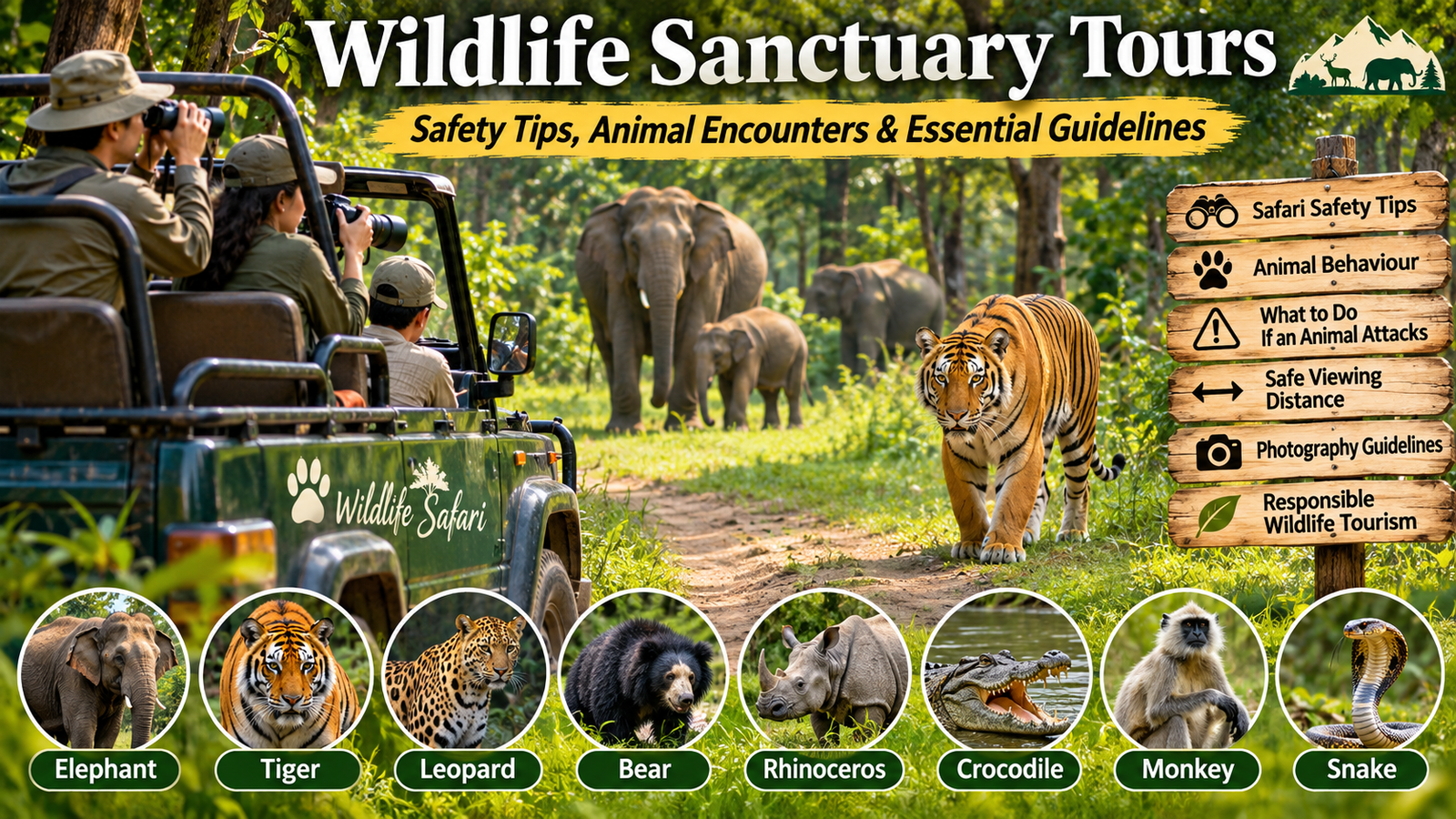
Wildlife Sanctuary Tours: Safety Tips, Animal Encounters and Emergency Guidelines
Explore the wilderness responsibly. Learn how to stay safe around elephants, tigers, leopards, bears, crocodiles and other wild animals.
Wildlife sanctuaries and national parks offer an unforgettable opportunity to experience nature and observe wild animals in their natural habitats. From majestic elephants and powerful tigers to leopards, bears, rhinoceroses and crocodiles, forests are home to incredible wildlife.
However, visiting a wildlife sanctuary is very different from visiting a zoo. Wild animals are unpredictable and may become aggressive when frightened, threatened or protecting their young.
This guide explains how to prepare for a wildlife tour, maintain safe distances from animals and respond to unexpected encounters.
Table of Contents
- Before Visiting a Wildlife Sanctuary
- General Safari Safety Rules
- Safety Tips for Different Animals
- What to Do During an Animal Attack
- Unexpected Wildlife Encounters While Walking
- Essential Items to Carry
- Wildlife Photography Safety
- Safety Tips for Families
- Emergency Safety Guide
- Responsible Wildlife Tourism
1. Before Visiting a Wildlife Sanctuary
Good preparation can prevent many accidents. Before planning your visit, check the official forest department website and understand the sanctuary’s rules.
- Book safaris through authorised operators.
- Choose experienced and licensed forest guides.
- Check weather conditions and seasonal restrictions.
- Understand whether walking, boating and camping are permitted.
- Carry drinking water and essential medicines.
- Wear comfortable closed shoes.
- Wear neutral-coloured clothing.
- Keep emergency contact numbers available.
- Never enter restricted forest areas without permission.
2. General Safety Rules During a Wildlife Safari
You are a visitor in the animals’ natural home. Respect their territory and behaviour.
- Remain inside your safari vehicle unless authorised to get down.
- Never feed or touch wild animals.
- Avoid shouting, whistling and playing loud music.
- Do not throw food or rubbish into the forest.
- Never chase animals for photographs.
- Do not block an animal’s escape route.
- Never stand between a mother animal and its young.
- Follow your guide’s instructions immediately.
3. Safety Tips for Different Wild Animals
3.1 Elephant
Elephants are among the most powerful animals in Indian forests. They may become aggressive when protecting calves, surprised by vehicles or feeling trapped. Bulls may also display heightened aggression during musth.
Safety precautions:
- Never approach an elephant on foot.
- Do not stand between a mother and her calf.
- Never surround an elephant with vehicles.
- Give it an open escape route.
- Do not shout, throw objects or sound the horn.
- Remain inside the vehicle and follow the guide’s instructions.
3.2 Tiger
Tigers are powerful predators. Always observe them from authorised safari vehicles or designated viewing areas.
- Never leave your vehicle to approach a tiger.
- Never follow a tiger on foot.
- Do not make loud noises to attract it.
- Never attempt to feed or provoke it.
- Do not block its movement.
If you unexpectedly encounter a tiger while walking, do not run or approach it. Stay calm, avoid sudden movements, slowly increase the distance if safe and follow your guide’s instructions.
3.3 Leopard
Leopards are excellent climbers and can move quietly through forests and rocky areas.
- Never approach a resting leopard.
- Keep children close to adults.
- Never approach leopard cubs.
- Avoid walking alone in areas where leopard activity is reported.
- Do not corner or chase a leopard.
3.4 Bear
Indian forests are home to sloth bears. They can be particularly dangerous during surprise encounters.
- Avoid walking through dense vegetation without a guide.
- Never approach a feeding or resting bear.
- Do not attempt to photograph it from close range.
- Do not run towards it or try to chase it away.
- Move away slowly if there is a safe escape route.
If a bear attacks, the correct response depends on the species and situation. Follow trained local emergency guidance rather than relying on a universal rule.
3.5 Rhinoceros
Rhinoceroses are large, powerful animals that may charge when startled or threatened.
- Never approach a rhinoceros on foot.
- Do not stand between a mother and calf.
- Never block its escape route.
- Move towards a secure location if it approaches.
3.6 Crocodile
Crocodiles can be extremely dangerous near rivers, lakes and other water bodies.
- Never swim in unauthorised natural water bodies.
- Do not stand near the water’s edge.
- Never feed crocodiles.
- Follow designated viewing areas.
- Do not assume a crocodile is absent because you cannot see it.
3.7 Monkeys
Monkeys may appear friendly but can bite or scratch when threatened or expecting food.
- Never feed monkeys.
- Keep food securely stored.
- Do not touch baby monkeys.
- Never grab or chase them.
- Avoid displaying food openly.
3.8 Snakes
Forests are home to venomous and non-venomous snakes.
- Wear closed shoes.
- Watch where you step.
- Never put your hands into holes or beneath rocks.
- Use a torch during authorised low-light walks.
- Never try to catch or kill a snake.
4. Safe Viewing Distance: What Should You Know?
There is no universal safe distance for every wild animal. The required viewing distance depends on the species, animal behaviour, terrain and local forest department regulations.
Some Indian reserves prescribe minimum viewing distances, but a legal minimum is not a guarantee against an attack.
| Animal | Safety approach | Important precaution |
|---|---|---|
| Elephant | Keep well away and follow guide instructions. | Never block its escape route. |
| Tiger | Observe from authorised vehicles. | Never approach on foot. |
| Leopard | Maintain a substantial distance. | Never approach cubs. |
| Bear | Avoid close encounters. | Do not approach feeding bears. |
| Rhinoceros | Observe from a secure location. | Never approach on foot. |
| Crocodile | Stay within designated viewing areas. | Keep away from water edges. |
| Monkey | Keep distance and secure food. | Never feed them. |
| Snake | Keep well away and let it move off. | Never attempt to handle it. |
5. What Should You Do During an Animal Attack?
An animal attack is an emergency. Your response must depend on the species, the situation and instructions from trained personnel.
- Stay as calm as possible: Avoid unnecessary sudden movements.
- Do not approach: Never attempt to frighten or chase the animal.
- Find protection: A vehicle, secure building or substantial barrier may offer protection.
- Follow the guide: Experienced forest guides understand local emergency procedures.
- Contact authorities: Report the incident to forest officials.
- Seek medical help: Animal bites and scratches require prompt medical assessment.
6. Unexpected Wildlife Encounters While Walking
Walking through forests is different from travelling in a safari vehicle. An unexpected encounter may happen even on an authorised trekking route.
- Never walk alone in restricted forest areas.
- Stay with your authorised guide and group.
- Do not run when you see a large animal.
- Never approach animals for photographs.
- Do not move towards young animals.
- Slowly increase the distance when safe.
- Do not enter dense vegetation to follow an animal.
- If an animal blocks the trail, stop and follow your guide’s instructions.
7. Essential Items to Carry
- Drinking water.
- First-aid kit.
- Personal medication.
- Fully charged mobile phone.
- Power bank.
- Torch or headlamp for permitted activities.
- Binoculars.
- Camera with zoom lens.
- Comfortable walking shoes.
- Raincoat or waterproof jacket.
- Hat or cap.
- Insect repellent.
- Emergency contact information.
- Identification documents and safari permits.
8. Wildlife Photography Safety
Wildlife photography is exciting, but getting close to an animal should never become more important than safety.
- Use a telephoto or zoom lens.
- Never leave your safari vehicle for a better angle.
- Avoid flash where it is prohibited or disturbing.
- Do not use drones without explicit permission.
- Never use recorded animal calls to attract wildlife.
- Do not ask the driver to chase animals.
- Never block an animal’s natural movement.
9. Safety Tips for Families and Children
- Keep children seated inside safari vehicles.
- Never allow children to feed animals.
- Do not let children wander away from the group.
- Keep food securely stored.
- Explain that wild animals are not domestic pets.
- Follow the guide’s instructions during animal sightings.
- Take extra care with elderly visitors and people with mobility difficulties.
10. Emergency Safety Guide
| Emergency | Recommended action |
|---|---|
| Elephant approaches | Stay inside the vehicle and follow the guide. |
| Tiger encounter on foot | Do not approach or run. Follow guide instructions. |
| Leopard encounter | Avoid sudden movements and give it space. |
| Bear encounter | Do not approach or run. Follow species-specific guidance. |
| Crocodile near water | Move away from the water’s edge. |
| Snake encounter | Keep distance and allow it to move away. |
| Animal bite or scratch | Seek immediate medical attention. |
| Person missing in forest | Immediately inform forest authorities. |
11. Responsible Wildlife Tourism
Wildlife tourism should support conservation rather than disturb animals.
- Respect forest department rules.
- Avoid disturbing breeding animals.
- Never purchase products made from protected wildlife.
- Never litter in forests.
- Support authorised local guides and conservation programmes.
- Respect indigenous and forest-dependent communities.
- Report poaching and illegal wildlife trade to forest authorities.
Conclusion: Respect Wildlife, Protect Nature
Wildlife sanctuary tours can provide some of the most memorable travel experiences. Seeing an elephant herd crossing a forest road, observing a tiger in its natural habitat or watching birds around a lake can create lifelong memories.
However, wildlife tourism requires patience, discipline and respect.
Never forget that wild animals are not trained performers. Their behaviour can change without warning, and even an apparently peaceful animal can become dangerous when frightened or threatened.
The best wildlife tourist is not the person who gets closest to an animal, but the person who observes it without disturbing its natural life.
Respect wildlife. Protect nature. Travel safely.
Useful Official Resources
- Kerala Forest Department
- National Tiger Conservation Authority (India)
- Wildlife Institute of India
- India Code – Wildlife Protection Legislation
Disclaimer: This article provides general educational guidance. Sanctuary rules and species-specific emergency procedures differ. Always follow local forest department instructions and trained guides.