10 Ayurvedic Herbs You Should Grow in Your Backyard
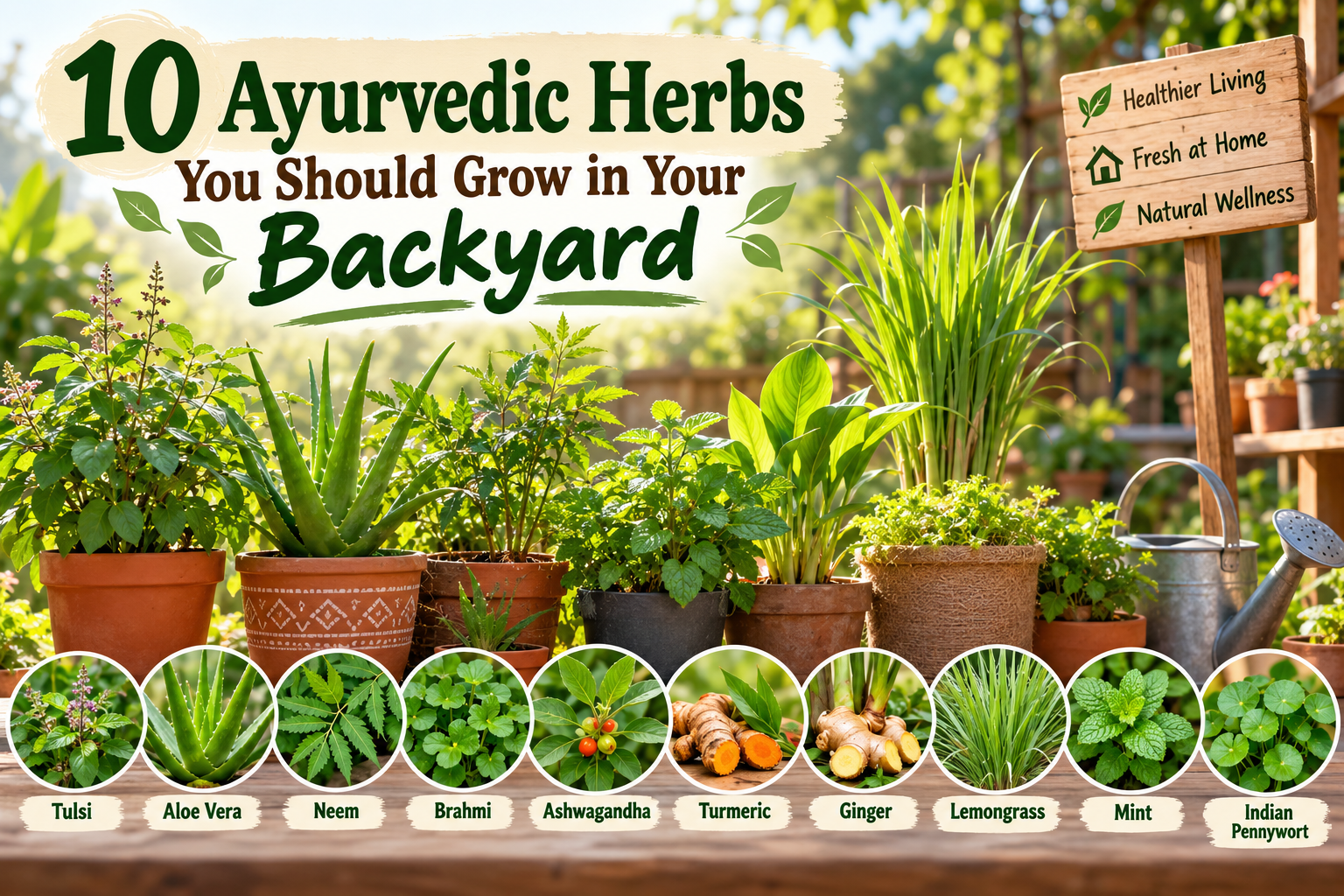
You don’t always need a large garden to grow useful medicinal plants. Even a small backyard, terrace, balcony, or collection of pots can become a simple home herbal garden.
1. Tulsi – The Traditional Home Garden Favorite
Botanical name: Ocimum tenuiflorum
Common names: Tulsi, Holy Basil
Malayalam: തുളസി
Hindi: तुलसी
Tulsi is probably one of the most familiar medicinal plants in Indian households. It is traditionally associated with Ayurveda and is commonly grown around homes.
Traditional Uses
- Herbal beverages
- Traditional seasonal preparations
- General wellness practices
- Aromatic use
- Religious and cultural purposes
How to Grow Tulsi
- Provide plenty of sunlight.
- Use well-drained soil.
- Water moderately.
- Prune regularly to encourage bushier growth.
Garden tip: Tulsi is an excellent choice for a sunny balcony, terrace or backyard.
2. Aloe Vera – The Easy-Care Succulent
Botanical name: Aloe vera
Common name: Aloe vera
Malayalam: കറ്റാർവാഴ
Hindi: घृतकुमारी
Aloe vera is one of the easiest plants to grow at home. Its thick, fleshy leaves store water, allowing the plant to tolerate relatively dry conditions.
Traditional Uses
- Traditional skin-care preparations
- Soothing applications to the skin
- Traditional digestive preparations
- General household herbal use
How to Grow Aloe Vera
- Give it bright sunlight.
- Use sandy or well-draining soil.
- Avoid excessive watering.
- Always use a pot with drainage holes.
3. Neem – India’s Famous Traditional Tree
Botanical name: Azadirachta indica
Common name: Neem
Malayalam: വേപ്പ്
Hindi: नीम
Neem has an important place in Indian traditional practices. It is better suited to a backyard where there is sufficient space because it can eventually become a sizeable tree.
Traditional Uses
- Traditional skin-care preparations
- Traditional cleansing practices
- Household herbal preparations
- Gardening and agricultural applications
How to Grow Neem
- Choose a sunny location.
- Use well-drained soil.
- Provide sufficient outdoor space.
- Avoid planting it too close to buildings.
Garden tip: Think carefully about the mature size of a neem tree before planting it directly in the ground.
4. Brahmi – A Traditional Ayurvedic Herb
Botanical name: Bacopa monnieri
Common name: Brahmi
Malayalam: ബ്രഹ്മി
Hindi: ब्राह्मी
Brahmi is strongly associated with traditional Ayurveda. It is a small, moisture-loving herb that can be grown in containers.
Traditional Uses
- Traditional memory and concentration preparations
- Mental wellness practices
- Traditional nervous-system preparations
- Ayurvedic herbal formulations
How to Grow Brahmi
- Keep the soil consistently moist.
- Use a shallow container if necessary.
- Provide sunlight or partial shade.
- Avoid letting the soil completely dry out.
5. Ashwagandha – A Classic Ayurvedic Plant
Botanical name: Withania somnifera
Common names: Ashwagandha, Indian Ginseng
Malayalam: അമുക്കുരം
Hindi: अश्वगंधा
Ashwagandha is one of the best-known plants associated with Ayurveda. It is traditionally used in a variety of Ayurvedic preparations.
Traditional Uses
- General vitality
- Traditional stress-related wellness preparations
- Strength and stamina preparations
- Traditional rest and relaxation preparations
How to Grow Ashwagandha
- Provide plenty of sunlight.
- Use well-drained soil.
- Avoid waterlogged conditions.
- Water moderately.
6. Turmeric – A Spice and Traditional Herbal Plant
Botanical name: Curcuma longa
Common name: Turmeric
Malayalam: മഞ്ഞൾ
Hindi: हल्दी
Turmeric is both a kitchen spice and a plant with a long history in Indian traditional medicine. The underground rhizomes are harvested after the plant matures.
Traditional Uses
- Cooking
- Traditional herbal preparations
- Traditional skin-care practices
- Household remedies
- Cultural and religious purposes
How to Grow Turmeric
- Plant healthy turmeric rhizomes.
- Use rich, well-drained soil.
- Maintain regular moisture.
- Provide suitable sunlight or partial shade.
Garden tip: Turmeric is especially suitable for warm and tropical climates.
7. Ginger – A Useful Kitchen Garden Plant
Botanical name: Zingiber officinale
Common name: Ginger
Malayalam: ഇഞ്ചി
Hindi: अदरक
Ginger is one of the most practical plants to grow because it is both a culinary ingredient and a traditional medicinal plant.
Traditional Uses
- Traditional digestive preparations
- Herbal beverages
- Warming preparations
- Cooking
- General household wellness practices
How to Grow Ginger
- Start with a healthy piece of ginger rhizome.
- Use loose, fertile soil.
- Keep the soil moderately moist.
- Provide partial sunlight.
- Avoid stagnant water.
Bonus: Ginger is one of the best choices if you want a plant that can move directly from your backyard into your kitchen.
8. Lemongrass – Fragrant and Easy to Grow
Botanical name: Cymbopogon citratus
Common name: Lemongrass
Malayalam: നാരങ്ങപ്പുല്ല്
Hindi: लेमनग्रास
Lemongrass is a beautiful addition to a backyard herbal garden. It produces long, narrow leaves with a characteristic lemon-like fragrance.
Traditional Uses
- Herbal beverages
- Culinary preparations
- Aromatic purposes
- Traditional wellness preparations
How to Grow Lemongrass
- Provide plenty of sunlight.
- Water regularly.
- Use well-drained soil.
- Give the plant sufficient space to form a large clump.
9. Mint – The Perfect Small-Space Herb
Common name: Mint
Malayalam: പുതിന
Hindi: पुदीना
Mint is an extremely useful traditional household herb and is particularly suitable for people who don’t have a large backyard.
Traditional Household Uses
- Chutneys
- Drinks
- Herbal beverages
- Cooking
- Traditional digestive preparations
How to Grow Mint
- Keep the soil moderately moist.
- Provide sunlight or partial shade.
- Water regularly.
- Harvest the leaves regularly to encourage new growth.
10. Indian Pennywort – A Traditional Ground-Cover Herb
Botanical name: Centella asiatica
Common names: Indian Pennywort, Gotu Kola
Malayalam: മുത്തിൽ
Hindi: मंडूकपर्णी
Centella asiatica is another plant associated with traditional medicinal practices. It is a low-growing herb that can work particularly well in moist parts of a garden.
Traditional Uses
- Traditional cognitive wellness preparations
- Traditional skin-related preparations
- General wellness
- Ayurvedic herbal formulations
How to Grow Indian Pennywort
- Keep the soil moist.
- Provide partial sunlight.
- Grow in warm conditions.
- Allow enough space for the plant to spread.
How to Create Your Own Ayurvedic Herb Garden
You don’t need a huge backyard to start growing medicinal and traditional herbs. A small garden, terrace or balcony can be enough.
Sunny Area
- Tulsi
- Aloe vera
- Neem
- Ashwagandha
- Lemongrass
Partially Shaded Area
- Brahmi
- Centella
- Mint
Larger Garden Area
- Neem
- Lemongrass
- Turmeric
- Ginger
Growing Medicinal Plants in Pots
If you live in an apartment or have only a balcony, you can still create a small herbal garden.
Use separate pots for plants that have different watering requirements.
- Dryer conditions: Aloe vera and Ashwagandha
- Moderate moisture: Tulsi and Lemongrass
- More moisture: Brahmi, Centella and Mint
Always choose containers with suitable drainage holes.
Natural Soil Preparation
You don’t need complicated equipment to begin your home herbal garden.
A simple potting mixture can contain:
- Garden soil
- Compost
- Cocopeat
- Sand or another drainage-improving material
The exact mixture should be adjusted according to the plant. The most important principle is good drainage for plants that dislike waterlogging.
How to Reduce Pest Problems Naturally
If your goal is to grow herbs for household use, avoid unnecessary pesticide use.
Start with basic gardening practices:
- Remove damaged leaves.
- Keep the garden clean.
- Avoid excessive watering.
- Provide adequate sunlight.
- Maintain sufficient spacing between plants.
- Inspect plants regularly.
For serious pest problems, identify the pest before choosing a treatment.
Can You Eat All These Herbs Directly?
No.
This is an important point.
A plant being called a medicinal herb does not mean that every part of the plant can safely be eaten whenever you want.
Different plants may have different:
- Active compounds
- Traditional preparations
- Recommended amounts
- Contraindications
- Potential drug interactions
- Parts traditionally used
For example, aloe vera leaves contain latex that is different from the inner gel, while neem and ashwagandha are medicinal plants rather than ordinary vegetables.
Growing a medicinal plant and using a medicinal preparation are two different things.
Don’t Replace Medical Treatment With Herbs
Ayurvedic herbs have an important place in traditional Indian healthcare, but they should not automatically be considered replacements for modern medical treatment.
If you have a persistent symptom, diagnosed medical condition, or are taking prescription medication, consult a qualified healthcare professional before using concentrated herbal preparations.
This is especially important for:
- Pregnant or breastfeeding people
- Children
- Older adults
- People taking multiple medicines
- People with chronic illnesses
- Anyone considering high-dose herbal supplements
10-Plant Backyard Herbal Garden – Quick Guide
| Plant | Best Feature | Recommended Space |
|---|---|---|
| Tulsi | Easy household herb | Small pot |
| Aloe Vera | Very low maintenance | Pot |
| Mint | Kitchen use | Pot |
| Brahmi | Moisture-loving herb | Pot |
| Centella | Ground-cover herb | Pot or garden bed |
| Lemongrass | Fragrant and useful | Large pot |
| Turmeric | Kitchen and traditional use | Large pot or garden bed |
| Ginger | Kitchen staple | Pot or garden bed |
| Ashwagandha | Traditional Ayurvedic plant | Medium pot |
| Neem | Traditional medicinal tree | Large outdoor space |
Final Thoughts
A backyard herbal garden can be much more than a collection of plants. It can become a simple connection between traditional knowledge, gardening, cooking and everyday life.
Start with easy plants such as Tulsi, Aloe vera, Mint, Lemongrass and Turmeric. Once you become comfortable with gardening, you can add plants such as Brahmi, Centella and Ashwagandha.
If you have enough outdoor space, consider Neem as a long-term addition.
The goal should not be to turn your garden into a substitute pharmacy. Instead, think of it as a way to preserve traditional plant knowledge, grow useful plants yourself and understand where many familiar herbs and spices come from.
Grow responsibly, identify plants correctly, and use medicinal herbs carefully.