Festivals Celebrated in the UAE: Emirati Traditions, Indian Festivals and International Cultural Events
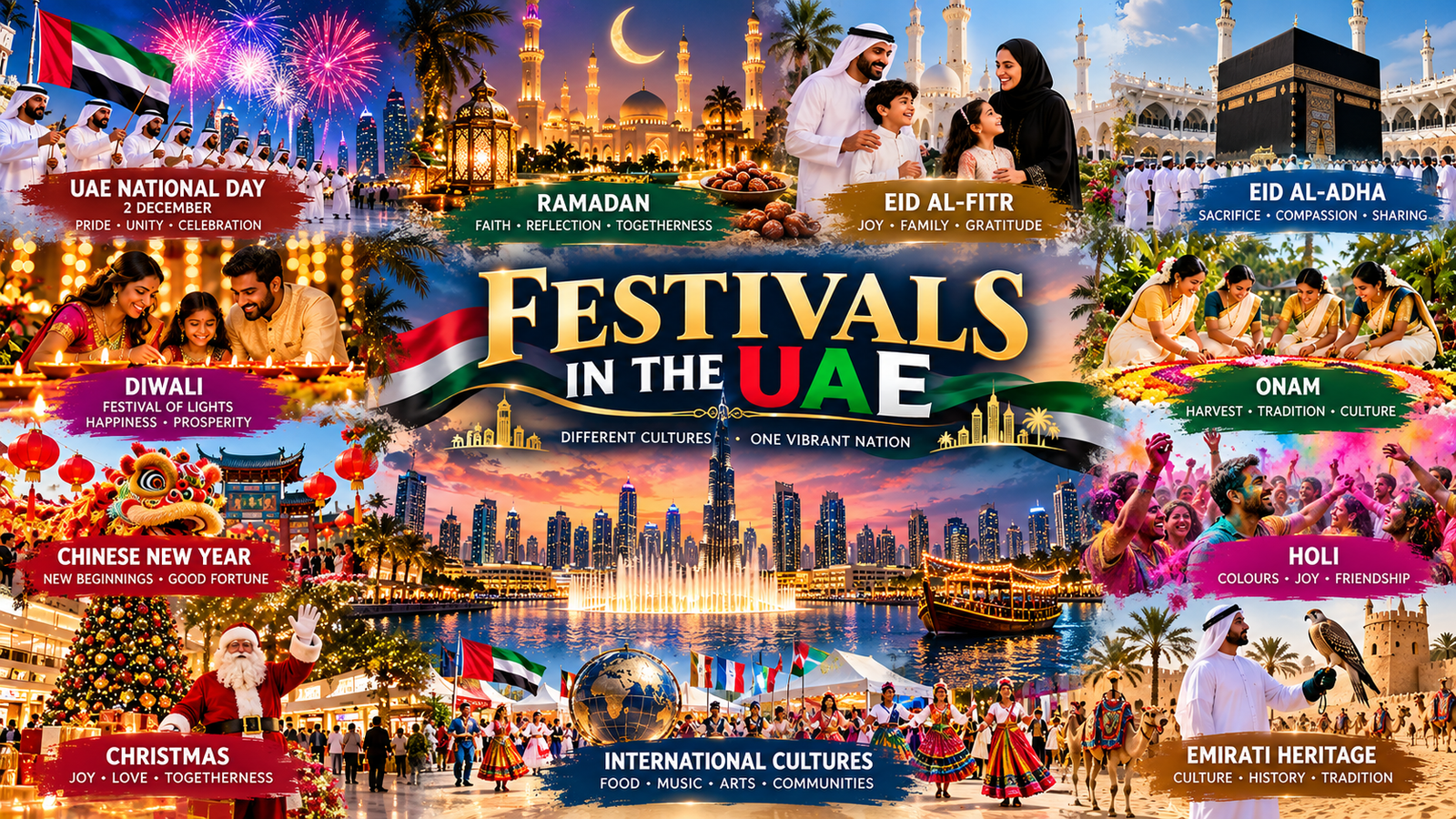
Discover the rich cultural diversity of the United Arab Emirates, from traditional Emirati heritage and Islamic festivals to Indian celebrations, Chinese New Year, Christmas and international events.
The United Arab Emirates is one of the world’s most culturally diverse destinations. Although the country has its own rich Emirati traditions and Islamic heritage, millions of people from India, Pakistan, Bangladesh, the Philippines, China, Europe, Africa and other parts of the world also call the UAE home.
This diversity makes the UAE an interesting place to experience different festivals throughout the year. From the spectacular National Day celebrations to Ramadan nights, Diwali lights, Onam flower carpets and Christmas decorations, the country’s cultural calendar offers something for many different communities.
Table of Contents
- Traditional Emirati Festivals
- Islamic Festivals
- Indian Festivals
- Pakistani, Bangladeshi and South Asian Festivals
- Filipino Festivals
- Chinese, Japanese and Korean Festivals
- Christian Festivals
- Western and International Celebrations
- Other Religious and Cultural Festivals
- Best Festival Seasons for Tourists
- Important Tips for Visitors
1. Traditional Emirati Festivals and Cultural Celebrations
Traditional Emirati celebrations reflect the UAE’s history, national identity, desert lifestyle, maritime heritage and Bedouin culture. These traditions are especially visible during national holidays and heritage festivals.
1. Eid Al Etihad — UAE National Day
2 December
Eid Al Etihad celebrates the formation of the United Arab Emirates on 2 December 1971. It is one of the country’s most important national occasions.
During the celebrations, buildings and streets display UAE flags, while cities host fireworks, concerts, cultural performances, parades and family activities. Traditional Emirati dances, including Al-Ayyala, are often featured at cultural events.
Visitors can experience national pride, traditional music and the unity of the seven emirates.
2. Emirati Heritage Festivals
Dates vary throughout the year
Heritage festivals preserve traditional Emirati customs, clothing, poetry, handicrafts, music and food. Visitors may see traditional tents, Arabic coffee preparation, local crafts and demonstrations of historic ways of life.
Traditional performances such as Al-Ayyala and Al-Razfa are important parts of Emirati cultural identity. These performances can be seen at heritage events, weddings and national celebrations.
3. Camel Festivals and Heritage Competitions
Usually seasonal; check event schedules
Camels played an important role in traditional Arabian life, providing transportation and supporting desert communities. Today, camel festivals preserve this heritage through camel beauty competitions, racing and cultural activities.
Some events also include traditional markets, handicrafts, food and family entertainment. The programme and dates depend on the particular festival.
4. Falconry Festivals
Falconry is a historic tradition in Emirati culture. Falcons were important to desert hunting and are now recognised as symbols of heritage and skill.
Falconry events may include demonstrations, competitions and conservation activities that help visitors understand the relationship between falconers and their birds.
5. Maritime and Pearl-Diving Heritage Events
Before the discovery of oil transformed the UAE’s economy, fishing, pearl diving and seafaring supported many coastal communities.
Maritime heritage programmes celebrate this history through traditional dhow boats, boatbuilding, pearl-diving stories, sea songs and exhibitions. They offer a different perspective on the country’s history beyond its modern skyscrapers.
2. Islamic Festivals Celebrated Across the UAE
Islamic religious occasions are an important part of life in the UAE. They are observed through prayer, charity, family gatherings, religious reflection and special meals. The dates follow the Hijri lunar calendar and change from year to year in the Gregorian calendar.
6. Ramadan
Ninth month of the Islamic calendar
Ramadan is a holy month during which Muslims fast from dawn until sunset, subject to religious exemptions. It is a time for prayer, self-discipline, charity and reflection.
Across the UAE, families and friends gather for iftar after sunset and suhoor before dawn. Ramadan tents, special menus, night markets, lantern decorations and extended shopping hours may be found in many areas.
Visitors can experience traditional Emirati and international iftar meals while respecting local customs and current public guidance.
7. Eid Al-Fitr
At the end of Ramadan
Eid Al-Fitr marks the conclusion of Ramadan. Muslims attend special prayers, wear festive clothing, visit relatives, exchange gifts and share meals.
Charity is an important part of the occasion. Shopping centres, hotels and entertainment venues may organise seasonal promotions and family activities during the holiday.
8. Eid Al-Adha
During Dhu al-Hijjah
Eid Al-Adha, often called the Festival of Sacrifice, commemorates Prophet Ibrahim’s devotion to God. It is associated with prayer, charity, family gatherings and the distribution of meat from the ritual sacrifice where practised.
The festival coincides with the period of the annual Hajj pilgrimage to Mecca and is one of the most significant occasions in the Islamic calendar.
9. Islamic New Year
The Islamic New Year marks the beginning of a new Hijri year. It is recognised as a UAE public holiday. Many Muslims observe the occasion through reflection and religious activities, and celebrations are generally more subdued than Eid festivities.
10. Prophet Muhammad’s Birthday — Mawlid
Mawlid commemorates the birth of Prophet Muhammad. Some Muslim communities observe it through religious talks, devotional poetry, charitable activities and gatherings. Customs differ between communities and religious traditions.
11. Arafah Day
Arafah Day falls on the ninth day of Dhu al-Hijjah and is an important day of the Hajj pilgrimage. Muslims who are not performing Hajj may observe the day through fasting and prayer. It precedes Eid Al-Adha.
3. Indian Festivals Celebrated in the UAE
The Indian community is one of the largest expatriate communities in the UAE. Indian festivals are celebrated in homes, temples, community halls, restaurants, schools and selected public venues. The celebrations represent India’s many religions, languages and regional cultures.
12. Diwali — Festival of Lights
Usually October or November
Diwali is one of India’s best-known festivals. Many Hindus, Jains and Sikhs celebrate it, with different religious meanings and traditions.
Families decorate their homes with lights and lamps, exchange sweets, wear festive clothing and visit friends and relatives. Shopping centres and restaurants in the UAE may organise Diwali decorations, special offers and cultural programmes.
13. Holi — Festival of Colours
Usually February or March
Holi is a spring festival associated with colour, joy and community. Celebrations may include coloured powders, music, dancing, sweets and gatherings with family and friends.
Organised Holi events may take place at designated venues across the UAE. Visitors should follow the event’s safety rules and instructions.
14. Onam — Kerala’s Harvest Festival
Usually August or September
Onam is Kerala’s major harvest and cultural festival. Malayali residents celebrate it with pookalam flower carpets, traditional clothing, Onam sadhya served on banana leaves, music and cultural performances.
Community organisations and venues may arrange Thiruvathira, traditional games, music programmes and other Kerala art forms. Onam is especially significant to the many Keralites who live and work in the UAE.
15. Ganesh Chaturthi
Usually August or September
Ganesh Chaturthi celebrates the birth of Lord Ganesha. Hindu communities observe it with prayers, devotional offerings, flowers and gatherings. Public celebrations depend on the arrangements of the relevant religious institution or event venue.
16. Navratri and Dandiya Raas
Usually September or October
Navratri is a Hindu festival celebrated in different ways across India. In the UAE, some communities organise Garba and Dandiya dance evenings featuring colourful traditional clothing, music and group dancing.
These events provide an opportunity for people from different Indian regions to meet and celebrate their shared cultural heritage.
17. Indian Independence Day and Republic Day
15 August and 26 January
Indian residents celebrate Independence Day and Republic Day through flag ceremonies, patriotic songs, school programmes and community gatherings.
India’s diplomatic missions in the UAE also observe these national occasions.
18. Other Indian Festivals
Other celebrations observed by Indian communities include Pongal, Makar Sankranti, Ugadi, Vishu, Raksha Bandhan, Janmashtami, Ram Navami, Dussehra and Guru Nanak Jayanti.
The customs, dates and scale of celebrations depend on regional traditions and the religious communities involved.
4. Pakistani, Bangladeshi and Other South Asian Festivals
South Asian culture in the UAE extends beyond Indian celebrations. Pakistani, Bangladeshi, Sri Lankan and Nepali communities bring their own traditions, music, food and national occasions to the country.
19. Pakistan Independence Day
14 August
Pakistani residents celebrate independence with green-and-white decorations, national flags, patriotic songs, traditional food and community programmes. Events may be organised by schools, cultural associations and community groups.
20. Bangladesh Independence Day and Bengali New Year
26 March and usually mid-April
Bangladesh Independence Day commemorates the country’s declaration of independence in 1971. Bengali New Year, known as Pohela Boishakh, is celebrated with traditional clothing, food, music and cultural activities.
21. Dashain and Tihar
Usually September–November
Nepali communities celebrate Dashain and Tihar with family gatherings, blessings, traditional dishes, lights and decorations. Tihar is particularly associated with lamps, flowers and illuminated homes.
22. Sinhala and Tamil New Year
Usually mid-April
Sri Lankan communities observe the New Year with traditional sweets, family visits, cultural games and customary activities. The occasion brings together Sinhala and Tamil traditions.
5. Filipino Festivals and Celebrations
The Filipino community is an important part of UAE society. Filipino cultural celebrations frequently feature traditional food, music, dance, community gatherings and national pride.
23. Philippine Independence Day
12 June
Filipino residents celebrate independence with national flags, cultural performances, traditional dances, music and community events. Filipino associations and other organisers may arrange special programmes.
24. Sinulog and Other Filipino Cultural Events
Sinulog is a famous religious and cultural festival originating in Cebu in the Philippines. It features colourful costumes, dancing and devotion to the Santo Niño.
Some Filipino community and religious groups abroad may organise related celebrations or cultural programmes. The availability and format of events in the UAE vary.
25. Filipino Christmas Celebrations
Christmas is particularly important in Filipino culture. Families and community groups may organise parties, carol singing, gift exchanges and gatherings featuring traditional dishes.
Filipino Christmas traditions often begin well before December, making the season an important time for community activities.
6. Chinese, Japanese and Korean Cultural Festivals
East Asian communities add further variety to the UAE’s cultural calendar. Cultural associations, shopping centres, restaurants and entertainment venues sometimes organise public events around these festivals.
26. Chinese New Year — Lunar New Year
Usually January or February
Chinese New Year is celebrated with family meals, red decorations, lanterns, lion dances and dragon performances. The occasion marks the beginning of a new year in the traditional Chinese lunisolar calendar.
Some UAE destinations organise themed entertainment, restaurant offers and cultural displays around the festival.
27. Mid-Autumn Festival
Usually September or October
The Mid-Autumn Festival is associated with the full moon, family reunions, lanterns and mooncakes. Chinese communities may observe it through family gatherings or organised cultural events.
28. Japanese Cultural Festivals
Japanese cultural programmes may feature traditional arts, music, crafts, food and contemporary Japanese culture, including anime. These events provide opportunities for residents and visitors to learn about Japan’s cultural traditions.
29. Korean Cultural Events
Korean cultural events may feature K-pop, Korean food, traditional clothing, dance and contemporary entertainment. Many are cultural showcases rather than UAE public holidays.
7. Christian Festivals Celebrated in the UAE
Christian communities from India, the Philippines, Europe, Africa and other regions celebrate religious occasions in the UAE. Churches hold services, while hotels, malls and community venues may arrange seasonal decorations and entertainment.
30. Christmas
25 December
Christmas commemorates the birth of Jesus Christ. Churches hold religious services, families exchange gifts, and shopping centres and hotels display Christmas trees and festive lights.
Seasonal markets, festive meals, concerts and family entertainment make December a popular time for visitors to enjoy the UAE’s international atmosphere.
31. Easter
Usually March or April
Easter commemorates the resurrection of Jesus Christ. Christian communities attend church services, gather with family and, in some traditions, exchange Easter eggs. Catholic, Protestant and Orthodox communities may observe different dates and customs.
32. Good Friday and Palm Sunday
These occasions form part of Holy Week, leading to Easter. Churches may hold prayers, processions and special services according to their traditions.
Good Friday commemorates the crucifixion of Jesus, while Palm Sunday remembers his entry into Jerusalem.
8. Western and International Celebrations
These celebrations are not originally Emirati traditions, but they are familiar to many expatriates and tourists. They can be seen in hotels, restaurants, shopping malls and entertainment venues.
33. New Year’s Eve
31 December
The UAE is known for spectacular New Year’s Eve celebrations, including fireworks, concerts, hotel events and citywide entertainment. Dubai’s skyline and waterfront locations attract large crowds, while Abu Dhabi and other emirates also host celebrations.
New Year’s Day, on 1 January, is an official public holiday. Visitors should check transport arrangements and access restrictions before attending major events.
34. Halloween
31 October
Halloween is marked by costume parties, pumpkin decorations, themed restaurant events and children’s activities. International schools, shopping centres and entertainment venues may arrange seasonal programmes.
35. Valentine’s Day
14 February
Hotels, restaurants and florists often promote romantic dinners, flowers, chocolates and special packages. It is an international social occasion rather than a UAE national holiday.
36. Oktoberfest and German Cultural Events
German-themed cultural gatherings may feature traditional food, music, costumes and entertainment. Selected hotels and restaurants sometimes organise themed events. Dates and programmes vary by organiser.
37. International Food and Cultural Festivals
Multicultural food festivals bring together cuisines from Asia, Europe, Africa and the Middle East. Visitors may enjoy regional dishes, live performances, crafts and activities representing different cultures in one location.
These events can be especially interesting for tourists who want to experience the UAE’s international community in a single visit.
9. Other Religious and Cultural Festivals
Many additional religious and cultural occasions are observed by communities living in the UAE. Some celebrations take place privately, while others are organised at religious institutions or community venues.
| Festival | Community or tradition | Typical observance |
|---|---|---|
| Vaisakhi | Sikh and Punjabi communities | Prayers, community meals and cultural programmes |
| Buddha Purnima | Buddhist communities | Prayer, reflection and charitable activities |
| Nowruz | Persian and several Central and West Asian cultures | New Year gatherings, traditional food and customs |
| Hanukkah | Jewish communities | Menorah lighting, prayers and family gatherings |
| Rosh Hashanah | Jewish communities | Jewish New Year prayers and traditional meals |
| Yom Kippur | Jewish communities | Fasting, prayer and reflection |
| Orthodox Christmas | Some Orthodox Christian communities | Church services and family gatherings, often on 7 January |
| Vesak | Buddhist communities | Religious observances and charitable activities |
These examples represent the diversity of communities in the UAE. They are not all official UAE public holidays, and public event availability varies.
10. Best Festival Seasons for Tourists Visiting the UAE
December: Emirati Culture and National Celebrations
December is an excellent time to experience Eid Al Etihad, traditional performances, national decorations and outdoor activities. The cooler winter season is also suitable for heritage festivals and open-air entertainment.
Ramadan and Eid: Islamic Traditions
Ramadan offers opportunities to experience iftar meals, night markets and seasonal decorations. Eid celebrations bring family activities and festive entertainment. Check the Islamic calendar for the expected dates of your visit.
October–November: Indian and Asian Festivals
Depending on the year, this period may include Diwali, Navratri and Halloween events. Chinese New Year generally falls in January or February, while Onam is usually celebrated in August or September.
November–December: Christmas and Winter Festivities
Explore seasonal decorations, Christmas markets, festive dining, concerts and New Year’s Eve events. Check individual venues for opening times, entry requirements and event dates.
11. Important Tips for Attending Festivals in the UAE
- Check dates in advance: Islamic festivals follow the lunar calendar, and the dates of many other festivals also change annually.
- Follow venue rules: Some events require advance tickets, registration or a particular dress code.
- Respect religious customs: Dress modestly at religious sites and follow posted rules for photography.
- Plan transport: National holidays and New Year’s Eve may bring heavy traffic, crowds and road closures.
- Check whether events are public: A festival being observed by a community does not guarantee that a public event will take place.
- Ask before photographing people: Be considerate when photographing individuals, religious ceremonies and family gatherings.
- Explore different cultures: Visiting cultural events and trying traditional foods can help you understand the UAE’s international character.
Conclusion
The United Arab Emirates is a unique destination where Emirati heritage meets the traditions of residents from India, Pakistan, Bangladesh, the Philippines, China, Japan, Europe, Africa and many other regions.
From Ramadan and Eid to Diwali, Onam, Chinese New Year, Christmas and Eid Al Etihad, these celebrations reveal the rich cultural diversity of the country.
For tourists, exploring both traditional Emirati events and international festivals offers a deeper understanding of life in the UAE. For residents, festivals provide opportunities to maintain their cultural identity while learning about the customs of their neighbours.
The UAE’s festival calendar is more than a list of holidays. It reflects the many communities that call the country home.
Frequently Asked Questions
What is the most important national festival in the UAE?
Eid Al Etihad, celebrated on 2 December, marks the formation of the United Arab Emirates in 1971. It is one of the country’s most important national celebrations.
Do people celebrate Indian festivals in Dubai?
Yes. Indian communities celebrate occasions such as Diwali, Holi, Onam, Navratri and several regional festivals. Some venues and community organisations arrange public events.
Is Christmas celebrated in the UAE?
Yes. Christian communities celebrate Christmas through church services and family gatherings. Shopping centres, hotels and entertainment venues also feature Christmas decorations and seasonal events.
Are all festivals public holidays in the UAE?
No. Some occasions, including specified Islamic holidays and UAE national holidays, are official public holidays. Many cultural and international festivals are community celebrations or organised events rather than public holidays.
When is the best time to visit the UAE for festivals?
November and December are popular for outdoor events, national celebrations and winter festivities. Ramadan, Eid and other cultural festivals offer different experiences depending on the year and your travel dates.
Article category: UAE Travel, Culture and Festivals