Things Not to Do in the UAE as a Tourist: Complete Guide to Rules, Fines & Etiquette (2026)
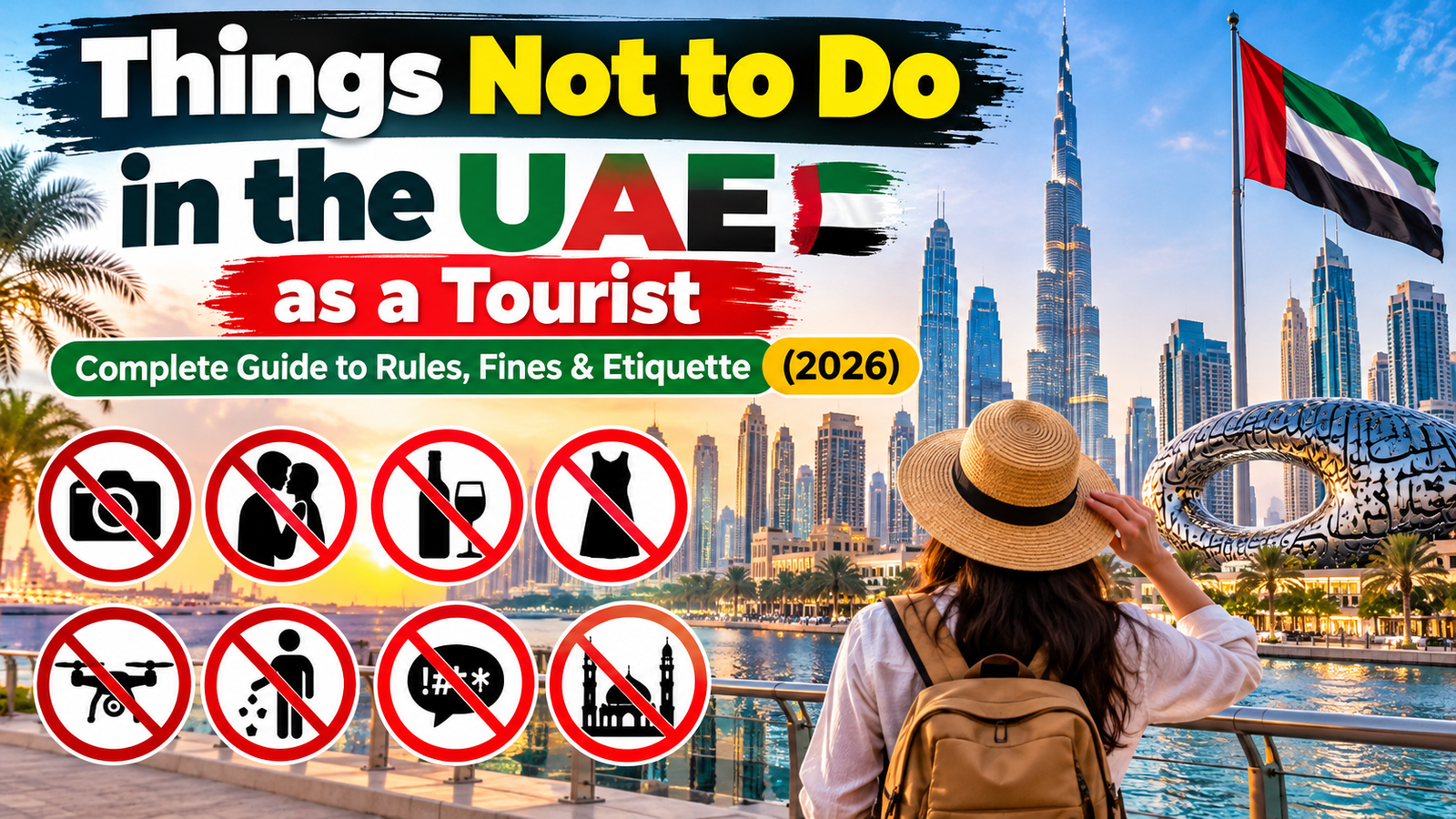
Things Not to Do in the UAE as a Tourist: Complete Guide to Rules, Fines & Etiquette (2026)
The United Arab Emirates is one of the world’s most popular tourist destinations — modern, luxurious, and remarkably clean. But behind the glittering skylines and desert adventures lie strict laws and cultural expectations that many visitors underestimate.
One of the most common mistakes tourists make is treating the UAE like a Western holiday destination. Simple actions such as carelessly throwing waste, showing affection in public, dressing too revealingly, or crossing the road in the wrong place can result in fines or more serious consequences.
This detailed guide covers the most important things you should never do in the UAE, with a special focus on littering, public behaviour, and important traffic rules.
1. Never Throw Waste or Litter Carelessly
The UAE takes cleanliness extremely seriously. Dubai regularly ranks among the cleanest cities in the world, and authorities enforce anti-littering laws strictly.
What counts as littering?
- Throwing cigarette butts on the ground
- Leaving food packaging, bottles, or cups behind
- Discarding waste on beaches, in parks, deserts, or streets
- Leaving rubbish outside designated bins
Fines for littering (2025–2026)
- Cigarette butts or personal waste (food packaging etc.): AED 500 for the first offence, rising to AED 1,000–2,000 for repeats
- Leaving waste in non-designated areas: AED 1,000 first offence, up to AED 4,000 for repeated violations (especially in Abu Dhabi)
- Dubai Municipality can issue fines starting from AED 500 and going much higher for serious cases
Golden rule: Always carry your rubbish until you find a bin. On beaches and in the desert, follow the “leave no trace” principle — take everything back with you.
2. Do Not Cross the Road Except at Designated Crossings (Jaywalking)
One of the most commonly fined traffic rules for tourists is crossing the road in the wrong place.
- You are not allowed to cross the road wherever you like.
- You must only cross at official pedestrian crossings, zebra crossings, or traffic light controlled crossings.
- Crossing in the middle of the road, between cars, or away from designated points is called jaywalking and is illegal.
Fine for jaywalking: Usually AED 400.
Police and cameras monitor busy roads, especially in Dubai. Always use the proper crossing points — even if it means walking a little further.
3. Avoid Public Displays of Affection (PDA)
Kissing, prolonged hugging, or intimate touching in public is considered inappropriate and can lead to fines or legal action under public morals laws.
- Holding hands is generally tolerated for married couples
- Anything more intimate should be kept private (hotel room only)
4. Do Not Drink Alcohol in Public or Appear Drunk
Alcohol is legal for tourists aged 21+ in licensed venues only (hotels, restaurants, bars, and clubs).
- Drinking on beaches, streets, parks, or public transport is illegal
- Being drunk in public can result in arrest
- Drink-driving has a zero tolerance policy — even one drink can get you into serious trouble
- Note: Alcohol is completely banned in Sharjah
5. Zero Tolerance for Drugs
The UAE has one of the strictest drug policies in the world. Possession of even tiny amounts (including traces in your system or CBD products) can lead to imprisonment, heavy fines, and deportation.
Always check with the UAE Ministry of Health before bringing any prescription medication.
6. Dress Modestly in Public Places
While Dubai is relatively liberal, modest dress is still expected in malls, souks, government buildings, and residential areas.
- Shoulders and knees should be covered in public
- Swimwear is only acceptable at beaches, pools, and waterparks
- Avoid transparent, extremely tight, or revealing clothing
- In mosques, women are usually required to wear an abaya and cover their hair (often provided free of charge)
7. Respect Photography Rules
- Never take photos of people (especially women and children) without clear permission
- Avoid photographing government buildings, military areas, airports, and police
- Posting photos of people on social media without consent can lead to legal complaints
8. Other Important Don’ts
- During Ramadan: Do not eat, drink, or smoke in public during daylight hours
- Do not insult Islam, the UAE, its rulers, or the national flag (even online)
- Avoid swearing, rude gestures, or loud arguments in public
- Do not use your left hand for greetings or giving/receiving items
- Never work on a tourist visa
- Do not eat or drink while driving (can be treated as distracted driving)
Quick Reference Table: What Not to Do in the UAE
| Action | Risk Level | Possible Consequence |
|---|---|---|
| Littering / throwing waste | High | Fine AED 500 – 4,000+ |
| Crossing road outside designated crossings (Jaywalking) | Medium-High | Fine AED 400 |
| Public kissing / hugging | High | Fine or legal action |
| Drinking alcohol in public | Very High | Arrest / fine |
| Drink-driving | Very High | Heavy fine + possible jail |
| Any drug possession | Extreme | Jail + deportation |
| Revealing clothing in malls | Medium | Warning or denied entry |
| Photos without permission | High | Fine or legal complaint |
| Insulting religion/rulers | Extreme | Jail or deportation |
Final Advice for a Trouble-Free Trip
The UAE is generally very welcoming and tourist-friendly. Most visitors enjoy their holiday without any issues simply by being respectful and using common sense.
Remember these four golden rules:
- Keep the country clean — never litter
- Only cross the road at official pedestrian crossings
- Respect local culture and public behaviour norms
- When in doubt, be more conservative than you would at home
Follow these guidelines and you’ll be free to enjoy the beaches, desert safaris, world-class shopping, and incredible hospitality that the UAE is famous for.
Have a wonderful and safe trip!
Disclaimer: Laws and fines can change. Always check official UAE government sources or your embassy for the most up-to-date information before travelling.